Alpine Region, Europe – A major transportation infrastructure project has successfully utilized SupAnchor's self drilling anchor system to overcome severe geotechnical challenges. The project, involving the construction of a new highway extension through mountainous terrain, required robust ground stabilization solutions to ensure long-term safety and structural integrity. The site presented a complex combination of steep cut slopes, heavily fractured rock formations, and unpredictable groundwater conditions—factors that demanded an innovative ground reinforcement approach.
Traditional anchoring methods proved inefficient and risky due to the collapsing nature of the boreholes in the fractured shale and sandstone. The project team, after extensive evaluation, selected SupAnchor's self drilling anchor bolts as the primary support system for retaining walls, slope stabilization, and micropile foundations. This decision was based on the system's ability to combine drilling, grouting, and anchoring in a single operation, significantly reducing installation time and improving bond strength in unstable ground.
SupAnchor, a globally recognized geotechnical reinforcement system manufacturer, supplied a comprehensive package of hollow bar anchors, drill bits, couplers, and accessories tailored to the specific ground conditions. The company's technical team collaborated closely with the design engineers to optimize anchor lengths, spacing, and grouting pressures, ensuring that the final design met all load requirements and safety factors.
The infrastructure project forms part of a strategic transportation corridor designed to improve connectivity between two major economic hubs. The new highway section traverses a valley with steep natural slopes, requiring deep cuts to achieve the desired alignment. These cuts, reaching heights of up to 15 meters, necessitated permanent retaining structures to prevent slope failure and erosion. Additionally, a bridge crossing a seasonal stream required deep foundations capable of transferring loads through weak surface deposits to competent bedrock.
Geotechnical investigations revealed a subsurface profile dominated by weathered shale and sandstone with frequent interbedded clay seams. The rock mass was classified as poor to very poor according to the RMR (Rock Mass Rating) system, with uniaxial compressive strengths ranging from 5 to 25 MPa. Groundwater was present in several boreholes, and inflows were observed during initial excavation, further complicating drilling and grouting operations. The presence of swelling clay minerals posed a long-term durability concern, as moisture changes could lead to pressure build-up behind retaining walls.
The project's tight schedule and environmental constraints ruled out conventional cast-in-place concrete retaining walls, which would require extensive excavation, formwork, and curing time. Instead, the design team opted for a soil nailing and anchored wall system, relying on self drilling anchors to provide immediate and permanent support. This approach minimized the construction footprint, reduced spoil disposal, and allowed work to proceed in a top-down sequence—critical for maintaining stability during excavation.
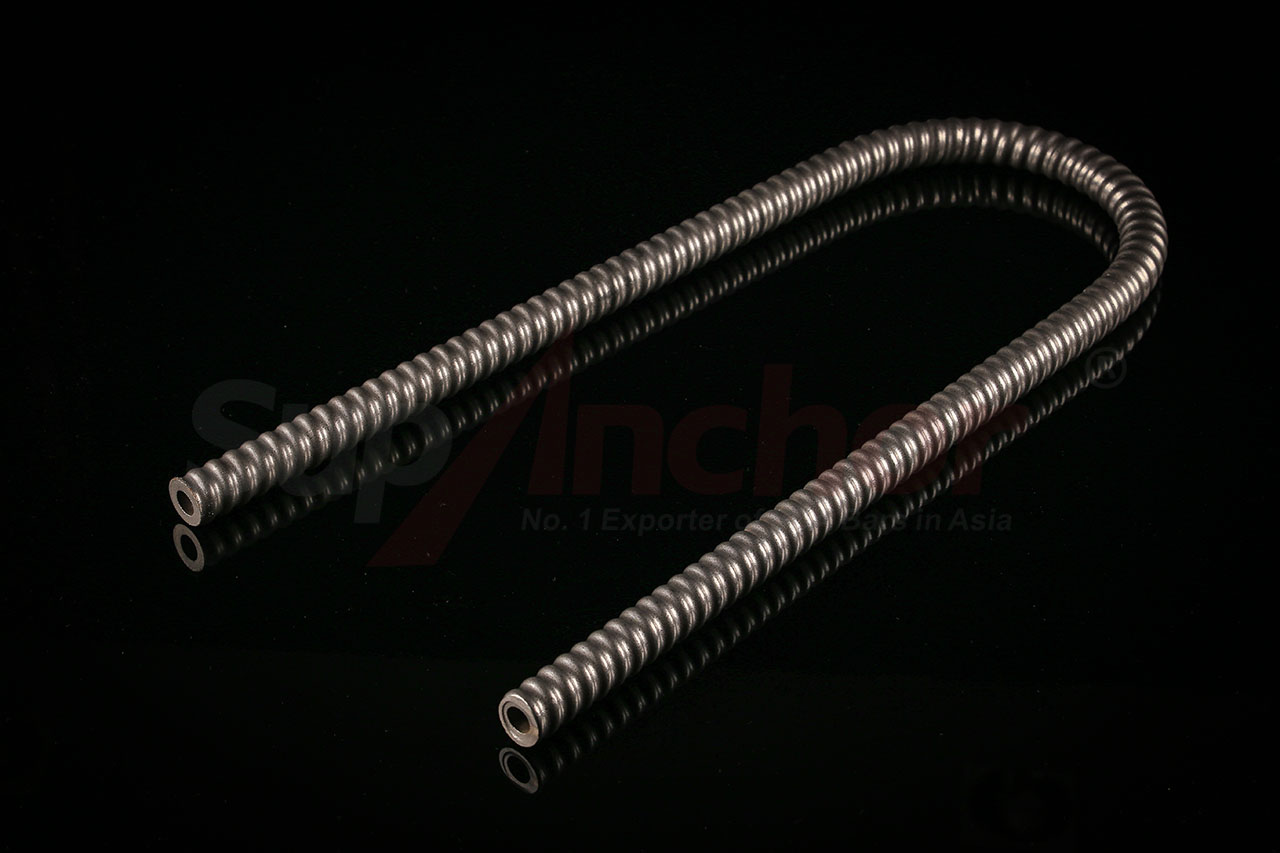
SupAnchor's self drilling anchor system was chosen because it is specifically engineered for such conditions. The hollow bar anchor acts as a drill rod, casing, and tendon simultaneously, eliminating the need for sacrificial casing and reducing the risk of borehole collapse. The drill-and-grout bolt method ensures that grout is injected under pressure through the hollow core as the anchor advances, filling voids and creating a rough, irregular grout body that interlocks with the surrounding ground. This results in higher pull-out capacities compared to traditional grouted anchors, especially in fractured rock and granular soils.
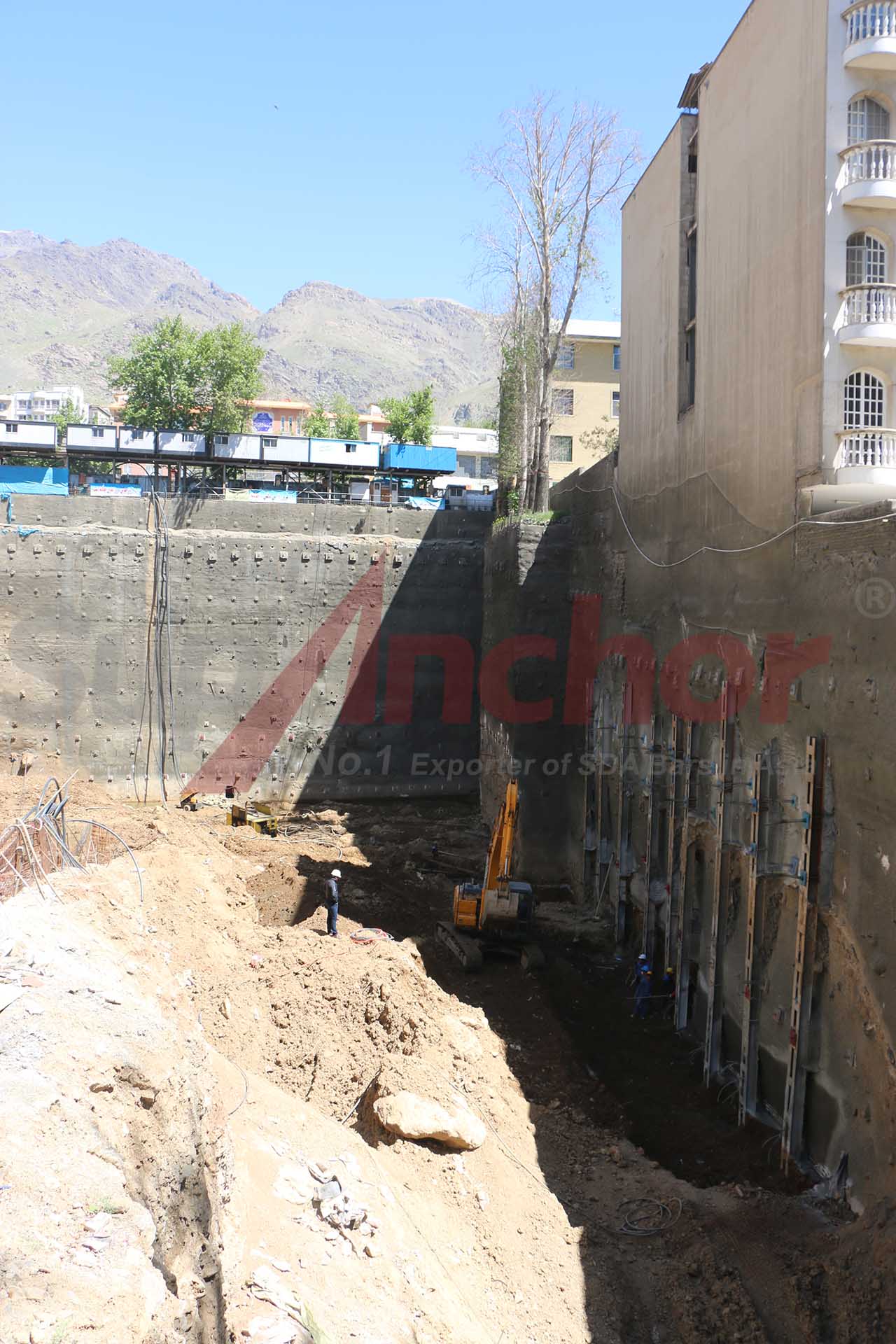
The construction site image captures a typical installation scene: a hydraulic drilling rig equipped with a rotary-percussive head is advancing a SupAnchor hollow bar anchor into a steep cut slope. The operator monitors the drilling parameters to ensure consistent penetration and grout flow. The anchor sections, each 3 meters long, are connected using high-strength couplers to achieve the required total length of 12 to 18 meters. This modular design allows for flexibility in confined spaces and reduces transportation costs.
SupAnchor supplied a range of self drilling anchor bolts for different applications on the project, including 32 mm and 38 mm diameter bars for soil nailing and retaining wall anchors, and 51 mm diameter bars for micropile foundations. The following table summarizes the key technical parameters of the anchors used:
| Parameter | Specification |
|---|---|
| Outer Diameter | 32 mm / 38 mm / 51 mm |
| Ultimate Tensile Load | ≥ 280 kN (32mm), ≥ 360 kN (38mm), ≥ 660 kN (51mm) |
| Yield Load | ≥ 230 kN (32mm), ≥ 300 kN (38mm), ≥ 525 kN (51mm) |
| Thread Type | R32, R38, T51 |
| Corrosion Protection | Hot-dip galvanized (≥ 70 µm) or epoxy coating |
| Section Length | 2 m / 3 m / 4 m (connectable via couplers) |
The high tensile strength of the hollow bar anchors ensures they can safely carry the design loads for the retaining walls, which in some sections exceeded 500 kN per anchor. The R32 and R38 thread profiles provide a reliable connection between anchor sections and allow the use of sacrificial drill bits that are left in place after installation. The thread also enhances the mechanical interlock between the bar and the grout, improving load transfer.
Corrosion protection is a critical aspect of the anchor system, as the retaining structures are designed for a 100-year service life. SupAnchor provided hot-dip galvanized bars with a minimum zinc coating thickness of 70 µm, which is suitable for the moderately aggressive soil conditions at the site. For areas with higher chloride content near the stream, epoxy-coated bars were used to provide an additional barrier against corrosion. The combination of sacrificial zinc and barrier epoxy ensures long-term durability even in the presence of groundwater with fluctuating pH levels.
In addition to slope stabilization, the same self drilling bolt for civil engineering was used to install micropile hollow bar anchors for the bridge abutment foundations. These micropiles, with an outer diameter of 51 mm and lengths up to 25 meters, were installed vertically to transfer structural loads through the weak surface deposits to competent rock at depth. The micropile installation was completed in less than half the time required for conventional drilled shafts, and the small-diameter holes minimized spoil generation and vibration. Pull-out tests conducted on site confirmed that the micropiles achieved ultimate capacities exceeding 1,000 kN, validating the design assumptions.
Quality control during installation included continuous monitoring of drilling torque, penetration rate, and grout pressure. SupAnchor's technical team provided on-site training to the contractor's crew, ensuring that the installation procedures were strictly followed. Grout samples were tested for compressive strength at 7 and 28 days, with all samples exceeding the specified 30 MPa strength requirement. Load tests on sacrificial anchors demonstrated that the actual pull-out capacities were consistently higher than the theoretical values, providing a significant safety margin.
The successful deployment of SupAnchor's geotechnical reinforcement system in this project underscores the growing importance of efficient ground support solutions in modern infrastructure development. As global investment in transportation and energy infrastructure continues to rise, engineers are increasingly turning to self drilling anchor systems to address challenging ground conditions. Unlike conventional anchor systems that require pre-drilling and casing, self drilling anchor bolts can penetrate difficult formations while simultaneously grouting, reducing overall project timelines by up to 40% and costs by 20–30% in suitable conditions.
The versatility of the system makes it applicable across a wide range of sectors. In underground mining, rock bolt for underground mining applications based on the same hollow bar technology are used extensively for roof and wall support, where speed and reliability are paramount. In civil engineering, ground stabilization anchor systems are employed for landslide mitigation, tunnel portal reinforcement, and foundation underpinning. The self drilling anchor for retaining walls has become a standard solution for projects with limited access or environmentally sensitive areas, as it minimizes disturbance to the surrounding ground.
SupAnchor's position as a leading soil nail system manufacturer and ground anchor bolt factory is built on decades of experience and a commitment to quality. The company's state-of-the-art manufacturing facility in China produces anchor bolt system for geotechnical engineering under strict quality control, with products certified to international standards such as EN 14490, ASTM F432, and ISO 9001. Every batch of hollow bar anchor is tested for tensile strength, elongation, and thread conformity, ensuring consistent performance in the field.
As an SDA bolt factory direct supply, SupAnchor offers significant advantages to contractors and distributors, including competitive pricing, fast delivery, and customization options. The company's global logistics network ensures that products reach project sites in Europe, North America, Australia, and beyond within weeks, not months. This capability was critical for the current project, which required rapid mobilization of materials to meet an accelerated construction schedule.
Beyond product supply, SupAnchor emphasizes collaboration and technical support as core values. The company's engineers work closely with clients from the design phase through installation, providing calculations, installation guidance, and troubleshooting. Training programs for drill operators and site supervisors are available, ensuring that the full potential of the self drilling anchor system is realized. This customer-centric approach has earned SupAnchor a reputation for being not just a supplier, but a trusted partner in geotechnical engineering.
Looking ahead, SupAnchor continues to invest in research and development to enhance the performance of its self drilling anchor systems. Recent innovations include new thread geometries that increase grout bond strength, advanced epoxy coatings for highly corrosive environments, and automated manufacturing processes that reduce variability. With the global push toward sustainable infrastructure, the company is also exploring the use of recycled steel and low-carbon grouts to reduce the environmental footprint of its products.
This infrastructure project stands as a testament to the effectiveness of SupAnchor's self drilling anchor system in solving complex geotechnical challenges. By combining technical excellence, reliable products, and collaborative support, SupAnchor has reinforced its position as a leader in the geotechnical reinforcement industry—professional, innovative, and collaborative in every project it undertakes.
SupAnchor's self drilling anchor system deployed in a major infrastructure project, overcoming difficult geology with high-tensile hollow bar anchors and innovative drill-and-grout technology.
SupAnchor introduces the SupFRP® GFRP tie rod, a non-corrosive, high-strength, permanent formwork solution that eliminates removal costs and enhances structural durability.
SupAnchor's self drilling anchor system played a pivotal role in stabilizing slopes for a major European transportation project, combining innovative hollow bar technology with rigorous quality standards.
Discover how SupAnchor's R Thread self-drilling hollow anchor integrates drilling and grouting, offering high strength and corrosion resistance for tunneling and ground engineering projects.
SupAnchor's self drilling anchor bolts provide reliable geotechnical reinforcement for a European highway slope stabilization, overcoming fractured rock and water ingress.