
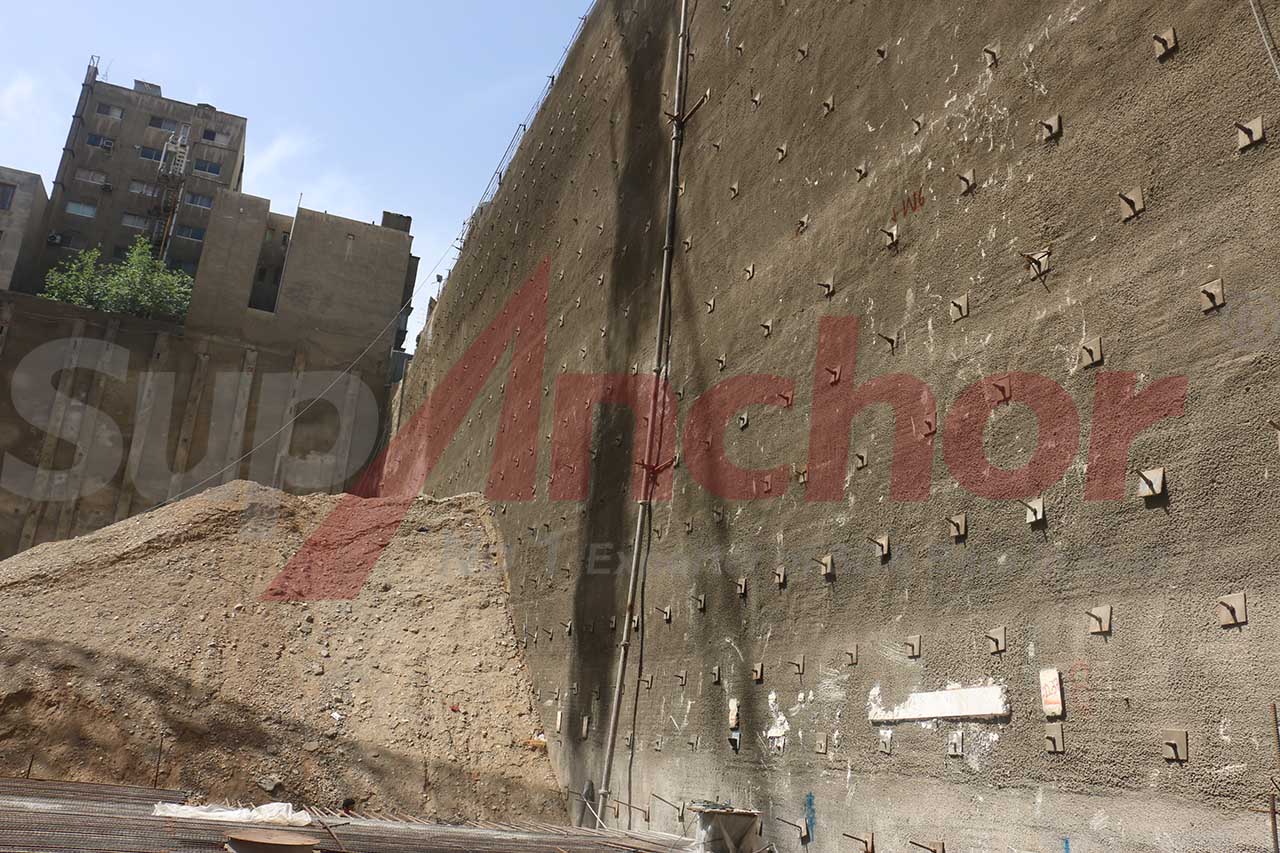
SupAnchor’s advanced products are widely trusted in demanding construction environments.
As infrastructure ages and coastal developments expand, the construction industry faces a persistent enemy: steel corrosion. Traditional steel rebar, while strong, succumbs to rust when exposed to chlorides, moisture, or aggressive soils, leading to spalling, costly repairs, and reduced service life. In response, SupAnchor, a leading manufacturer of geotechnical and structural reinforcement systems, has unveiled its new SupFRP® GFRP (Glass Fiber Reinforced Polymer) Reinforcement Rebar—a lightweight, corrosion-proof alternative engineered for long-term durability.
“Our clients demand solutions that not only perform today but also remain intact for decades with minimal maintenance,” said a SupAnchor spokesperson. “The GFRP rebar meets that need, especially in harsh environments where steel simply cannot survive.”
GFRP rebar is fabricated by pultruding high-strength glass fibers with a proprietary corrosion-resistant resin matrix. The result is a non-metallic bar that is completely immune to chloride attack, chemical corrosion, and electrochemical reactions—making it ideal for marine structures, seawalls, bridge decks, and industrial plants. The product also boasts a tensile strength of up to 1000 MPa, rivaling steel while weighing only a quarter as much. Its non-conductive and non-magnetic properties open doors to specialized applications such as MRI suites, electrical substations, and military installations.
Unlike steel, GFRP rebar can be factory-formed into custom shapes—bent, looped, or threaded—simplifying on-site handling and reducing labor costs. “The ability to customize shapes off-site means faster installation and fewer errors,” explained a project manager familiar with the product. “It’s a game-changer for precast elements and complex geometries.”
The SupFRP® GFRP rebar is available in diameters from 9 mm (Rebar size ReB-8) to 45 mm (ReB-40), covering a wide load spectrum. Key technical data for select sizes are summarized below:
| Size | Outside Diameter (mm)* | Guaranteed Tensile Load (kN) | Tensile Strength (MPa) | E-Modulus (GPa) | Weight (kg/m) |
|---|---|---|---|---|---|
| ReB-8 | 9 | 50.3 | 1000 | 50 | 0.125 |
| ReB-12 | 14 | 113 | 1000 | 50 | 0.28 |
| ReB-20 | 23 | 314 | 1000 | 50 | 0.79 |
| ReB-25 | 28 | 491 | 1000 | 50 | 1.20 |
| ReB-32 | 36 | 720 | 900 | 50 | 2.00 |
*Outside diameter includes the waved thread structure, which enhances mechanical interlock with concrete.
The modulus of elasticity, at 50 GPa, is approximately a quarter that of steel. While this means GFRP exhibits greater deflection under equal loads, engineers can design accordingly to exploit its unique stress-strain behavior. The guaranteed ultimate strain of 2% is consistent across all sizes, ensuring ductile failure modes when properly designed. Importantly, GFRP does not yield; it behaves linear-elastically to failure, simplifying long-term deflection calculations.
SupAnchor’s GFRP rebar is already being specified in a diverse array of projects. In soft-eye excavation for tunneling, where temporary walls must be easily cut by tunnel boring machines, the material’s easy cuttability and non-metallic nature eliminate the risk of damaging cutter heads. For seawalls and port aprons, permanent corrosion resistance translates to 100-year design lives. In bridge decks, GFRP rebar is used to prevent premature deterioration from de-icing salts, a chronic problem in cold regions.
The rebar’s non-conductivity also makes it a preferred choice for railway and electrical infrastructure, where stray currents can accelerate steel corrosion. “We are seeing interest from high-speed rail projects and renewable energy plants, where any metallic interference must be avoided,” noted a SupAnchor engineer.
Despite the differences from steel, GFRP rebar does not require radical changes in site practice. It can be cut with diamond or carbide blades, and its light weight reduces manual handling injuries. SupAnchor offers custom prefabrication services: bent stirrups, cages, and threaded bars are delivered ready to install, minimizing on-site labor. The waved thread surface provides excellent bond to concrete, matching or exceeding steel rebar in pull-out tests.
As a geotechnical reinforcement system, GFRP rebar complements SupAnchor’s existing portfolio of self drilling anchor bolts and hollow bar anchors. “Whether a project needs a permanent soil nail system or a sacrificial tunnel eye, our product range covers both metallic and non-metallic needs,” the company states. Indeed, the same engineering team that developed the well-known self drilling anchor system applied its bonding expertise to the rebar surface, resulting in an optimal mechanical interlock.
With global infrastructure spending projected to exceed $4 trillion annually by 2030, and with an increasing emphasis on sustainability and life-cycle cost, the non-corrosive reinforcement market is poised for exponential growth. GFRP rebar not only extends service life but also reduces the carbon footprint associated with steel production and repeated repairs. Specialized applications such as MRI rooms, toll plazas, and data centers further broaden its appeal.
Regions like the Middle East, where high chloride content in groundwater attacks steel aggressively, have already become early adopters. In North America and Europe, revisions to building codes are increasingly accommodating GFRP, spurred by organizations like ACI (American Concrete Institute) and fib (International Federation for Structural Concrete).
SupAnchor has built a reputation as a ground anchor bolt factory and soil nail system manufacturer that consistently delivers innovative solutions. Holding ISO 9001, ISO 14001, and ISO 45001 certifications, the company ensures quality, environmental stewardship, and occupational safety. Its central R&D facility continuously tests new composites and bonding technologies, and in-house production lines are capable of rapid customization.
“Our collaborative approach means we often work alongside design engineers from the concept stage, tailoring reinforcement layouts and material specifications to the specific geology and structural demands,” said the R&D director. This philosophy has earned SupAnchor a place on landmark projects across more than 40 countries.
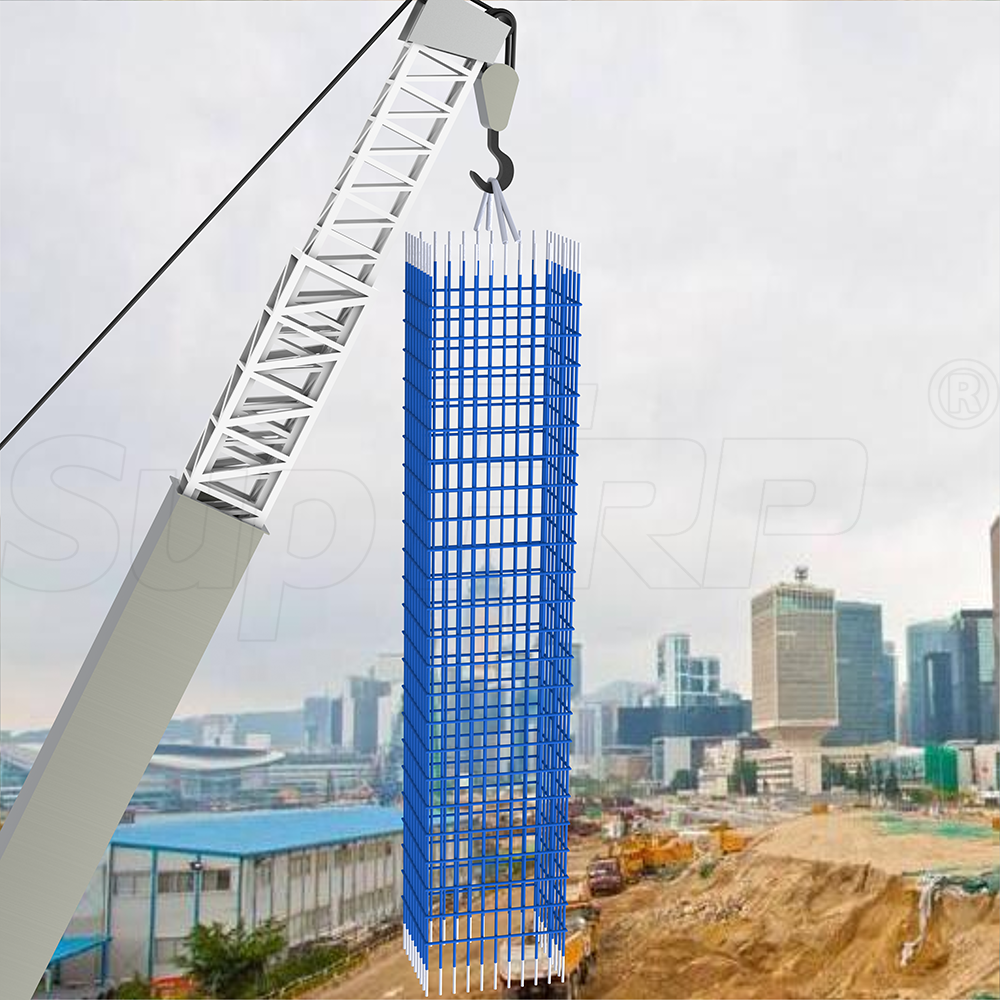
The SupFRP® GFRP rebar features a waved thread surface for superior concrete bonding.
The launch of GFRP rebar reaffirms SupAnchor’s commitment to providing complete geotechnical reinforcement systems. Clients can now source high-performance self drilling anchor bolts for temporary works and GFRP rebars for permanent, maintenance-free structures from a single, trusted supplier. This integration simplifies procurement and technical support on complex jobsites.
Pilot projects using GFRP rebar in deep foundation cages and coastal revetments are already underway. Early data indicate a 30% reduction in installation time compared to epoxy-coated steel, thanks to lighter handling. As the industry moves toward digitalization, SupAnchor is exploring sensor-embedded smart GFRP rebars that could monitor strain and corrosion in real time—a feature that would be impossible with traditional steel.
For contractors and consultants seeking a future-proof alternative to steel, SupAnchor’s GFRP rebar represents a timely and technically robust solution. With its blend of high tensile strength, corrosion immunity, and design flexibility, the product is set to become a staple in sustainable construction worldwide.
SupAnchor's self drilling anchor system deployed on an Alpine slope stabilization project, showcasing efficient installation and high-performance geotechnical reinforcement in challenging conditions.
SupAnchor's Grade 75 self-drilling hollow anchor bars deliver ASTM A615 performance, continuous T-thread bonding, and proven reliability for hydropower slope stabilization projects.
SupAnchor's self drilling anchor system deployed on an Alpine highway slope stabilization project, enabling fast drilling and grouting in fractured rock while meeting strict safety and environmental standards.
SupAnchor launches a corrosion-resistant GFRP friction bolt, offering lightweight, spark-free ground support for tunneling and mining.
SupAnchor's self drilling anchor system demonstrates superior performance in a challenging slope stabilization project, ensuring safety and efficiency.