
As global infrastructure ages and environmental challenges intensify, engineers are increasingly seeking materials that can withstand aggressive conditions without compromising structural integrity. SupAnchor, a leading manufacturer of advanced construction solutions, has responded with its SupFRP® GFRP Reinforcement Rebar—a high-performance alternative to traditional steel reinforcement for concrete applications. Developed with high-quality corrosion-resistant resin and fiberglass, this innovative product is now available in a wide range of diameters and shapes, offering engineers unprecedented flexibility in designing durable, low-maintenance structures.
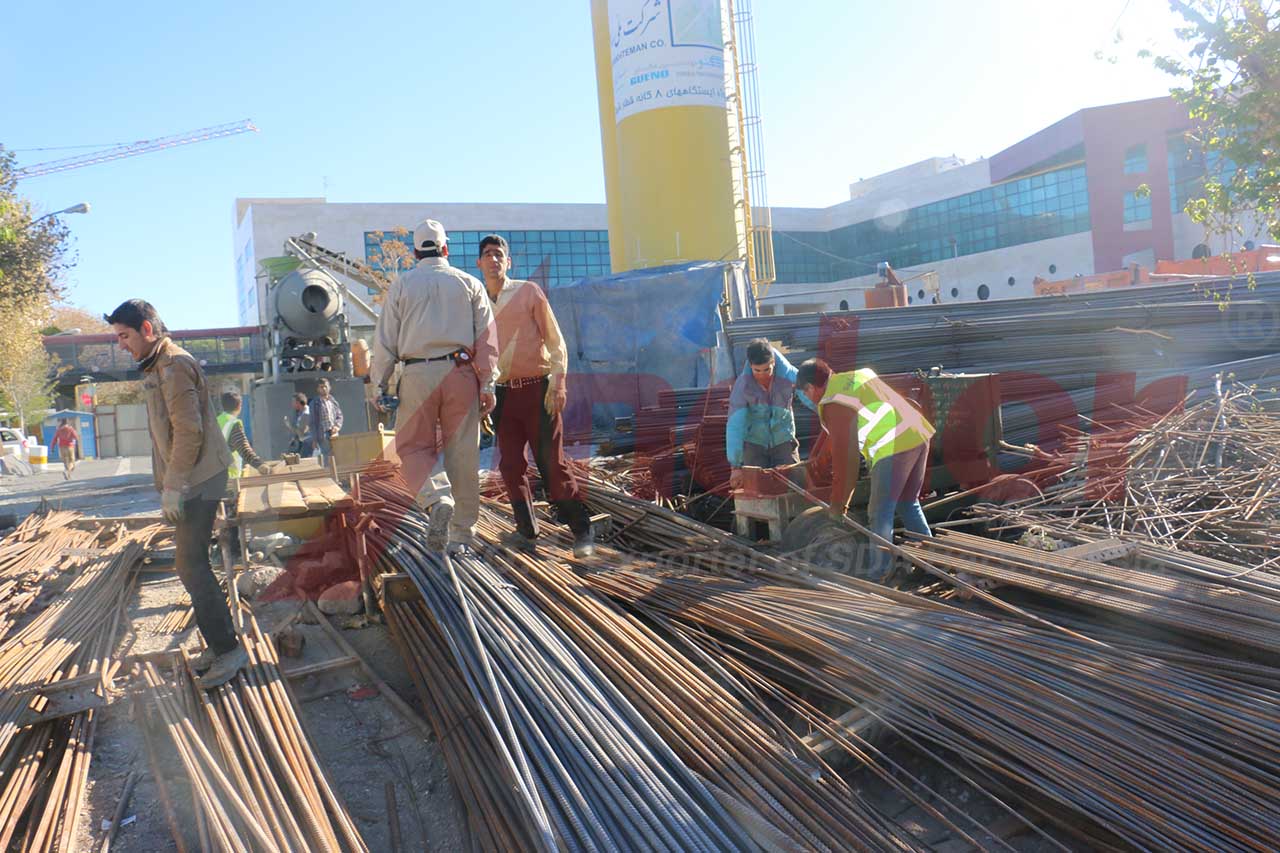
From marine environments to chemical plants, the GFRP rebar addresses the critical issue of steel corrosion, which costs billions annually in repair and replacement. With properties such as high tensile strength, non-conductivity, and non-magnetic behavior, SupAnchor's rebar is poised to become a cornerstone of modern geotechnical and structural engineering.
The SupFRP® GFRP Reinforcement Rebar is manufactured through a pultrusion process that ensures consistent quality and mechanical properties. Unlike steel, the rebar exhibits a linear elastic behavior up to failure, with an ultimate strain of 2% and a tensile modulus of 50 GPa across all diameters. This predictable response simplifies design calculations and improves structural safety.
Key technical specifications for selected sizes are summarized in the table below:
| Diameter (Nominal) | Outside Diameter (mm) | Guaranteed Tensile Load (kN) | Tensile Strength (MPa) | Weight (kg/m) |
|---|---|---|---|---|
| ReB-10 | 11.5 | 79 | 1000 | 0.2 |
| ReB-16 | 18 | 201 | 1000 | 0.50 |
| ReB-25 | 28 | 491 | 1000 | 1.20 |
| ReB-32 | 36 | 720 | 900 | 2.00 |
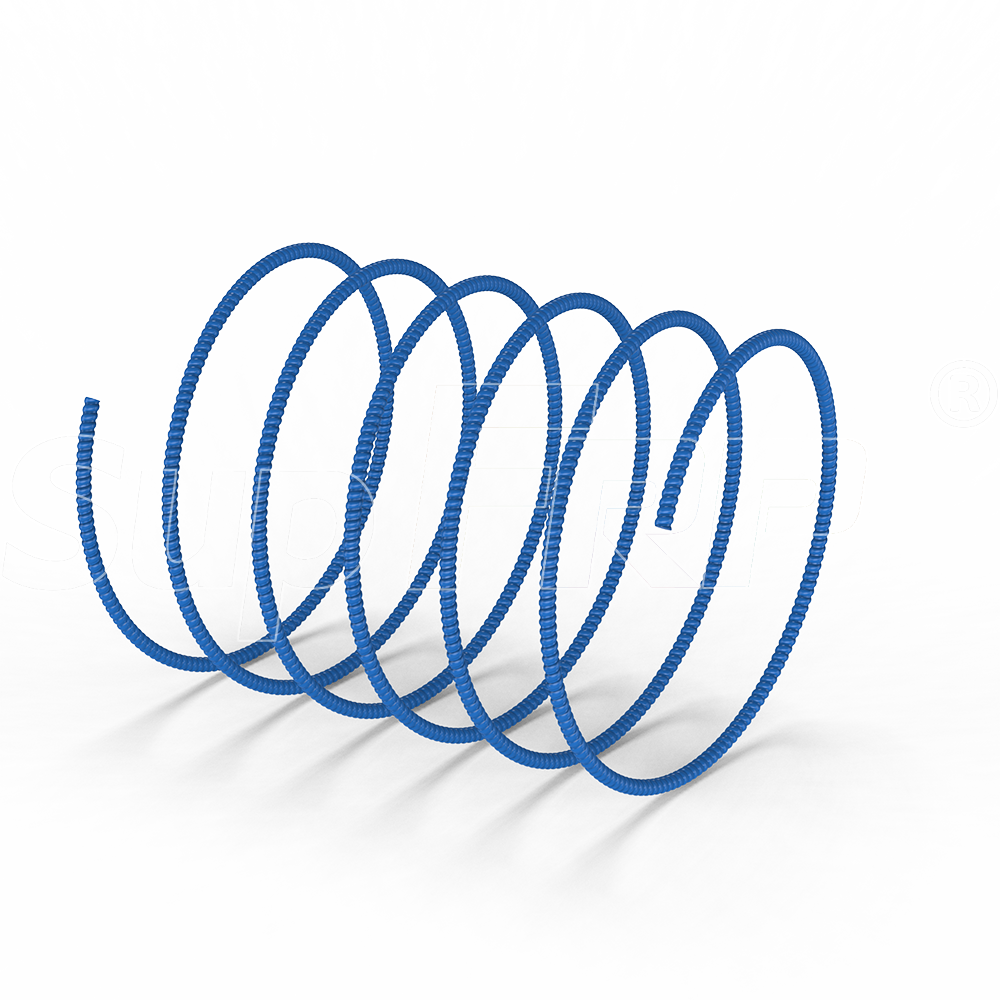
The rebar's waved thread structure enhances mechanical interlock with concrete, ensuring excellent bonding and load transfer. This feature, combined with a nominal cross-sectional area that matches the core characteristic stress value, guarantees reliable performance under tension. Additionally, the material is non-conductive and non-magnetic, making it ideal for applications near sensitive electronic equipment, MRI facilities, or railway tracks where stray currents can accelerate steel corrosion.
Moreover, the GFRP rebar is significantly lighter than steel—up to four times lighter for equivalent strength—reducing transportation costs and easing on-site handling. Its easy cutting characteristic allows for fast installation without special tools, further accelerating project timelines.
The versatility of SupFRP® GFRP Reinforcement Rebar makes it suitable for a broad spectrum of projects. In marine structures such as sea walls and port aprons, the rebar's high corrosion resistance eliminates the need for protective coatings or cathodic protection, drastically lowering lifecycle costs. For infrastructure including bridge decks and foundations, the rebar's durability ensures longevity even in chloride-rich environments or areas with de-icing salts.
Precast concrete manufacturers benefit from the rebar's consistent dimensions and light weight, enabling efficient production of elements like tunnel segments and retaining wall panels. Industrial plants, particularly those handling corrosive chemicals, can rely on GFRP rebar to maintain structural integrity without frequent maintenance shutdowns. Additionally, the rebar's non-magnetic nature is critical for magnetic resonance imaging (MRI) facilities, transformer vaults, and laboratories where electromagnetic interference must be avoided.
Soft-eye excavation projects, common in tunneling and underground construction, use GFRP rebar to create temporary openings that can be easily broken through by tunnel boring machines (TBMs). The rebar's low shear strength compared to steel allows for efficient cutting while maintaining sufficient tensile capacity during the temporary stage. This application demonstrates the product's adaptability to complex geotechnical reinforcement systems.
While SupAnchor is widely recognized for its self drilling anchor system and self drilling anchor bolt products used in slope stabilization and foundation support, the introduction of GFRP rebar expands the company's portfolio to address corrosion-related challenges across the construction industry. The same engineering rigor applied to hollow bar anchor and drill-and-grout bolt solutions is evident in the rebar's design, ensuring compatibility with existing concrete design codes and construction practices.
The global push toward sustainable infrastructure and reduced maintenance expenditures is driving demand for alternative reinforcement materials. Traditional steel rebar, while strong and cost-effective, is susceptible to corrosion when exposed to moisture, chlorides, or aggressive soils. The resulting concrete spalling and structural deterioration lead to costly repairs and, in severe cases, catastrophic failures. SupAnchor's GFRP rebar directly addresses this pain point by offering a maintenance-free service life exceeding 100 years in most environments.
From an economic perspective, the initial higher unit cost of GFRP rebar is offset by long-term savings in inspection, repair, and replacement. For public agencies managing bridges, tunnels, and marine assets, these savings are substantial. The material's light weight also reduces crane capacity requirements and labor fatigue, contributing to overall project efficiency and safety.
Furthermore, the rebar's environmental profile aligns with green building standards. Its production consumes less energy than steel manufacturing, and its extended lifespan reduces the need for resource-intensive rehabilitation. These factors position SupFRP® GFRP Reinforcement Rebar as a key enabler of resilient and sustainable infrastructure worldwide.
SupAnchor has built a reputation as a professional and innovative manufacturer of geotechnical and structural products. The company's state-of-the-art production facilities, certified to ISO 9001 and ISO 14001 standards, ensure that every batch of GFRP rebar meets rigorous quality benchmarks. Continuous research and development efforts focus on optimizing fiber placement, resin formulations, and surface geometries to enhance bond strength and long-term performance.
The firm's collaborative approach involves working closely with engineering firms, contractors, and research institutions to tailor solutions to specific project requirements. This customer-centric philosophy has earned SupAnchor trust in projects across Europe, North America, and Asia, ranging from high-speed rail tunnels to offshore wind farm foundations.
By introducing the SupFRP® GFRP Reinforcement Rebar, SupAnchor reaffirms its dedication to providing cutting-edge materials that solve real-world challenges. The product's combination of high tensile strength, corrosion resistance, and ease of use sets a new standard for concrete reinforcement in demanding environments.
SupAnchor's self-drilling anchor system is being used in a major European infrastructure project, addressing challenging ground conditions and ensuring long-term stability.
SupAnchor's new GFRP reinforcement rebar offers high tensile strength, corrosion resistance, and non-magnetic properties for concrete structures in harsh environments.
SupAnchor's hollow bar anchor technology provides reliable geotechnical reinforcement in a challenging slope stabilization project, highlighting industry trends in ground stabilization.
SupAnchor introduces SupUTS self-drilling hollow anchor series with ultimate loads up to 930 kN, corrosion protection options, and 3-in-1 installation for heavy-duty geotechnical projects.
SupAnchor's self drilling anchor system was deployed on a challenging highway slope stabilization project, overcoming difficult geological conditions and ensuring long-term geotechnical safety.