In a recent infrastructure development in central Europe, a critical highway expansion project faced severe geotechnical challenges. The project required stabilization of steep cut slopes composed of highly weathered rock and loose overburden, conditions that threatened both construction safety and long-term roadway integrity. To address these issues, the project team selected SupAnchor's advanced self drilling anchor system, a proven geotechnical reinforcement system designed for difficult ground conditions.
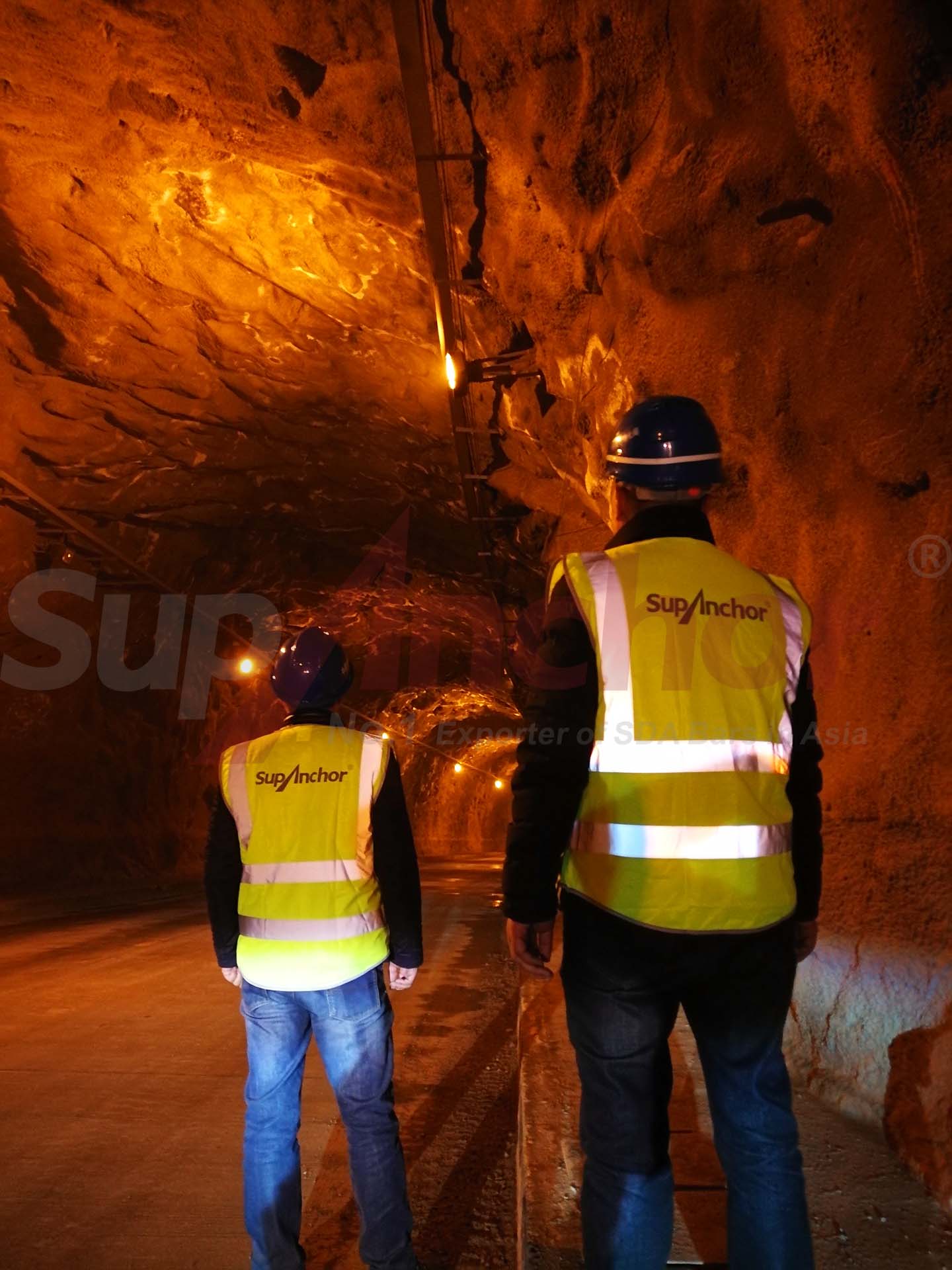
The deployment underscores the growing reliance on drill-and-grout bolt technology for efficient ground stabilization anchor systems in civil engineering projects. As infrastructure budgets expand and geological complexities increase, the need for reliable, fast, and cost-effective anchoring solutions has never been greater. SupAnchor's response demonstrates how modern engineering can overcome nature's obstacles while adhering to strict safety and environmental standards.
The highway widening project, part of a national transportation corridor upgrade, included a 2.5-kilometer section traversing a hilly terrain with complex geology. Site investigations revealed a shallow layer of colluvial deposits over heavily fractured shale and sandstone, with significant groundwater seepage. The slope angles ranged from 45 to 70 degrees, and the presence of fault zones and variable weathering depths created a patchwork of ground conditions that defied simple engineering solutions. Conventional rock bolts and soil nails were deemed inadequate due to hole collapse in the loose overburden and difficulty in achieving proper grout encapsulation in the fractured rock. Furthermore, the project's location near a protected watershed imposed strict limits on drilling fluid discharge and vibration, ruling out methods that required extensive casing or heavy percussion.
Engineers needed a solution that could combine drilling, anchoring, and grouting in a single operation, eliminating the need for casing and reducing installation time. The self drilling anchor for retaining walls emerged as the optimal choice, offering immediate support and high load capacity in unstable ground. The self drilling anchor bolt, with its hollow core and sacrificial drill bit, allowed for continuous drilling and pressure grouting, effectively stabilizing the borehole as it advanced. This method not only prevented collapse but also improved the surrounding ground through grout permeation, enhancing the overall factor of safety.
The project's geotechnical report highlighted risks of slope failure during excavation, which could delay construction and pose safety hazards. By specifying a hollow bar anchor system, the design team aimed to achieve reliable ground reinforcement while minimizing disturbance to the surrounding environment. The use of a ground stabilization anchor system was also seen as a sustainable choice, reducing spoil volume and equipment footprint compared to traditional anchored retaining walls.
At the construction site, crews deployed crawler-mounted drilling rigs equipped with rotary-percussive heads. The SupAnchor self drilling anchor bolt was installed using a one-step process: the hollow steel bar, fitted with a sacrificial drill bit, was drilled into the slope without a casing. As drilling progressed, cement grout was injected through the hollow core under pressure, filling the annular space and bonding the bar to the surrounding ground. This method proved particularly effective in the fractured rock, where the grout permeated cracks and improved the overall ground mass. Workers in the image can be seen monitoring the drilling alignment and grout flow, ensuring that each anchor met the specified inclination and depth. The construction site image showcases the rugged terrain and the heavy machinery employed, highlighting the project's scale and the necessity for robust anchoring technology.
The table below summarizes the key technical parameters of the SDA bolt factory direct supply products used in this project:
| Parameter | Specification |
|---|---|
| Nominal Diameter | 32 mm, 38 mm, 51 mm (R32, R38, R51) |
| Ultimate Tensile Strength | ≥ 500 MPa (depending on steel grade) |
| Yield Strength | ≥ 400 MPa |
| Elongation | ≥ 16% |
| Thread Type | Rope thread (ISO 10208 compliant) |
| Standard Length | 2 m, 3 m, 4 m, 6 m (custom up to 12 m with couplers) |
| Corrosion Protection | Hot-dip galvanized, epoxy coating, or duplex system |
| Drill Bit Type | Cross-cut or button bit, sacrificial, available for various ground conditions |
These specifications were selected to meet the project's design load requirements, which demanded anchor capacities up to 300 kN per bar. The high tensile strength and ductility ensured that the anchors could accommodate ground movement without brittle failure. The corrosion protection options were evaluated based on the site's aggressive groundwater chemistry, with a duplex system chosen for long-term durability. Additionally, the micropile hollow bar anchor variant was used in areas where higher load transfer was required, such as at the toe of the slope where passive resistance was limited.
During the project, the installation rate averaged 15 to 20 anchors per day per rig, significantly outpacing conventional methods. This efficiency was crucial in meeting the project's tight timeline, especially given the limited working season due to winter weather. The self drilling bolt for civil engineering applications proved its worth by allowing work to continue even in moderately adverse conditions, where traditional drilling would have been halted by hole instability.
The successful application of this ground stabilization anchor system reflects broader trends in the global geotechnical engineering sector. As governments worldwide invest heavily in infrastructure renewal and expansion, particularly in transportation and energy, the demand for reliable and efficient slope stabilization and foundation support solutions continues to grow. The self drilling anchor bolt technology addresses key industry pain points, including installation speed, worker safety, and performance in difficult ground conditions. In Europe and North America, aging highway networks require upgrades that often involve widening cuts and constructing retaining structures. Traditional methods such as driven piles or cast-in-place anchors are increasingly being supplemented or replaced by hollow bar anchors and micropile hollow bar anchor systems, which offer greater flexibility and lower environmental impact.
The drill-and-grout bolt methodology reduces spoil generation and noise, making it suitable for projects near residential areas or environmentally sensitive zones. Regulatory frameworks, such as the European Union's Construction Products Regulation and various national codes, now recognize the benefits of self drilling systems, facilitating their adoption in public works. Furthermore, the mining sector continues to rely on rock bolt for underground mining applications, where self drilling systems enhance safety and productivity in tunneling and shaft construction. The ability of these anchors to be installed in a single pass reduces exposure of workers to hazardous ground conditions, a critical factor in deep mining operations.
As a leading soil nail system manufacturer, SupAnchor has positioned itself at the forefront of this technology, supplying anchor bolt system for geotechnical engineering projects across more than 40 countries. The company's products have been used in landmark projects, including high-speed rail tunnels in the Alps, dam stabilization in Southeast Asia, and metro systems in the Middle East. This global footprint not only demonstrates the versatility of the self drilling anchor system but also contributes to the standardization of quality and performance benchmarks worldwide.
Moreover, the trend toward performance-based design and digital construction is driving innovation in anchoring technology. Real-time monitoring of grout pressure and anchor load, integrated with Building Information Modeling (BIM), allows for more precise quality control and predictive maintenance. SupAnchor is actively engaged in research to embed sensors within the hollow bar, providing data on stress distribution and corrosion potential. Such advancements will further cement the role of self drilling anchors in the future of geotechnical engineering.
SupAnchor, a professional ground anchor bolt factory with ISO 9001, ISO 14001, and OHSAS 18001 certifications, has built a reputation for delivering high-quality geotechnical products. The company's self drilling bolt for civil engineering applications is manufactured under strict quality control, with each batch tested for mechanical properties and dimensional accuracy. The factory direct supply model enables competitive pricing and rapid delivery, which was critical for this project's tight schedule. Beyond product supply, SupAnchor provided on-site technical support, including installation training and grout mix design recommendations. This collaborative approach ensured that the self drilling anchor system performed as specified, and any adjustments were made promptly.
'Professional, Innovative, Collaborative' is not just a slogan but a guiding principle that has driven the company's success in challenging projects, from European highway slopes to Southeast Asian tunnels and South American mines. The company invests heavily in research and development, operating a state-of-the-art testing laboratory where new steel alloys, thread geometries, and corrosion protection systems are evaluated under simulated field conditions. This commitment to innovation has resulted in several patented technologies, including a unique thread profile that enhances load transfer and a duplex coating that extends service life in aggressive environments.

As the industry moves toward more sustainable and resilient infrastructure, the role of advanced anchorage systems like those from SupAnchor will only expand. The company continues to invest in research and development, exploring new steel alloys, improved thread designs, and smart monitoring capabilities for geotechnical reinforcement systems. With a global network of distributors and engineering partners, SupAnchor is well-equipped to meet the evolving needs of civil engineering and mining projects worldwide. The success of this European highway project is yet another testament to the reliability and efficiency of SupAnchor's self drilling anchor system, and the company remains dedicated to providing solutions that build a safer, more connected world.
SupAnchor's self drilling anchor system successfully addressed challenging weathered rock conditions in a European highway slope stabilization project, demonstrating high efficiency and reliability.
SupAnchor launches high-performance GFRP reinforcement rebar with high corrosion resistance, tensile strength up to 1000 MPa, and wide applications in bridges, seawalls, and precast elements.
A new ground stabilization project in rugged terrain highlights the efficiency and reliability of SupAnchor's self drilling anchor bolt system, designed for complex geotechnical conditions.
SupAnchor introduces a stainless steel self-drilling hollow anchor, offering superior corrosion resistance and high load capacity for coastal, marine, and industrial geotechnical reinforcement projects.
SupAnchor's self drilling anchor system proves critical in stabilizing slopes and foundations on a major construction site, showcasing advanced geotechnical reinforcement technology.