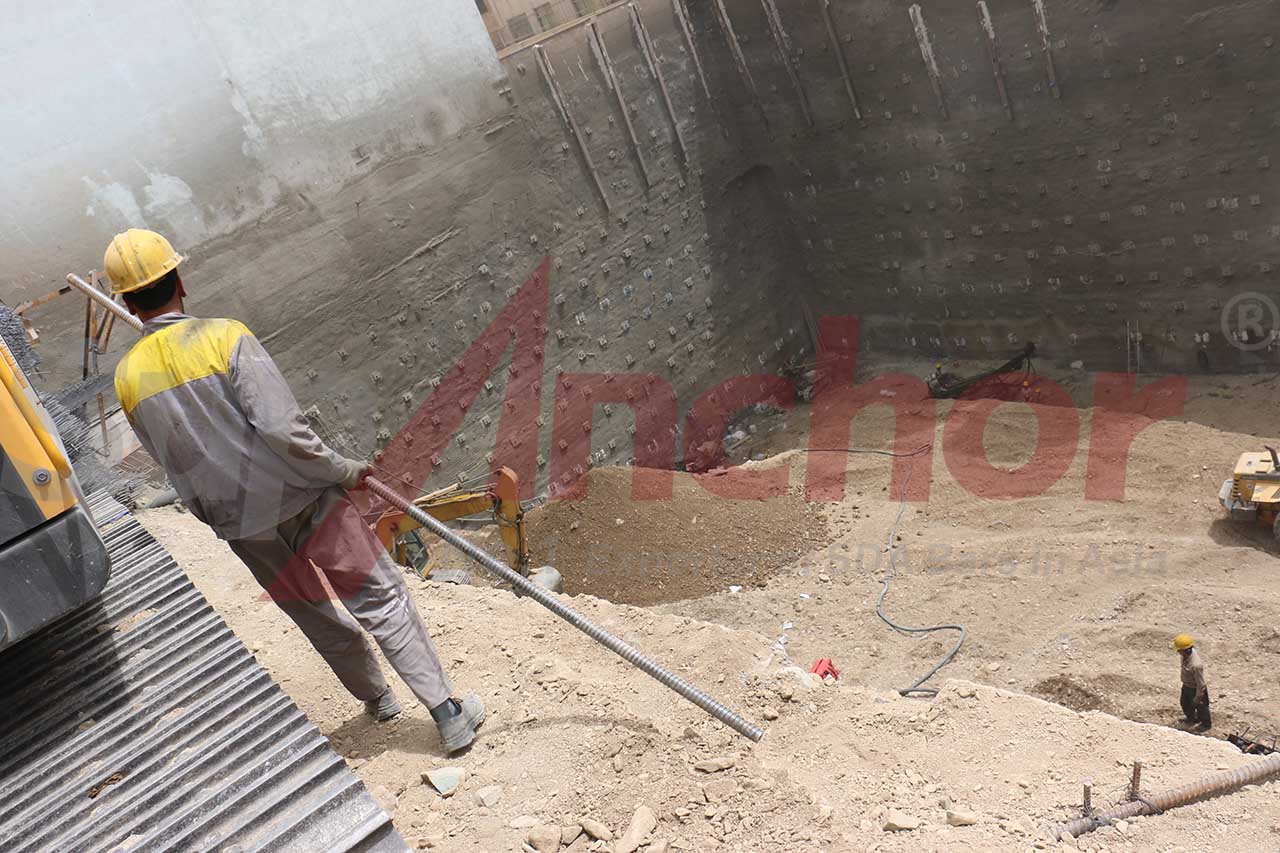
In a major European infrastructure project, where aggressive groundwater and tight construction schedules demanded a formwork tie system that could remain permanently embedded without compromising structural integrity, SupAnchor's SupFRP® GFRP Tie Rod has emerged as a game-changing solution. Traditional steel tie rods, while widely used, require extraction after concrete curing, a process that adds labor costs, extends cycle times, and leaves behind holes that must be patched. In corrosive environments, any residual steel can become a pathway for chloride attack, leading to premature deterioration. The SupFRP® GFRP Tie Rod addresses these challenges head-on by offering a permanent, corrosion-resistant, and high-strength alternative that eliminates the need for removal while maintaining compatibility with standard formwork accessories.
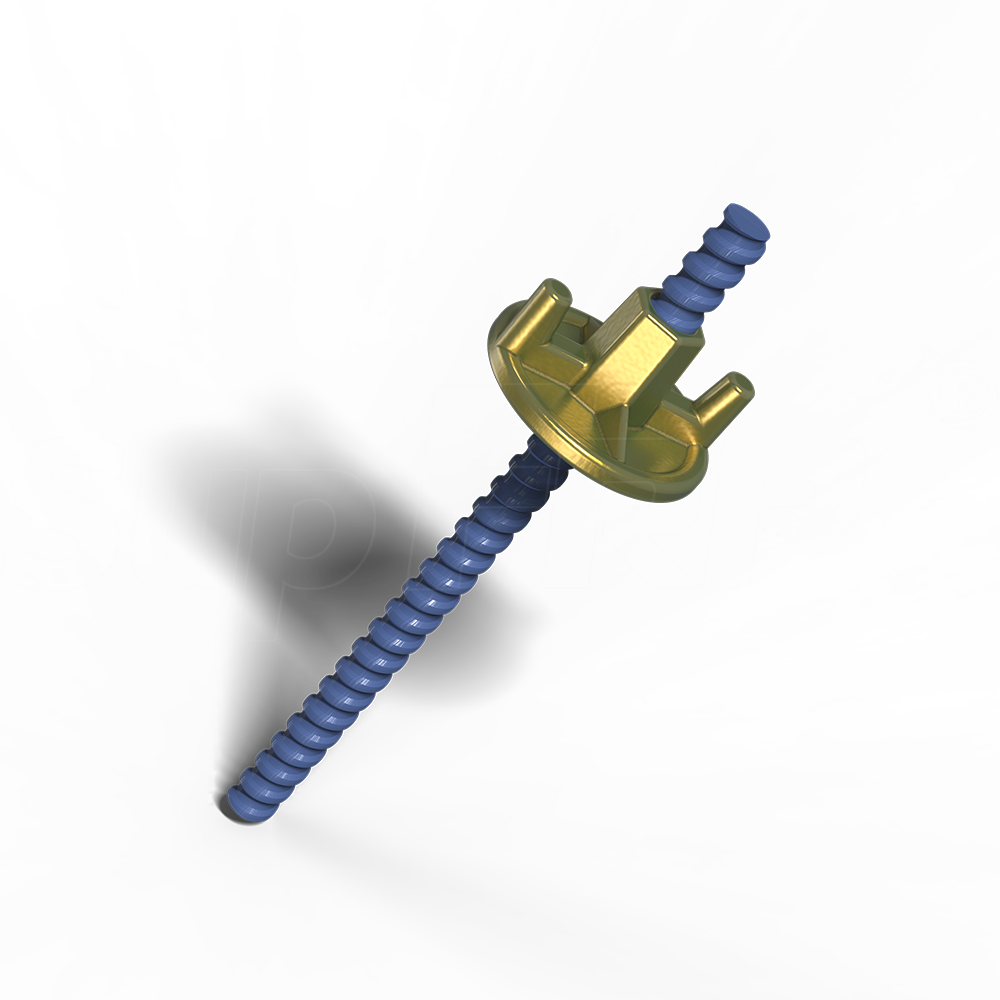
Developed by SupAnchor, a globally recognized manufacturer of geotechnical reinforcement systems, the SupFRP® GFRP Tie Rod is manufactured in accordance with the thread profile of standard steel rods. This design allows contractors to use existing couplers, nuts, and plates without modification. The rod's advanced glass fiber reinforced polymer composition provides high corrosion resistance, high strength, cuttability, and non-conductive/non-magnetic properties, making it suitable for a wide range of formwork applications in challenging environments.
In formwork construction, tie rods must withstand the hydrostatic pressure of wet concrete while maintaining precise dimensional control. The SupFRP® GFRP Tie Rod is engineered with a waved thread structure that enhances mechanical interlock with the concrete, resulting in excellent bond force and high end loading capacity. Two standard models, T15/130 and T20/250, cover most formwork requirements, with guaranteed tensile loads of 130 kN and 250 kN respectively. The table below summarizes key technical data.
| Technical Parameter | T15/130 | T20/250 |
|---|---|---|
| Outside Diameter (mm) *1 | 17 (Including Waved Thread Structure) | 22 (Including Waved Thread Structure) |
| Nominal Cross sectional area (mm²) *2 | 130 (Characteristic Stress Value in core) | 250 (Characteristic Stress Value in core) |
| Guaranteed tensile load (kN) | 130 | 250 |
| Tensile E-Modulus (GPa) | 45 | 45 |
| Ultimate Strain | 2.0% | 2.0% |
| Weight (kg/m) | 0.37 | 0.71 |
| Length options (m) | 2, 3, 4, 5, 6, 7, 8, 9, 10, 11 | |
*1 Outside diameter includes waved thread structure. *2 Nominal cross sectional area refers to characteristic stress value in core. The data shown applies to standard production lengths.
The T15/130 model weighs only 0.37 kg per meter, less than one-third the weight of an equivalent steel tie rod, while delivering a guaranteed tensile load of 130 kN. This high strength-to-weight ratio translates into easier handling, reduced worker fatigue, and lower transportation costs. The T20/250 model offers a higher capacity of 250 kN for larger or deeper formwork sections. Both models feature a tensile E-modulus of 45 GPa and an ultimate strain of 2.0%, providing predictable elongation behavior that helps engineers control formwork deflection during concrete placement.
Unlike steel, the GFRP material is inherently non-conductive and non-magnetic. This property is particularly valuable in projects near high-voltage power lines, railway electrification systems, or sensitive electronic equipment, where induced currents or magnetic interference could pose safety risks or affect equipment performance. The waved thread structure enhances the bond between the tie rod and the surrounding concrete, ensuring that the embedded rod acts as a permanent reinforcement element rather than merely a temporary spacer.
The SupFRP® GFRP Tie Rod is designed for all formwork applications, but it delivers exceptional value in scenarios where permanent embedment is beneficial or where harsh environments accelerate steel corrosion. Typical use cases include high-rise building foundations, bridge piers, tunnel linings, water treatment plants, marine structures, and industrial facilities exposed to chemicals. In these settings, removing steel tie rods is not only labor-intensive but also risks damaging the concrete surface. The GFRP tie rod can be cut flush with the concrete surface after curing, leaving a clean, corrosion-proof termination that requires no patching or sealing.
One of the most significant advantages is the elimination of post-curing removal operations. On a large project with thousands of tie rods, the labor and equipment costs associated with extraction, as well as the subsequent repair of tie rod holes, can be substantial. By leaving the GFRP tie rod in place, contractors accelerate the construction cycle and reduce overall project costs. Additionally, the compatibility with standard steel rod threading means that contractors do not need to invest in new accessories or retrain workers, further simplifying adoption.
In projects where SupAnchor's self drilling anchor system or self drilling anchor bolt is used for initial ground support, the SupFRP® GFRP Tie Rod can be integrated as part of a comprehensive geotechnical reinforcement system. For example, a deep excavation may be stabilized with self drilling anchors, while the subsequent concrete lining formwork uses GFRP tie rods that remain permanently embedded. This integration streamlines the transition from ground improvement to structural construction, reducing interfaces and potential points of failure. Traditional hollow bar anchor and drill-and-grout bolt solutions, while effective for temporary support, often require separate handling and removal procedures that the GFRP tie rod avoids entirely.
From an industry perspective, the demand for durable, low-maintenance construction materials is growing as infrastructure owners seek to extend service life and reduce lifecycle costs. Corrosion of steel reinforcement is a leading cause of concrete deterioration worldwide, costing billions annually in repairs. The SupFRP® GFRP Tie Rod directly addresses this issue by providing a permanent, non-corroding formwork tie that contributes to the long-term durability of the structure. Its high end loading capacity and good bond force ensure that the embedded tie rod does not create weak planes or stress concentrations, maintaining structural integrity.
SupAnchor has built a reputation as a professional and innovative manufacturer of ground engineering products, including self drilling anchor systems, hollow bar anchors, and drill-and-grout bolts. The company's commitment to research and development is evident in the SupFRP® GFRP Tie Rod, which combines advanced composite materials with practical formwork engineering. SupAnchor's facilities are ISO certified, and its products have been used in major infrastructure projects across Europe, the Americas, and Asia, demonstrating a collaborative approach to solving complex geotechnical challenges.
The SupFRP® GFRP Tie Rod is supported by a detailed application video available from SupAnchor, which demonstrates proper installation and highlights the product's key benefits. As global infrastructure investment continues to rise, particularly in urban transit, renewable energy, and water management, the need for efficient, durable formwork solutions will only grow. SupAnchor's SupFRP® GFRP Tie Rod is well positioned to meet this demand, offering a professional, innovative, and collaborative solution that enhances construction productivity while extending the service life of critical structures.
SupAnchor's self drilling anchor system deployed on an Alpine slope stabilization project, showcasing efficient installation and high-performance geotechnical reinforcement in challenging conditions.
SupAnchor's Grade 75 self-drilling hollow anchor bars deliver ASTM A615 performance, continuous T-thread bonding, and proven reliability for hydropower slope stabilization projects.
SupAnchor's self drilling anchor system deployed on an Alpine highway slope stabilization project, enabling fast drilling and grouting in fractured rock while meeting strict safety and environmental standards.
SupAnchor launches a corrosion-resistant GFRP friction bolt, offering lightweight, spark-free ground support for tunneling and mining.
SupAnchor's self drilling anchor system demonstrates superior performance in a challenging slope stabilization project, ensuring safety and efficiency.