
As Europe continues to modernize its transportation infrastructure, the expansion of the A12 Autobahn through the Austrian Alps has emerged as one of the most technically demanding projects in recent years. The 23‑kilometer stretch between Innsbruck and the Italian border traverses steep, unstable slopes composed of highly fractured schist and limestone, interspersed with loose overburden. Traditional anchoring methods proved inadequate during early test borings, as collapsing boreholes and difficult drilling conditions threatened both schedule and safety. The project's engineers sought a robust ground stabilization anchor system that could cope with the unpredictable geology while minimizing construction time and environmental disruption.
Given the remote location and stringent European environmental regulations, conventional anchored retaining walls were ruled out due to the extensive equipment and grouting logistics required. The steep gradients—often exceeding 60 degrees—made access challenging even for tracked rigs. Moreover, groundwater seepage through the fractured rock introduced the risk of internal erosion behind any installed reinforcement. After a comprehensive review, the design‑build consortium selected a self drilling anchor system as the core solution, leveraging its ability to drill and grout in a single pass without the need for temporary casing.
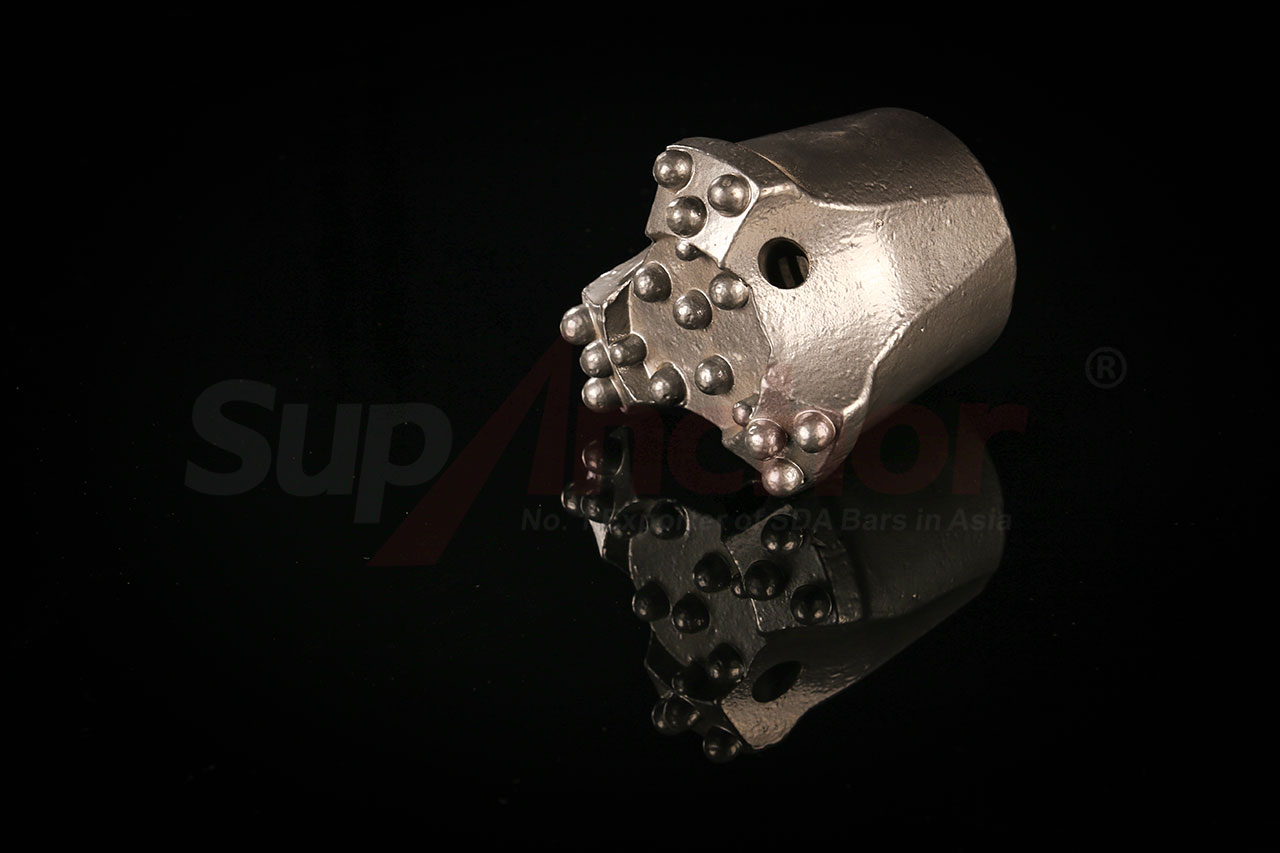
Deployment of the self drilling anchor bolt began in late spring, shortly after snowmelt exposed the most critical cut slopes. Working from narrow benches carved into the mountainside, crews used compact hydraulic drilling rigs equipped with rotary‑percussive heads. The hollow bar anchor served as both drill rod and permanent tendon, eliminating the classic risk of hole collapse during extraction of the drill steel. This drill-and-grout bolt technique proved especially advantageous in the highly fractured zones, where open joints and voids would have swallowed conventional cement grout before it could form a competent bond.
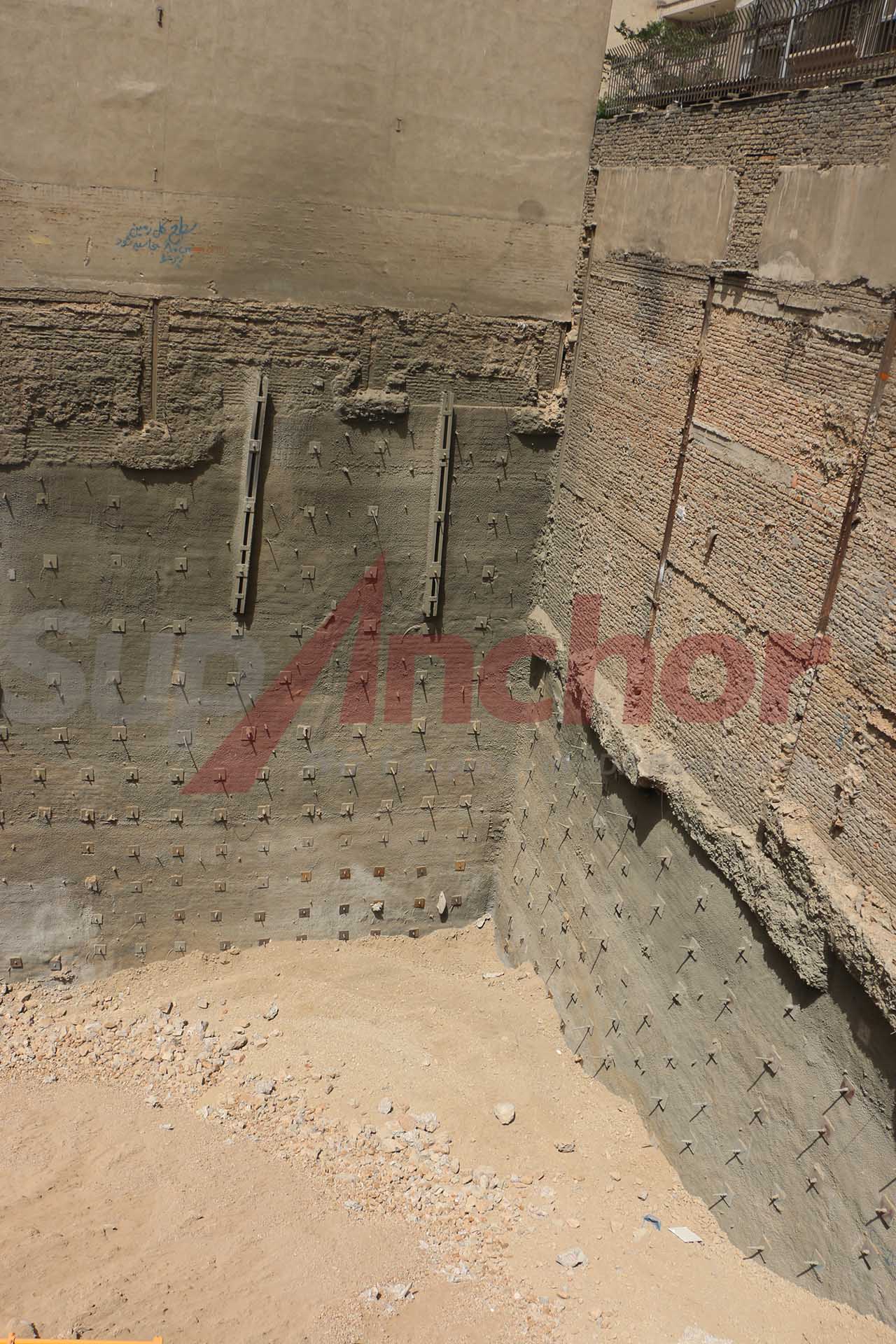
As shown in the site photograph, the anchors were installed in 15‑ to 20‑metre lengths, with drill bits selected to match the rock hardness. Immediately after reaching the design depth, cementitious grout was injected through the hollow core, filling the annulus and permeating the surrounding rock mass. The entire installation sequence for a single anchor—drilling, grouting, and pre‑tensioning—was completed in under 30 minutes, a fraction of the time required by traditional methods. This efficiency allowed the contractor to install up to 80 anchors per day across multiple work fronts, keeping the project on its aggressive 18‑month schedule.
The anchors supplied by SupAnchor were engineered to meet the project's rigorous performance specifications. The table below summarizes key parameters of the geotechnical reinforcement system deployed on site.
| Parameter | Value |
|---|---|
| Anchor type | Self‑drilling hollow bar with sacrificial drill bit |
| Nominal diameter | 32 mm (R32 thread) |
| Ultimate tensile strength | ≥ 700 MPa |
| Yield load | 280 kN |
| Corrosion protection | Hot‑dip galvanized to EN ISO 1461 + sacrificial anode rings in aggressive zones |
| Grout bond strength | > 2 MPa (rock‑grout interface) |
| Installation rate | 0.5–2 m/min, depending on rock hardness |
The high tensile strength of the bars ensured ample safety margins, even where localised rock falls imposed sudden dynamic loads. The hot‑dip galvanizing, complemented by sacrificial anodes in sections with aggressive groundwater, provides a 100‑year service life, meeting the client’s durability requirements. The R32 thread profile enabled rapid coupling of 3‑metre segments, reducing handling time and allowing the anchors to be tailored to the exact depth of the failure plane—often identified only during drilling.
A critical advantage of this soil nail system manufacturer approach was the ability to proof‑test every anchor immediately after installation. Portable hydraulic jacks applied a test load of 1.3 times the working load, confirming that the anchor bolt system for geotechnical engineering performed as designed. Less than 2% of the 4,200 anchors required re‑tensioning, and none failed structurally—a testament to the quality control at the ground anchor bolt factory.
The successful application of the self drilling anchor system on the Alpine highway underscores a broader shift toward advanced geotechnical reinforcement system solutions in global infrastructure projects. As urbanisation and climate change impose new demands on transportation networks, engineers increasingly rely on self drilling bolt for civil engineering to address a widening range of challenges:
The Alpine project serves as a benchmark for future works. Its success demonstrates that a well‑designed anchor bolt system for geotechnical engineering can reduce construction time by up to 40% compared with traditional methods while enhancing long‑term safety. Independent monitoring stations have recorded less than 3 mm of cumulative slope movement since installation, well within the specified 10 mm threshold.
Behind the scenes, SDA bolt factory direct supply from SupAnchor played a crucial role in meeting the project’s tight timelines. The company’s ISO 9001‑certified manufacturing facility in China shipped over 65,000 metres of continuous thread hollow bar in six weeks, fully traceable from raw steel to final coating. With two decades of experience, SupAnchor has established itself as a premier soil nail system manufacturer and a trusted ground anchor bolt factory, exporting to more than 40 countries.
SupAnchor’s commitment to innovation is embodied in its integrated self drilling anchor system, which simplifies logistics by replacing separate drill rods, casings, and tendons with a single component. This “Professional, Innovative, Collaborative” ethos has earned the company a place in landmark projects, from high‑speed rail tunnels in Southeast Asia to hydro‑electric dam abutment stabilisation in South America. The modular design of the hollow bar anchor allows it to serve as a drill‑and‑grout bolt, micropile hollow bar anchor, or self drilling anchor for retaining walls, giving consultants the flexibility to adapt to unforeseen ground conditions without changing the approved materials list.
Looking ahead, the industry is poised to adopt digitally enabled geotechnical reinforcement system products, with embedded sensors that report strain and corrosion in real time. SupAnchor’s R&D team is already field‑testing a generation of smart hollow bars, reinforcing its position as the go‑to SDA bolt factory direct supply partner for complex, high‑stakes projects worldwide.
SupAnchor's self drilling anchor system deployed on an Alpine slope stabilization project, showcasing efficient installation and high-performance geotechnical reinforcement in challenging conditions.
SupAnchor's Grade 75 self-drilling hollow anchor bars deliver ASTM A615 performance, continuous T-thread bonding, and proven reliability for hydropower slope stabilization projects.
SupAnchor's self drilling anchor system deployed on an Alpine highway slope stabilization project, enabling fast drilling and grouting in fractured rock while meeting strict safety and environmental standards.
SupAnchor launches a corrosion-resistant GFRP friction bolt, offering lightweight, spark-free ground support for tunneling and mining.
SupAnchor's self drilling anchor system demonstrates superior performance in a challenging slope stabilization project, ensuring safety and efficiency.