In the dynamic world of infrastructure construction, the race to adopt smart, sustainable, and cost-effective solutions has never been more intense. Across demanding projects—from sprawling bridge decks and high-rise cores to intricate tunnel linings—formwork systems are the unsung backbone. Yet, traditional steel tie rods bring hidden burdens: post-construction removal, corrosion risks, and logistical headaches. SupAnchor, a global leader in geotechnical reinforcement systems, has answered these challenges with the launch of its innovative SupFRP® GFRP Tie Rod. Designed for permanent embedment in concrete structures, this glass-fiber-reinforced polymer tie rod is poised to redefine formwork practices worldwide, delivering unparalleled durability, ease of use, and long-term project value.
The SupFRP GFRP Tie Rod is engineered to match the thread profile of standard steel rods, ensuring seamless compatibility with existing accessories like wing nuts and external ties. This backward compatibility eliminates the need for contractors to invest in new hardware, accelerating adoption on sites already familiar with conventional formwork. Two core models, T15/130 and T20/250, cover a broad spectrum of load requirements, as detailed in the technical data below.
| Parameter | T15/130 | T20/250 |
|---|---|---|
| Outside Diameter (mm) | 17 (incl. waved thread) | 22 (incl. waved thread) |
| Nominal Cross-sectional Area (mm²) | 130 | 250 |
| Guaranteed Tensile Load (kN) | 130 | 250 |
| Tensile E-Modulus (GPa) | 45 | 45 |
| Ultimate Strain | 2.0% | 2.0% |
| Weight (kg/m) | 0.37 | 0.71 |
| Standard Lengths (m) | 2, 3, 4, 5, 6, 7, 8, 9, 10, 11 | 2, 3, 4, 5, 6, 7, 8, 9, 10, 11 |
The GFRP material offers a tensile E-modulus of 45 GPa, providing high stiffness while remaining lightweight—key for manual handling on congested jobsites. The guaranteed tensile loads of 130 kN and 250 kN satisfy demanding structural requirements for most formwork applications, from thin retaining walls to massive bridge piers. The waved thread structure enhances mechanical interlock with concrete, ensuring superior bond force and load transfer. Moreover, the tie rod remains permanently in the hardened concrete, eliminating the need for removal, grouting of holes, and patching, which slashes labor costs and accelerates construction timelines.
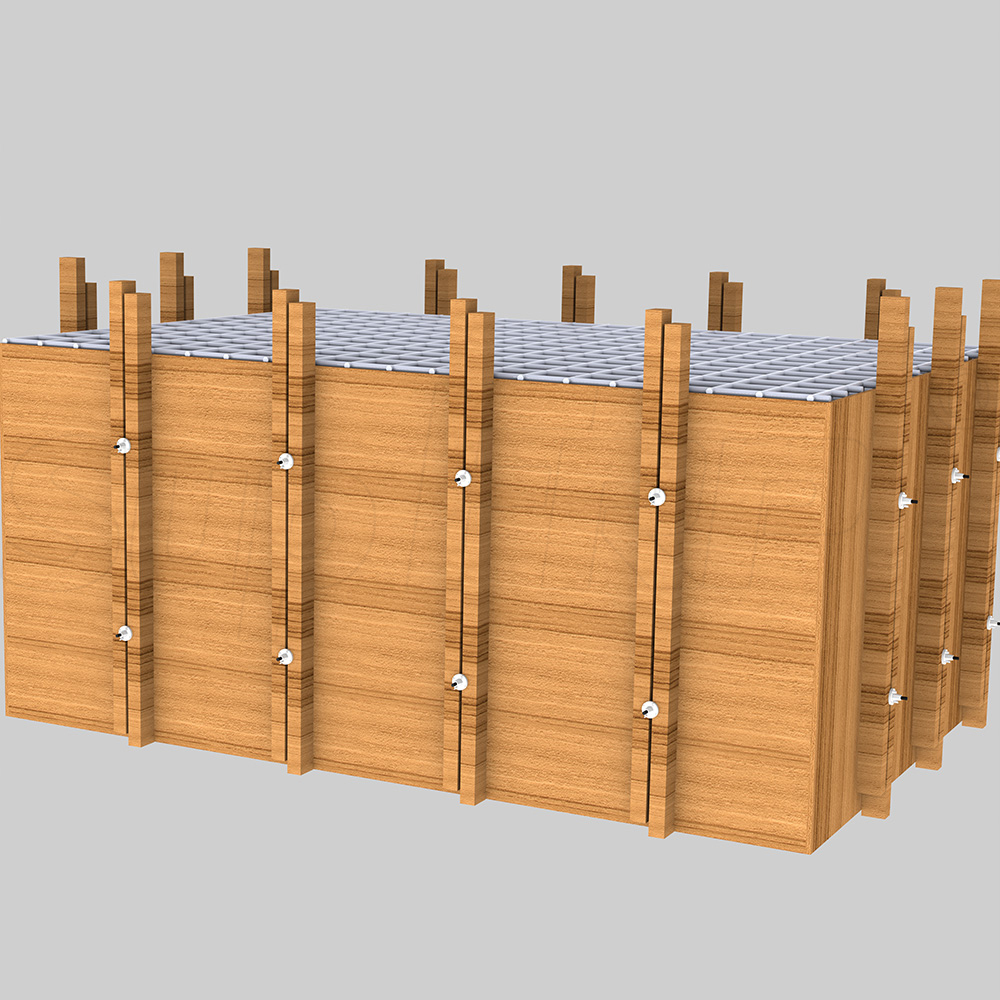
In formwork engineering, tie rods must resist lateral concrete pressure during pouring while being easy to install and remove. Traditionally, steel tie rods are extracted after curing, leaving behind voids that require sealing—a time-consuming and weather-dependent process. Steel rods are also susceptible to corrosion, especially in marine or chemically aggressive environments, which can compromise structural integrity over time. The SupFRP GFRP Tie Rod turns these pain points into advantages:
These features make the tie rod an excellent match for projects using hollow bar anchors or drill-and-grout bolts for ground support, as it complements the overall site safety regime. Whether for tunnel lining formwork, bridge deck falsework, or high-rise core walls, the GFRP tie rod offers a reliable, cost-effective alternative to steel.
The launch of the SupFRP GFRP Tie Rod comes at a time when the construction industry faces tightening regulations on sustainability and durability. In Europe, the push for carbon-neutral infrastructure favors materials with lower embodied energy and longer service lives. The GFRP rod’s permanent nature cuts waste, and its corrosion resistance aligns with the EU’s Construction Products Regulation (CPR) mandate for safety and reliability. In North America, the focus on resilient design in seismic zones benefits from the rod’s high strength-to-weight ratio and ductility characteristics.
From a market perspective, the global formwork market, valued at over $8 billion, is projected to grow steadily, driven by urbanization and megaprojects. The ability to save up to 30% on labor and material costs by eliminating removal and patching gives SupAnchor a compelling value proposition. Contractors can accelerate construction cycles, pass savings to clients, and improve project margins. Moreover, as a soil nail system manufacturer and ground anchor bolt factory, SupAnchor integrates its tie rod technology with a full suite of ground engineering products, offering a one-stop shop for geotechnical reinforcement needs.
With over two decades of expertise, SupAnchor has built a reputation for professional, innovative, and collaborative solutions. Its in-house R&D team continually refines materials and processes, backed by ISO 9001 and CE certifications that validate quality and performance. The SupFRP GFRP Tie Rod is a testament to the company’s commitment to solving real-world construction challenges. From the self drilling anchor bolt systems used in slope stabilization to the latest GFRP innovations, SupAnchor’s product range spans the full spectrum of ground and formwork engineering.
As global infrastructure demands intensify, SupAnchor’s focus on practical, high-performance products positions it as a trusted partner for tunneling, mining, and civil construction projects. The transition to non-metallic reinforcement is not just a trend but a strategic shift toward safer, faster, and more sustainable construction. With the SupFRP GFRP Tie Rod, the company is once again at the forefront, enabling engineers to build with confidence and efficiency.
For more details on the SupFRP GFRP Tie Rod and to watch the application video, visit SupAnchor’s official website or contact their technical support team.
SupAnchor's self drilling anchor system deployed on an Alpine slope stabilization project, showcasing efficient installation and high-performance geotechnical reinforcement in challenging conditions.
SupAnchor's Grade 75 self-drilling hollow anchor bars deliver ASTM A615 performance, continuous T-thread bonding, and proven reliability for hydropower slope stabilization projects.
SupAnchor's self drilling anchor system deployed on an Alpine highway slope stabilization project, enabling fast drilling and grouting in fractured rock while meeting strict safety and environmental standards.
SupAnchor launches a corrosion-resistant GFRP friction bolt, offering lightweight, spark-free ground support for tunneling and mining.
SupAnchor's self drilling anchor system demonstrates superior performance in a challenging slope stabilization project, ensuring safety and efficiency.