
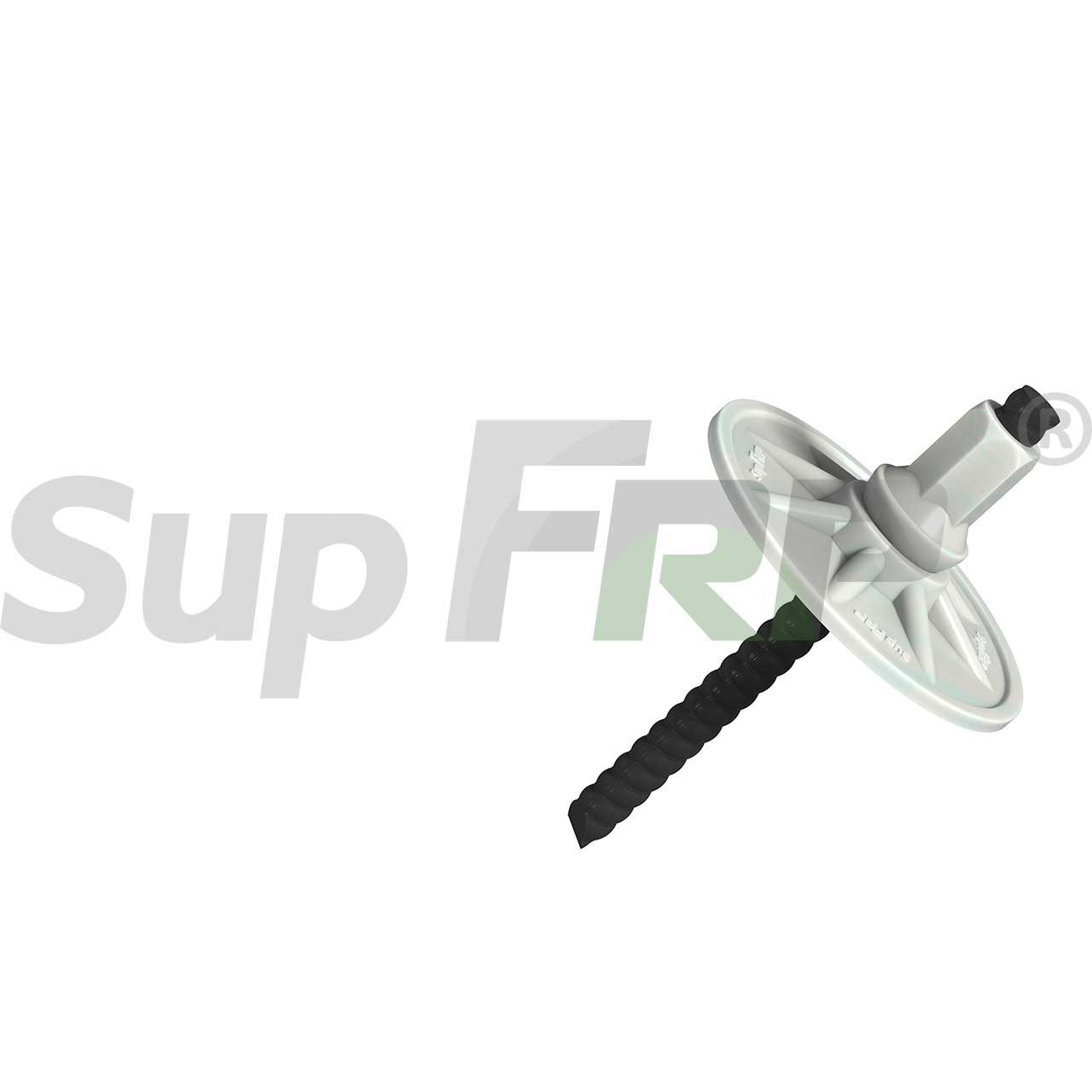
With global infrastructure projects increasingly encountering aggressive geological and chemical conditions, the demand for durable, low‑maintenance reinforcement solutions has never been higher. SupAnchor, a recognized soil nail system manufacturer and ground anchor bolt factory with a strong foothold in the geotechnical reinforcement system market, has answered this call with its latest innovation: the SupFRP® GFRP Solid Bolt. This newly launched product represents a paradigm shift from conventional steel anchors and even from typical hollow injection bolts, offering a solid‑profile, glassfiber‑reinforced polymer alternative that excels in corrosive, humid, or electromagnetically sensitive environments. The bolt’s introduction comes at a time when mining regulators and civil authorities worldwide are tightening durability standards to reduce lifecycle costs and improve safety.
Developed through three years of R&D and tested in real‑world mining, tunneling, and slope stabilization projects, the GFRP Solid Bolt retains the inherent benefits of glassfiber composites—lightweight, non‑conductive, and impervious to rust—while delivering the robust load‑bearing capacity demanded by modern geotechnical engineering. Its solid structure eliminates the hollow core found in many injection bolts, simplifying installation and enhancing long‑term reliability. The product has already undergone extensive pull‑out and shear testing at the Geotechnical Institute of Barcelona and the Colorado School of Mines, consistently exceeding the guaranteed tensile loads listed in its technical specifications.
The SupFRP GFRP Solid Bolt is available in five diameter grades, each engineered to provide consistent tensile performance under static and dynamic loads. Unlike conventional steel rebars that suffer from unpredictable corrosion‑induced section loss, the GFRP bolt maintains its full cross‑sectional area throughout its service life. The table below summarizes key parameters:
| Model | Diameter (mm)* | Nom. Cross‑Sectional Area (mm²) | Guaranteed Tensile Load (kN) | Weight (kg/m) |
|---|---|---|---|---|
| S20/200 | 20 | 200 | 200 | 0.52 |
| S22/240 | 22 | 240 | 240 | 0.62 |
| S25/320 | 25 | 320 | 320 | 0.83 |
| S28/400 | 28 | 400 | 400 | 1.04 |
| S32/500 | 32 | 500 | 500 | 1.30 |
* Diameter includes the waved thread structure; all models feature a tensile E‑Modulus of 45 GPa, ultimate strain of 2.0%, and are available in standard lengths from 2 m to 11 m (custom lengths on request). The nominal cross‑sectional area refers to the characteristic stress‑bearing core, ensuring consistent mechanical behavior.
Beyond raw numbers, several design features distinguish this product within the ground anchor bolt factory landscape:
Installation follows established rockbolting practices. After drilling the hole to the specified diameter and depth, resin cartridges or cementitious grout is inserted, and the bolt is spun into place using a standard pneumatic or hydraulic bolter. The waved thread mixes the resin and creates a mechanical lock, while the solid core prevents resin channelling that can occur in hollow bars. In full‑column cement grouting, the bolt is pushed into wet grout and held until set; the solid profile eliminates concerns about grout return loss, making quality assurance faster and more reliable. This simplicity means contractors can adapt to the SupFRP bolt with minimal retraining, a factor valued by both ground anchor bolt factory specialists and field crews.
The SupFRP GFRP Solid Bolt is already being specified for a wide array of challenging environments. In open‑pit mining, it provides reliable roof support in roadways where acidic groundwater rapidly degrades steel bolts, reducing the frequency of costly re‑bolting campaigns. On transportation corridors, it reinforces unstable slopes without introducing metallic elements that could disrupt electromagnetic signals used by intelligent traffic systems. In urban tunneling, the bolt’s light weight eases handling in confined spaces typical of metro station excavations.
During the construction of the Wolgan Highway in Australia, more than 8,000 meters of S25/320 and S28/400 bolts were installed to stabilize a highly fractured sandstone cutting. “We originally designed a hollow bar anchor scheme,” said John Matthews, Senior Geotechnical Engineer at Arup Australia. “But the long‑term maintenance costs in this arid, salty soil were alarming. Switching to the solid GFRP bolt eliminated the corrosion risk entirely and saved an estimated AUD 3.2 million in future remediation.” The installation used resin cartridges and a standard pneumatic bolter, demonstrating the bolt’s compatibility with existing equipment.
In another case study from Peru, a hydroelectric project in the Andes used over 12,000 linear meters of S28/400 bolts for slope stabilization above the power intake structure—an area subject to frequent freeze‑thaw cycles and high humidity. The specification team appreciated the bolt’s guaranteed tensile load of 400 kN, which matched the originally planned steel alternative while adding long‑term durability without cathodic protection systems. In South African platinum mines, the bolt’s non‑magnetic property prevents interference with magnetic ore sorting equipment, a critical operational advantage.
Additionally, the bolt’s solid profile simplifies quality assurance: there is no hollow core that could be inadvertently collapsed or filled with debris during handling. This makes it a reliable alternative to hollow bar anchor designs where grout channel continuity is critical. For drill‑and‑grout bolt installations that sometimes suffer from incomplete fill, the solid bolt provides a full cross‑sectional area that is always available for load transfer.
The global shift toward sustainable construction is accelerating the adoption of composite materials in ground engineering. According to a 2024 report by MarketsandMarkets, the FRP rebar and anchor market is expected to grow at a CAGR of 11.2% through 2030, driven by rehabilitation of aging infrastructure and mining safety regulations. SupAnchor’s entry into the solid GFRP bolt segment positions the company as a comprehensive geotechnical reinforcement system provider, complementing its established portfolio of self drilling anchor systems. While self drilling anchor bolts remain a preferred choice for fast installation in collapsing ground, the solid bolt offers a solution where full‑column grouting and maximum cross‑sectional integrity are paramount.
SupAnchor manufactures the GFRP Solid Bolt under strict ISO 9001 and ISO 14001 certified processes, with each batch tested for tensile strength and modulus in its in‑house laboratory. The company operates from three production bases in Asia and serves projects in over 40 countries, including the United States, Australia, and Norway. Recent installations on the California High‑Speed Rail and the Gotthard Base Tunnel maintenance galleries showcase the brand’s international credibility. As a soil nail system manufacturer that has delivered over 5 million meters of anchoring products globally, SupAnchor brings a wealth of application expertise to every project.
“We are not just a ground anchor bolt factory; we are an engineering partner,” said Dr. Lin Wei, Chief Technology Officer at SupAnchor. “Our GFRP solid bolt is the result of listening to miners, tunnellers, and geotechnical consultants who need a no‑compromise, long‑life anchor. The professional, innovative, and collaborative spirit that built our self drilling anchor system division is now propelling this new product line.”
As mining depths increase and infrastructure expands into geologically hostile territories, the need for maintenance‑free support will only intensify. The SupFRP GFRP Solid Bolt answers that call with a blend of proven composite science and practical field‑ready features—setting a new benchmark for anchors in corrosive environments. With this launch, SupAnchor reinforces its position as a one‑stop supplier for all manner of geotechnical reinforcement systems, from classic drill‑and‑grout bolts to advanced self drilling anchor bolts and beyond.
SupAnchor's self drilling anchor system deployed on an Alpine slope stabilization project, showcasing efficient installation and high-performance geotechnical reinforcement in challenging conditions.
SupAnchor's Grade 75 self-drilling hollow anchor bars deliver ASTM A615 performance, continuous T-thread bonding, and proven reliability for hydropower slope stabilization projects.
SupAnchor's self drilling anchor system deployed on an Alpine highway slope stabilization project, enabling fast drilling and grouting in fractured rock while meeting strict safety and environmental standards.
SupAnchor launches a corrosion-resistant GFRP friction bolt, offering lightweight, spark-free ground support for tunneling and mining.
SupAnchor's self drilling anchor system demonstrates superior performance in a challenging slope stabilization project, ensuring safety and efficiency.