
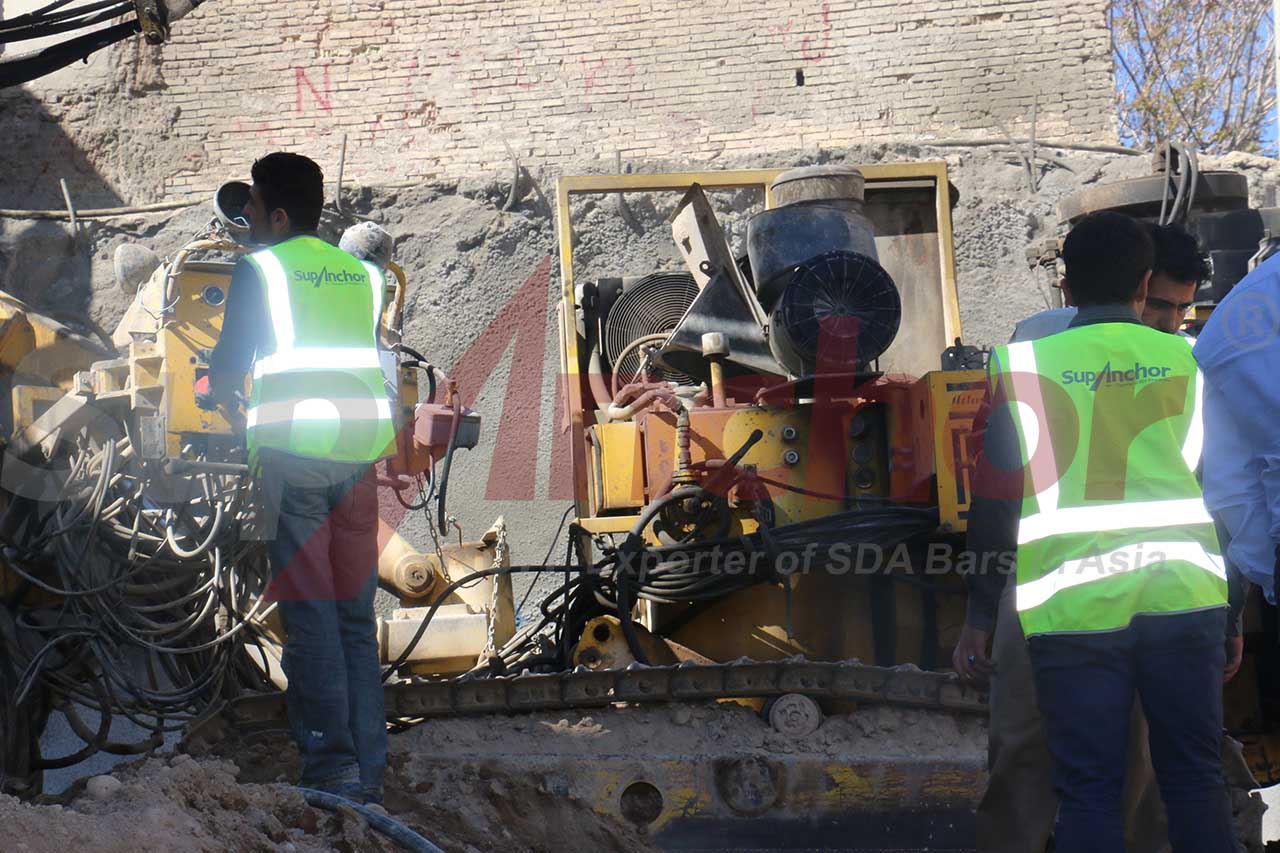
On a windswept hillside in central Europe, where the existing motorway snakes through fractured limestone and water‑sensitive marl, highway authorities faced a familiar but formidable challenge: widening a critical transport corridor without triggering slope instability. The solution came in the form of a geotechnical reinforcement system that combined drilling, grouting and anchoring in a single pass—SupAnchor’s self drilling anchor bolt. Deployed across a 2.5‑kilometre cut section, the system has not only accelerated construction by weeks but also delivered a permanent ground stabilization anchor system that engineers say will halve long‑term maintenance costs.
The project, part of the Trans‑European Transport Network (TEN‑T) upgrade, aims to increase capacity from four to six lanes through a mountainous region prone to seasonal landslides. Traditional drill‑and‑grout methods had already been trialled on a pilot section but repeatedly failed where weak rock and high groundwater pressures collapsed boreholes before anchoring could be completed. The switch to a hollow bar anchor, manufactured by SupAnchor, a global ground anchor bolt factory, has since been described by the geotechnical contractor as “the only viable option for this geology.”
The site geology presented a three‑fold problem: highly fractured limestone with clay‑infilled joints, alternating layers of saturated marl, and a groundwater table that fluctuated by up to 3 metres after heavy rain. In such conditions, open‑hole drilling triggers immediate caving, rendering conventional post‑grouted anchors ineffective. The project specification called for a reinforcement system that could be installed quickly, provide immediate skin friction, and offer a design life exceeding 80 years with minimal maintenance.
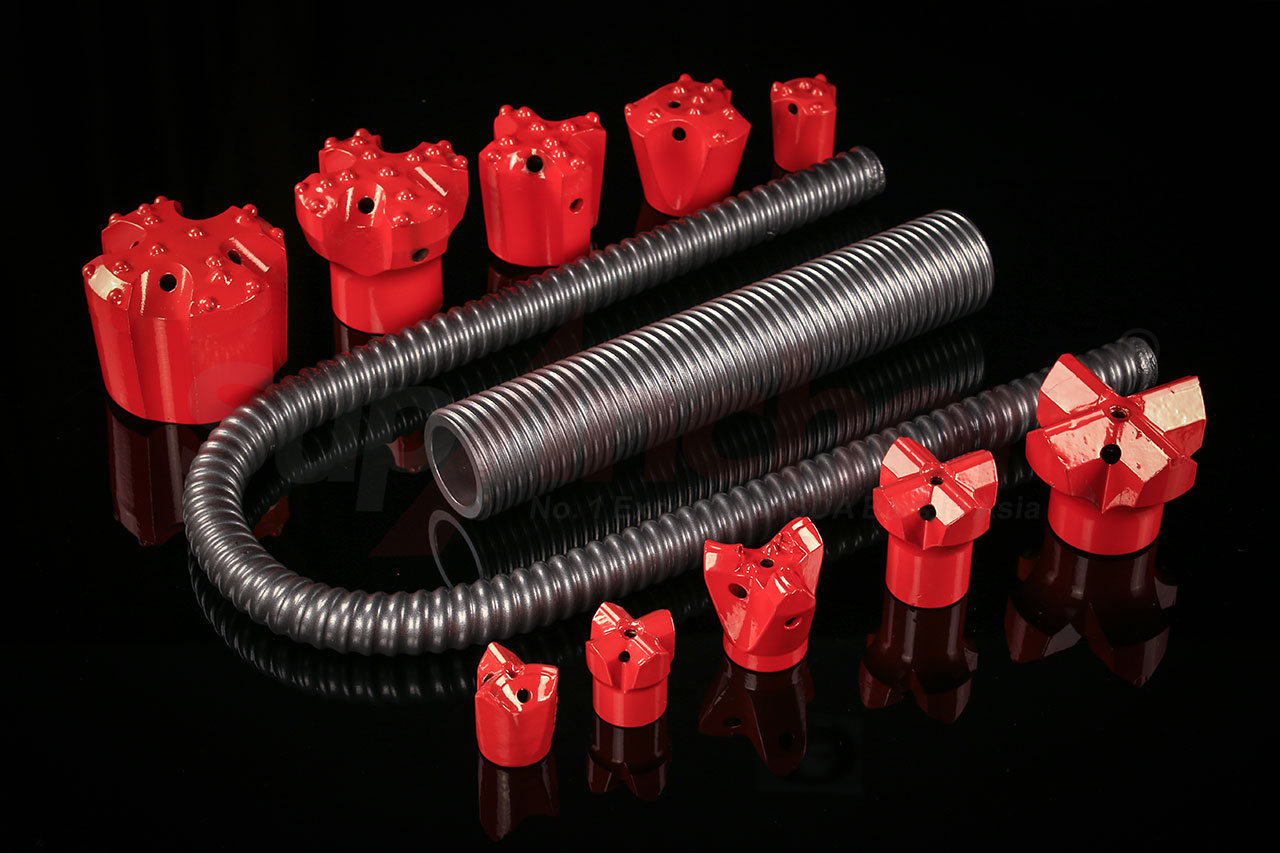
The engineering team, after reviewing several soil nail system manufacturers, selected SupAnchor’s R38N self drilling anchor system for its proven track record in similar Alpine conditions. The system functions as a micropile hollow bar anchor, allowing simultaneous drilling and grouting through the hollow centre of the bar. This eliminates the need for a temporary casing and guarantees grout‑to‑ground bond even in collapsing ground. Over 4,500 self drilling anchor bolts were installed, ranging in length from 8 to 15 metres, at inclination angles between 15° and 25° to stabilise cut slopes up to 35 m high.
On a typical summer morning, the construction bench was alive with the rhythmic hum of hydraulic rotary percussive drills. Each rig, carrying a magazine of 3‑metre hollow bar segments, advanced a drill‑and‑grout bolt in minutes. Workers coupled extension rods while a neat cement grout was pumped through the centre at a controlled pressure of 0.5–1.0 MPa, flushing drill cuttings as the bit penetrated. Once the target depth was reached, the same grout column was maintained for a further two minutes to ensure complete annulus filling. A bearing plate and hex nut were then torqued against a mesh‑reinforced shotcrete facing, providing immediate active support to the slope.
This continuous installation process, a hallmark of the self drilling bolt for civil engineering, allowed crews to complete up to 30 anchors per shift per rig—triple the rate achievable with cased drilling. The ability to drill, grout and tension in one operation meant that even the most water‑charged zones were secured before slit‑block failure could initiate. Site engineers noted that the rapid installation significantly reduced the exposure of workers and machinery to unstable faces, enhancing overall site safety.
SupAnchor supplied anchors tailored to the project’s demanding load and durability requirements. Table 1 summarises the key product specifications.
| Parameter | Specification |
|---|---|
| Nominal diameter | 32 mm / 38 mm (R32N / R38N) |
| Ultimate tensile strength | ≥ 660 MPa |
| Yield strength | ≥ 520 MPa |
| Elongation (A5) | ≥ 8% |
| Corrosion protection | Hot‑dip galvanised (min. 85 µm) + optional duplex epoxy coating |
| Thread | Left‑hand rope thread (standard) or trapezoidal |
| Lengths | 3 m segments coupled to 15 m total |
| Drill bit | Tungsten carbide cross‑cut or dome bit, diameter 76–115 mm |
Table 1: SupAnchor R38N self drilling anchor bolt properties. Values are typical and were certified for the project.
The high tensile strength of 660 MPa allowed a working load up to 280 kN, sufficient to resist the calculated slope‑driving forces. The hot‑dip galvanised coating, combined with the highly alkaline grout environment, provided a dual‑barrier corrosion protection system compliant with EN 14490 for a 100‑year service life in aggressive ground. The left‑hand rope thread facilitated rapid coupler connection while ensuring a positive grout‑to‑bar bond through its profiled surface.
Because the rock bolt for underground mining applications shares the same design philosophy, the contractor was able to draw on a large pool of trained operators, further smoothing the learning curve. For the retaining wall sections adjacent to bridge abutments, the same self drilling anchor for retaining walls was used, proving the system’s versatility across different structural elements.
The successful deployment of the ground stabilization anchor system on this highway project reflects broader trends in the geotechnical industry. As infrastructure ages and urban corridors expand, engineers are increasingly tasked with stabilising steep cuts, deep excavations and tunnel portals in poor ground—all while minimising traffic disruption and environmental footprint. Self drilling anchor systems have emerged as a go‑to technology because they eliminate the need for temporary casings, reduce spoil volume, and can be installed by smaller, more mobile rigs.
Market analysts at BCC Research project the global ground anchor market to grow at over 5% CAGR through 2030, driven by investments in transport infrastructure, renewable energy foundations and mining safety. The European Federation of Foundation Contractors has recently cited hollow bar anchors as a key innovation for low‑accessibility environments, where they outperform driven piles and traditional post‑grouted tendons. In North America, state Departments of Transportation are increasingly specifying self drilling bolt for civil engineering contracts after successful trials on Interstate slope repairs in Colorado and Oregon.
The micropile hollow bar anchor variant is particularly relevant for underpinning existing structures, as demonstrated in a recent railway bridge retrofit in northern England. There, SDA bolt factory direct supply enabled the project team to obtain custom lengths within three weeks, avoiding costly schedule overruns. The ability to source an anchor bolt system for geotechnical engineering from a single, integrated manufacturer also simplifies quality assurance and traceability—a growing requirement in European public works.
Behind the project’s technical success stands SupAnchor, a company that has quietly built a reputation as a reliable partner for challenging ground. Certified to ISO 9001, ISO 14001 and OHSAS 18001, and with CE marking on all anchor products, SupAnchor supplies self drilling anchor systems to more than 50 countries. Its factories, equipped with automated rolling, heat‑treatment and coating lines, can produce 1.5 million meters of hollow bar per year, ensuring that even the largest ground anchor bolt factory orders are delivered on time.
“We see ourselves not just as a manufacturer, but as a geotechnical collaborator,” said a SupAnchor senior engineer during a site visit. “Projects like this highway upgrade succeed when the reinforcement system matches the geology, and when our technical team can work alongside the contractor from design to installation.” That spirit of collaboration—rooted in the company’s core values of Professional, Innovative, Collaborative—has led to long‑term relationships with global construction firms.
SupAnchor’s research and development centre continuously tests new steel alloys, thread geometries and coating systems. Recent innovations include a duplex‑coated hollow bar for marine environments and a high‑elongation grade for seismic zones. These advances reinforce the company’s position as a premier manufacturer of geotechnical reinforcement systems, capable of delivering everything from a single pallet of soil nails to a fully customised rock bolt for underground mining project.
As the TEN‑T highway project moves toward completion, the slopes now stand secure, their faces gradually greening as hydroseeding takes hold beneath the shotcrete. For the thousands of motorists who will eventually use the widened road each day, SupAnchor’s self drilling anchor system will remain an unseen but vital safeguard—proof that when ground conditions demand innovation, professional engineering solutions prevail.
SupAnchor's self drilling anchor system deployed on an Alpine slope stabilization project, showcasing efficient installation and high-performance geotechnical reinforcement in challenging conditions.
SupAnchor's Grade 75 self-drilling hollow anchor bars deliver ASTM A615 performance, continuous T-thread bonding, and proven reliability for hydropower slope stabilization projects.
SupAnchor's self drilling anchor system deployed on an Alpine highway slope stabilization project, enabling fast drilling and grouting in fractured rock while meeting strict safety and environmental standards.
SupAnchor launches a corrosion-resistant GFRP friction bolt, offering lightweight, spark-free ground support for tunneling and mining.
SupAnchor's self drilling anchor system demonstrates superior performance in a challenging slope stabilization project, ensuring safety and efficiency.