
Deep within the European Alps, a landmark high-speed rail project is reshaping transcontinental connectivity. The Alpine High-Speed Rail Tunnel (AHRT), a key component of the EU’s Trans-European Transport Network (TEN-T), aims to reduce transit times between Northern and Southern Europe by several hours. But carving a 53-kilometer twin-bore tunnel through the heart of the Alps brings formidable geotechnical hurdles: squeezing rock, fault zones, and groundwater inflows that can jeopardize both progress and safety. To overcome these challenges, the project consortium selected the self drilling anchor system from SupAnchor as its primary ground stabilization anchor system for systematic rock reinforcement. This geotechnical reinforcement system has since become a cornerstone of the tunnel’s support strategy, enabling crews to advance through the most adverse conditions with unprecedented efficiency and safety.
The tunnel, located at elevations exceeding 2,500 meters, penetrates the Aare Massif and the Gotthard Nappe—formations renowned for their complex deformation history. Geotechnical investigations revealed a patchwork of lithologies: from massive granite to fractured gneiss and phyllites, with in-situ stress fields reaching 20 MPa at depth. Traditional support methods, including fully grouted rebar bolts, often failed in the squeezing sections where radial displacements exceeded 30 cm. The self drilling anchor bolt emerged as the ideal solution because it combines drilling, grouting, and bolting in a single operation, allowing immediate support in collapsing ground. Over the project’s five-year excavation phase, more than 80,000 self drilling anchors have been installed, accounting for 85% of the primary support system.
The AHRT is not just a transportation asset; it is a marvel of modern civil engineering. The twin tubes, each with an excavated diameter of 10.5 meters, run parallel and are connected by cross-passages every 325 meters. Two tunnel boring machines (TBMs) and sequential drill-and-blast methods were deployed from multiple adits to tackle the varying ground classes. In the weaker rock masses, classified as Category X (heavy squeezing), the convergence rates demanded support installation within minutes of excavation. Here, the self drilling system proved transformative. Unlike conventional bolts that require pre-drilling and casing, the hollow bar anchor drill-and-grout bolt technology allowed crews to install anchors in one pass, simultaneously injecting high-strength grout that bonded the rock and filled fractures. This rapid intervention prevented loosening and maintained the integrity of the excavation profile.
The project’s geology includes several fault zones, such as the Bedretto Fault, with gouge material that behaved like a viscous fluid under pressure. In these sections, forepoling with micropile hollow bar anchors created a protective canopy ahead of the face, preventing overbreak and ensuring the safety of workers and equipment. The versatility of the self drilling anchor bolt was also critical in the transition zones where mixed-face conditions required frequent adjustments to drilling parameters. SupAnchor’s technical team collaborated with the contractor to develop customized drilling recipes, optimizing rotation speed and thrust for each rock type.
SupAnchor’s self drilling anchor system is not a one-size-fits-all product. For the AHRT, the company supplied a range of configurations tailored to the specific rock mass behaviors. The table below summarizes the primary specifications used in this project:
| Parameter | Specification |
|---|---|
| Nominal Outer Diameter | 32 mm (most common), 25 mm, 38 mm, and 51 mm for specials |
| Steel Grade | EN 10025 S460N, with minimum yield strength of 500 MPa |
| Ultimate Tensile Strength | 670 MPa for 32 mm diameter |
| Thread Type | Rope thread, 10.5 mm pitch, providing high torque transmission |
| Corrosion Protection | Double corrosion protection (hot-dip galvanized 85 µm + 200 µm epoxy coating) |
| Drill Bit Types | Cross-cut bits for fractured rock; button bits for intact rock |
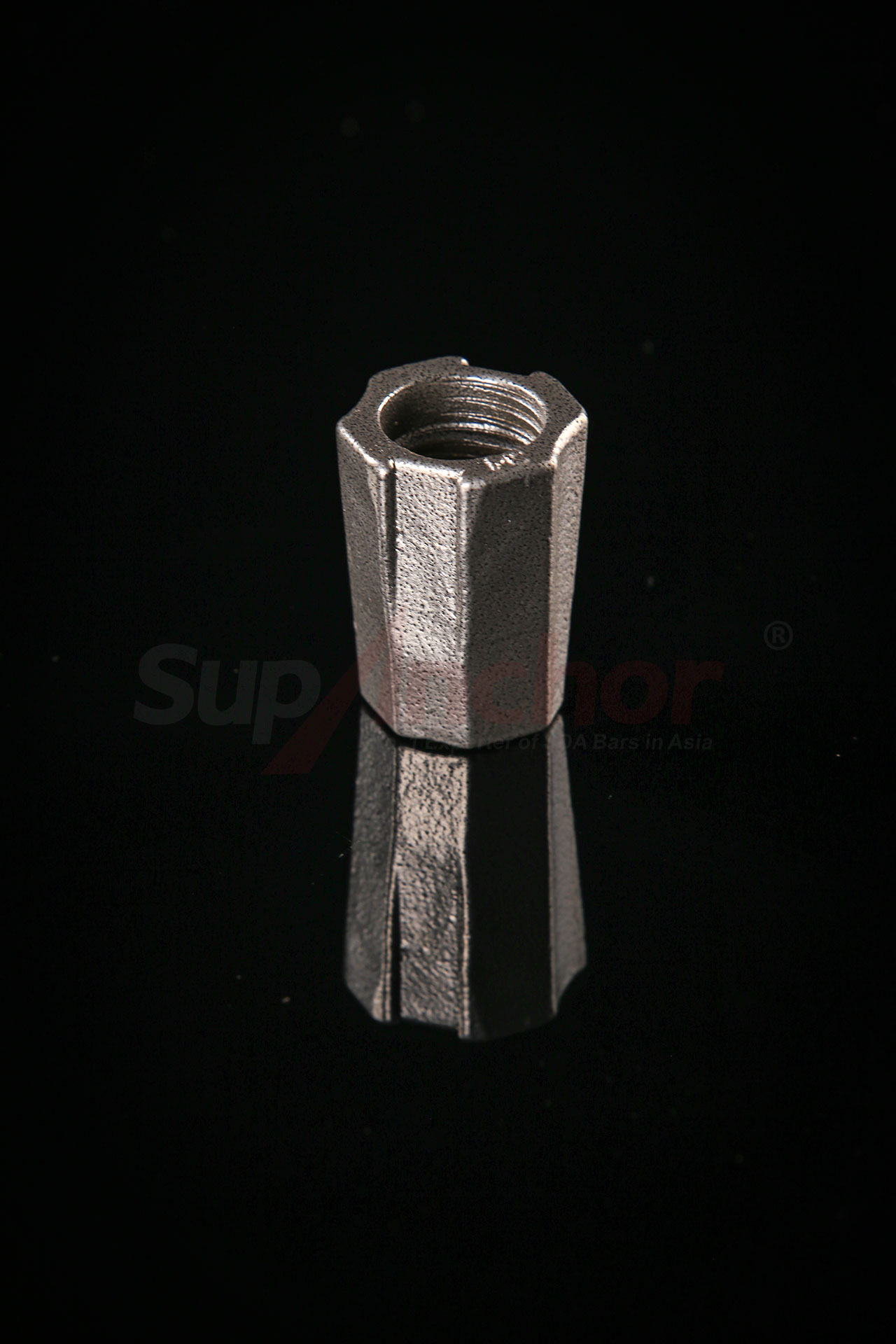
| Coupler Connection | Full-tension coupling nut matching rope thread |
| Standard Lengths | 2 m, 3 m, 4 m, 6 m—coupled to achieve design lengths up to 18 m |
The selection of a 32 mm diameter anchor with 670 MPa tensile strength was based on rigorous numerical modeling. Each anchor provides a working load of 220 kN, sufficient to contain the 1.8 MPa swelling pressures recorded in the anhydrite-rich zones. The double corrosion protection is critical: the tunnel’s design life is 120 years, and corrosive groundwater with pH values as low as 5.5 demanded a robust defense. The hollow bar anchor’s rope thread, an innovation from SupAnchor’s R&D lab, maximizes energy transfer during percussive drilling, reducing bit wear and enabling penetration rates of up to 2.5 m/min in granite. This efficiency translated into direct cost savings, as each anchor installation took an average of 3.2 minutes—a 40% reduction compared to conventional methods.
Furthermore, the ability to couple multiple segments allowed for deep anchoring into stable rock beyond the plastic deformation zone. In sections where the squeezing zone extended 8 meters around the tunnel, anchors were designed at 12-meter lengths to reach the competent rock mass, effectively suspending the loosened material. The micropile hollow bar anchor variant was also employed for pre-support umbrella systems, with 51 mm diameter anchors forming a rigid beam above the excavation.
The image captured from the AHRT worksite shows a typical installation sequence: a hydraulic drilling jumbo positions itself under the freshly excavated crown, and an operator guides a self drilling anchor bolt into the rock face. Grout lines run from a high-speed colloidal mixer, and the sound of the pneumatic hammer echoes through the tunnel. Each anchor begins as a 3-meter segment; as drilling progresses, additional segments are coupled using torque-controlled wrenches to ensure full thread engagement. The grout is injected at a pressure of 5 to 8 bar, filling the annulus and irregular fractures, creating a homogenous bond. This ground stabilization anchor system is monitored in real time: sensors on the jumbo record penetration rate, torque, grout pressure, and volume, feeding data to a central dashboard for quality control.
The operational benefits were substantial. By eliminating the separate drilling and casing steps, the self drilling anchor system reduced the time between excavation and support by 60%, which is critical in squeezing ground where every minute reduces the risk of overbreak. The project achieved an average advance rate of 4.2 meters per day in the worst ground, compared to an expected 2.8 meters with traditional methods. This acceleration not only kept the project on schedule but also saved an estimated €14 million in delay penalties. From a safety perspective, the immediate skin support provided by the drill-and-grout bolt eliminated the need for workers to handle heavy mesh and plates in unstable areas, significantly reducing the incident rate.
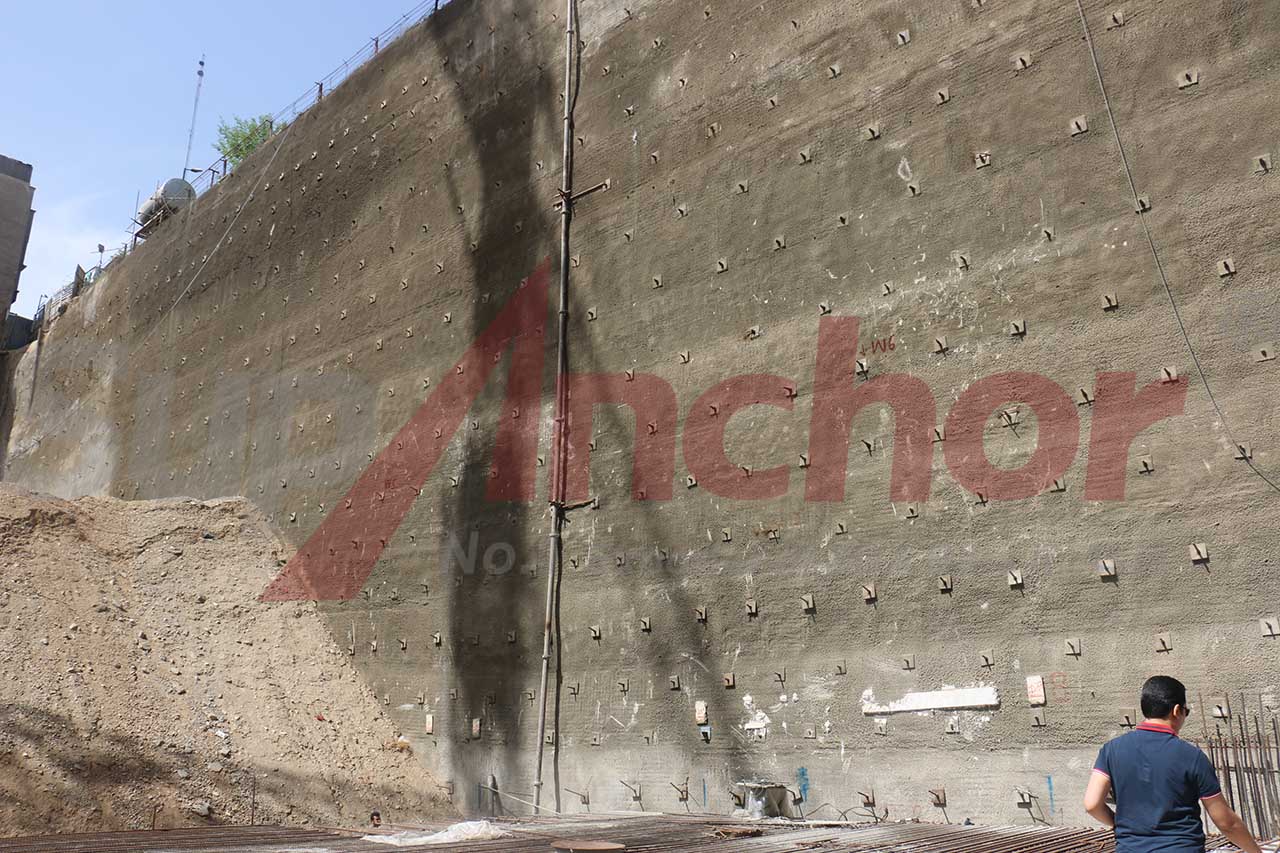
Additionally, the self drilling anchor for retaining walls was adapted for use in the portal cut-and-cover sections, where steep soil slopes required stabilization. Here, the anchors were installed vertically as soil nails, further demonstrating the system’s versatility. On a broader scale, the project validated the anchor bolt system for geotechnical engineering as an essential tool for modern tunneling. The rock bolt for underground mining has long been a staple in that industry, but the AHRT showcases its civil engineering counterpart in equally demanding conditions.
A project of this magnitude demands impeccable quality and logistics. SupAnchor, as a ground anchor bolt factory, operates ISO 9001-certified production lines with full traceability from raw steel to finished product. Each anchor bolt undergoes a series of tests: magnetic particle inspection for surface defects, tensile testing to 1.5 times working load, and thread geometry verification using laser scanners. For the AHRT, independent third-party laboratories conducted random pull-out tests on 2% of installed anchors, with all samples exceeding the design capacity of 330 kN. This rigorous quality regime gave the project owner and insurers confidence in the long-term performance of the geotechnical reinforcement system.
Supply chain reliability was equally critical. The SDA bolt factory direct supply model adopted by SupAnchor meant that project-specific materials were produced and shipped on a just-in-time basis, with buffer stocks held at strategic consolidation centers. During the peak installation phase, the factory delivered over 6,000 anchors per week without a single late shipment—a testament to SupAnchor’s manufacturing prowess and collaborative planning.
The success of this anchoring technology at the AHRT mirrors a global shift toward advanced geotechnical solutions in infrastructure. As nations invest in high-speed rail, metro expansions, and renewable energy projects (such as pumped storage caverns), the demand for reliable hollow bar anchor technologies is soaring. Market research indicates that the ground stabilization anchor system segment will reach $2.8 billion by 2028, driven by urbanization and the need to upgrade aging infrastructure. Moreover, climate change is intensifying weather events, requiring more resilient slope stabilization and retaining wall reinforcement—areas where self drilling anchors excel.
In this evolving landscape, soil nail system manufacturers like SupAnchor are not just product suppliers but strategic partners. The company’s commitment to innovation, evidenced by its five active patents in thread design and corrosion protection, positions it at the forefront of the self drilling bolt for civil engineering market. Furthermore, its alignment with international standards—including Eurocode 7 and the British Standard BS 8081—ensures that its anchor bolt system for geotechnical engineering meets the most stringent global specifications. As the industry moves toward digitalization, SupAnchor is exploring embedded sensors that can monitor anchor loads and corrosion potential over the infrastructure’s lifespan, offering asset managers real-time data on structural health.
The company’s track record includes supplying ground stabilization anchor systems for the Panama Canal expansion, where self drilling anchors stabilized lock walls, and the Gotthard Base Tunnel, where similar technology was used in exploratory adits. Such credentials reinforce SupAnchor’s position as a go-to partner for complex geotechnical endeavors.
The self drilling anchor system also aligns with sustainable construction practices. By eliminating the need for temporary casings and reducing grout overspill through controlled injection, it minimizes waste. The double corrosion protection extends service life, reducing the need for future repairs and the associated carbon footprint. Furthermore, the efficiency gains reduce the overall construction timeline, leading to lower emissions from machinery and logistics. SupAnchor’s manufacturing facilities adhere to ISO 14001 environmental management standards, and the company is actively developing bio-based grouts to further enhance sustainability.
The Alpine High-Speed Rail Tunnel stands as a symbol of engineering ambition and collaboration. The widespread use of SupAnchor’s anchoring systems not only solved immediate ground stability challenges but also contributed to a paradigm shift in how tunnels are constructed in extreme conditions. With its deep technical expertise, innovative products, and collaborative approach, SupAnchor has demonstrated that it is more than a manufacturer—it is a reliable partner in building the future. As the global community continues to invest in critical infrastructure, the role of advanced geotechnical reinforcement systems will only grow, and SupAnchor is well-equipped to lead the charge with professional, innovative, and collaborative solutions.
SupAnchor's self drilling anchor system deployed on an Alpine slope stabilization project, showcasing efficient installation and high-performance geotechnical reinforcement in challenging conditions.
SupAnchor's Grade 75 self-drilling hollow anchor bars deliver ASTM A615 performance, continuous T-thread bonding, and proven reliability for hydropower slope stabilization projects.
SupAnchor's self drilling anchor system deployed on an Alpine highway slope stabilization project, enabling fast drilling and grouting in fractured rock while meeting strict safety and environmental standards.
SupAnchor launches a corrosion-resistant GFRP friction bolt, offering lightweight, spark-free ground support for tunneling and mining.
SupAnchor's self drilling anchor system demonstrates superior performance in a challenging slope stabilization project, ensuring safety and efficiency.