
In the rugged terrain of the Alps, a vital highway expansion project is tackling one of geotechnical engineering’s most daunting challenges: stabilising a crumbling rock face that threatens the safety of a new 4-lane section. The steep slopes, composed of highly fractured schist and limestone, have been prone to frequent rockfalls and progressive instability, making conventional anchoring methods both risky and time-consuming. To overcome these obstacles, the project’s engineers have turned to SupAnchor’s advanced self-drilling anchor system—a solution that is rapidly proving its worth in the most demanding ground conditions.
The site, located at an elevation of over 1,500 metres, experiences harsh winter conditions and significant water infiltration through the rock mass. Traditional drill-and-grout anchors would require multiple passes, casing to prevent borehole collapse, and considerable logistical support. In contrast, the self-drilling anchor bolt from SupAnchor integrates drilling, grouting, and tensioning into a single, efficient operation. This not only accelerates the installation schedule but also ensures immediate ground reinforcement, a critical factor when working adjacent to live traffic lanes below.
The geology of the location is characterised by a sequence of tectonically disturbed metamorphic rocks. The slope angle exceeds 70 degrees in places, and the rock mass is crossed by numerous joint sets with clay-filled seams. During the design phase, conventional soil nails and ground anchors were assessed, but the risk of hole collapse during drilling was deemed unacceptably high. The project’s geotechnical consultant specified a system that could be installed without casing, with the ability to handle collapses and voids through simultaneous grouting—defining the need for a hollow bar anchor.
SupAnchor’s technical team worked closely with the contractor to design a geotechnical reinforcement system tailored to the slope’s characteristics. By using a hollow bar as both the drill rod and the permanent tensile element, the system eliminates the need for a separate casing or temporary reinforcement. This approach significantly reduces installation time, equipment requirements, and overall project costs—all while maintaining the highest safety standards.
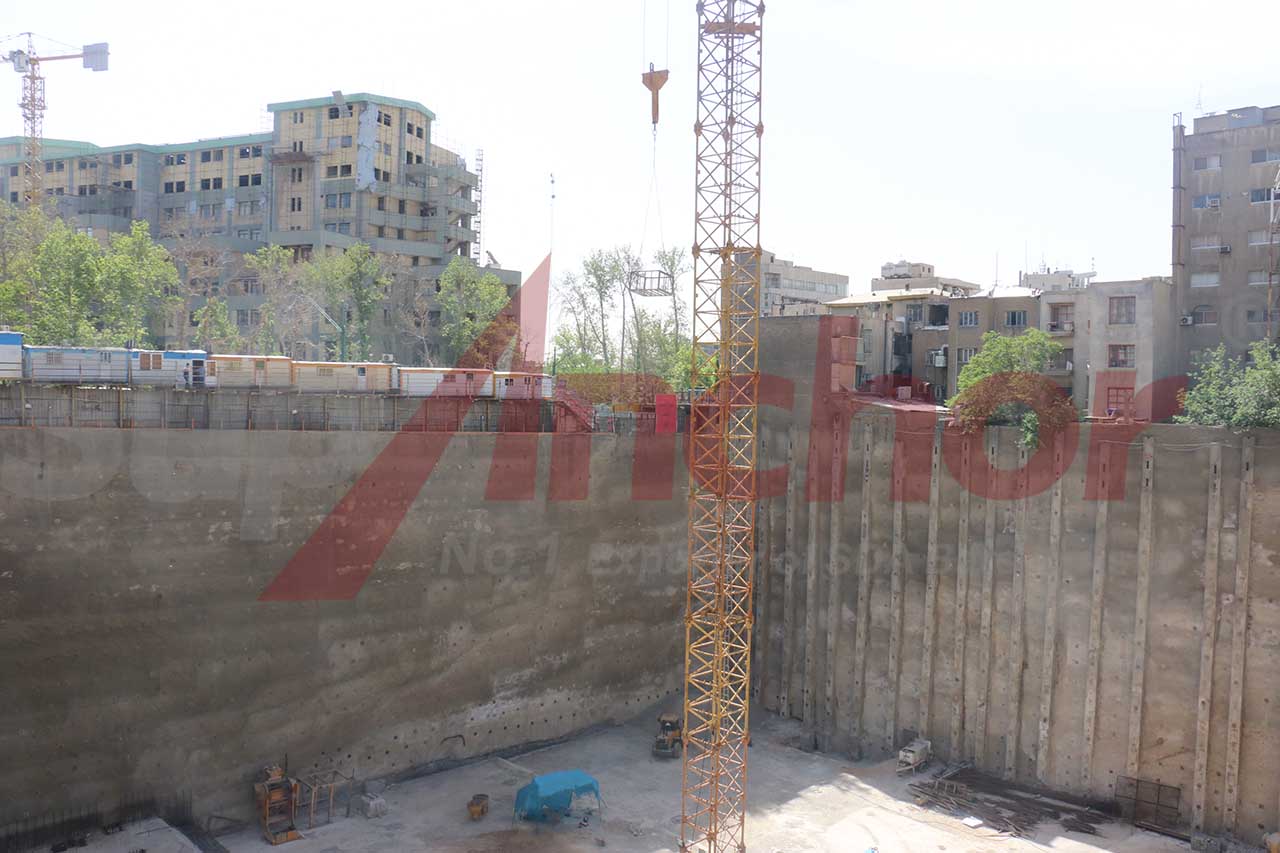
A visit to the construction site reveals a well-organised operation. Drilling rigs equipped with high-torque rotary heads are positioned on berms cut into the slope. Crews in protective gear handle the self-drilling anchor bolts, which arrive on site in 3-metre sections. These sections are coupled together as drilling progresses, allowing lengths of 9 to 15 metres to be installed seamlessly. The accompanying image shows a typical anchor being inserted; the hollow bar is visible as the rig drills and pumps cement grout through the bit at the same time.
The efficiency gains are evident: a single anchor can be installed in as little as 20 minutes, from start to grout completion. This rapid pace is essential for the project’s tight 18-month timeline. Moreover, the quality control is rigorous. Each anchor is proof-tested to a minimum of 1.5 times its working load, and selected anchors are subjected to creep tests to verify long-term performance.
The following table summarises the key technical parameters of the self-drilling anchor system employed on this project:
| Parameter | Specification | On-Site Benefit |
|---|---|---|
| Anchor Type | Self-drilling hollow bar anchor (SDA) | Eliminates casing, enabling drilling and grouting in one pass |
| Outer Diameter | 32 mm (R32 thread) | Optimised for hard rock drilling with standard percussive rigs |
| Ultimate Tensile Strength | 600 kN | Provides large safety margin for the designed 400 kN working load |
| Anchor Length | 9–15 m (customised per zone) | Ensures bonding beyond the failure surface into competent rock |
| Corrosion Protection | Double corrosion protection: hot-dip galvanised (ISO 1461) + epoxy coating | Guarantees a 100-year design life in aggressive alpine environment |
| Grouting Method | Through-the-bit grouting with neat cement (w/c 0.4–0.5) | Immediate bonding and soil reinforcement; reduces water ingress |
The combination of high tensile strength, extended length, and robust corrosion protection proved decisive. The slope’s instability demanded anchors that could reliably transfer loads deep into the mountain, while the alpine environment—with freeze-thaw cycles and aggressive groundwater—required maximum durability. SupAnchor’s self-drilling anchor for retaining walls and rock faces met all these demands, demonstrating why it is increasingly specified for critical infrastructure across the globe.
The hollow bar anchor is advanced using a down-the-hole hammer or a top hammer, depending on the rock hardness. As the drill bit penetrates, cement grout is pumped through the hollow centre at a controlled pressure, filling cracks and voids around the bar. This immediate grouting action not only stabilises the borehole but also enhances the bond between the anchor and the rock, a critical factor in the anchor’s load-bearing capacity. The continuous thread along the entire length of the bar allows for torque transmission and coupling, making it possible to drill to great depths without losing control or efficiency.
The anchors were arranged in a 2 m by 2 m grid pattern across the 300-metre-long slope face. The design working load of 400 kN per anchor was determined after extensive finite element analysis, which modelled potential failure wedges under seismic and hydrological loading. By utilising a self drilling anchor bolt with an ultimate strength of 600 kN, the design provides a safety factor of 1.5, exceeding the Eurocode 7 requirements. The installation process also incorporated real-time monitoring of drill speed, torque, and grout pressure, allowing the site team to adjust parameters immediately if variations in ground conditions were detected.
Quality is paramount in any geotechnical reinforcement system. On the Alpine site, every anchor undergoes a rigorous testing regimen. Proof tests are conducted on 10% of all anchors, while a smaller sample is subjected to longer-duration creep tests to confirm that load loss over time remains within acceptable limits. The double corrosion protection system—comprising a hot-dip galvanised layer per EN ISO 1461 followed by an epoxy coating applied in a fluidised bed process—is tested to withstand 2,000 hours of salt spray. This ensures it can endure the chloride-laden moisture common in mountain runoff, providing confidence in the system’s 100-year design life.
The success of this Alpine highway project underscores a broader trend in civil engineering: the growing reliance on advanced ground stabilization anchor systems to ensure the safety and longevity of transportation networks. As road and rail corridors expand into more challenging terrain, and as existing infrastructure ages, the need for reliable, cost-effective slope reinforcement has never been greater.
Self-drilling anchor technology has become a cornerstone of modern geotechnology. The self drilling anchor system is now widely used not only for highway slope stabilisation but also for tunnel pre-support, micropile foundations, and underground mining roof support. In many European countries, the hollow bar anchor has replaced traditional methods due to its versatility and speed. For example, in Scandinavian tunnelling projects, drill-and-grout bolts are employed to stabilise fractured rock immediately after excavation, preventing collapses and ensuring worker safety.
The global ground stabilisation anchor system market is projected to grow at over 6% annually, driven by infrastructure investment in emerging economies and retrofit programmes in developed regions. The need for soil nail system manufacturer and ground anchor bolt factory partnerships that can deliver consistent quality and technical support is paramount. By sourcing directly from an SDA bolt factory direct supply like SupAnchor, contractors gain access to customised lengths, diameters, and accessories that off-the-shelf products cannot match.
Furthermore, the self drilling anchor for retaining walls is becoming a preferred choice for urban environments where space constraints and vibration limits rule out heavy piling rigs. In such settings, the micropile hollow bar anchor offers a low-vibration, small-footprint alternative that can be installed with compact drilling equipment, often inside existing structures. In the United States, the Federal Highway Administration has promoted the use of self-drilling anchors for landslide remediation, as seen in projects along the Pacific Coast Highway.
Beyond technical performance, the self-drilling anchor system contributes to sustainable construction. By eliminating casing and reducing spoils, the overall carbon footprint of the anchoring work is minimised. Through-the-bit grouting uses less cement than traditional gravity grouting because it delivers precise volumes exactly where needed. The extended service life of the anchors, thanks to robust corrosion protection, reduces the frequency of maintenance interventions and associated traffic disruptions, aligning with the principles of long-life, low-maintenance infrastructure. From a safety perspective, the integrated drilling and grouting process reduces the number of manual handling operations and the time crews spend on unstable slopes, thereby lowering the risk of accidents.
Behind every successful project is a manufacturing partner that goes beyond simply supplying products. SupAnchor has built its reputation on a foundation of technical expertise, rigorous quality control, and close collaboration with clients. The company’s ISO 9001, ISO 14001, and ISO 45001 certifications reflect a commitment to quality, environmental management, and occupational health and safety. Its state-of-the-art factory is equipped with automated threading lines, robotic welding cells, and a dedicated R&D centre that continuously pushes the boundaries of anchor bolt system for geotechnical engineering.
From the initial site assessment to the final pull-out test, SupAnchor’s engineers provide on-call support, ensuring that the selected self drilling anchor bolt performs exactly as designed. This collaborative approach has earned the trust of leading construction firms across Europe, Asia, and the Americas. Notable recent projects include high-speed rail tunnels in Spain, hydroelectric dam foundations in the Andes, and deep excavations in Hong Kong—each benefiting from the reliability of the geotechnical reinforcement system that SupAnchor delivers.
SupAnchor’s investment in advanced corrosion protection technologies, such as duplex coatings and sacrificial anodes, extends service life to over 100 years. The company’s direct supply model reduces lead times and costs, allowing projects to maintain momentum even under tight schedules. For the Alpine highway project, SupAnchor conducted a hands-on training session for the site crew prior to the start of work, ensuring that every operator understood the correct coupling, torquing, and grouting procedures—a testament to the “collaborative” ethos.
In the words of the Alpine highway project manager: “We needed a solution that could handle the unpredictable rock, keep our crews safe, and meet the strict design life. SupAnchor’s self drilling bolt for civil engineering delivered on all fronts. Their technical backup was exceptional—they were effectively an extension of our design team.”
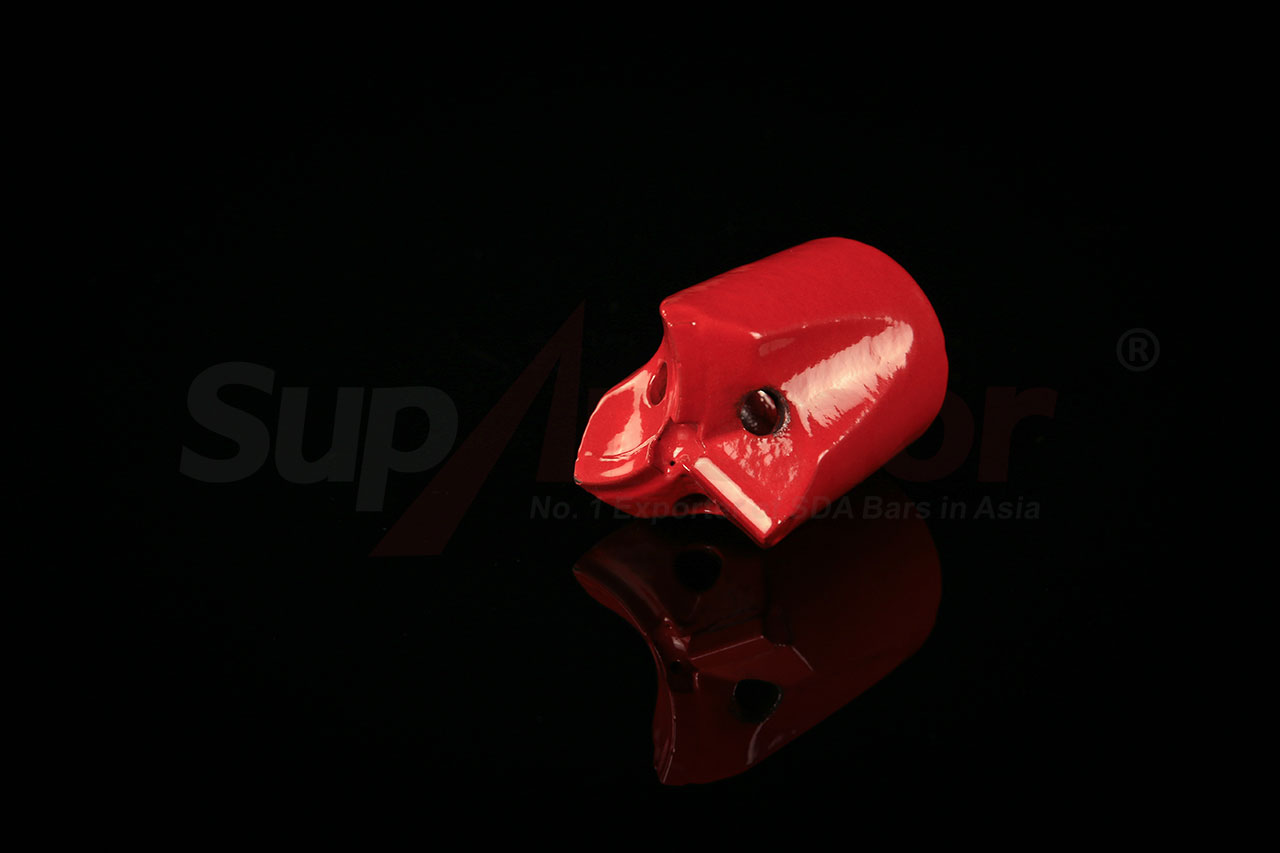
The image above shows the precision-engineered self-drilling anchor bolt that made this project possible. Its robust thread, hollow core, and adaptable bit system exemplify the innovation that SupAnchor brings to the geotechnical industry.
As infrastructure demands grow more complex, the role of the ground anchor bolt factory evolves. Climate change is intensifying weather patterns, leading to more frequent landslides and erosion. Governments worldwide are allocating billions to harden transportation networks against natural hazards, creating a sustained need for reliable ground stabilization anchor systems. SupAnchor, with its proven track record and commitment to innovation, is well positioned to lead this charge, delivering professional, innovative, and collaborative solutions that keep the world’s infrastructure safe and resilient.
In conclusion, the Alpine highway project stands as a testament to what can be achieved when advanced engineering meets real-world challenges. The self-drilling anchor system not only solved a critical geotechnical puzzle but also set new benchmarks for efficiency and safety. As a self-drilling anchor system manufacturer, SupAnchor continues to drive the industry forward, one anchor at a time.
SupAnchor's self drilling anchor system deployed on an Alpine slope stabilization project, showcasing efficient installation and high-performance geotechnical reinforcement in challenging conditions.
SupAnchor's Grade 75 self-drilling hollow anchor bars deliver ASTM A615 performance, continuous T-thread bonding, and proven reliability for hydropower slope stabilization projects.
SupAnchor's self drilling anchor system deployed on an Alpine highway slope stabilization project, enabling fast drilling and grouting in fractured rock while meeting strict safety and environmental standards.
SupAnchor launches a corrosion-resistant GFRP friction bolt, offering lightweight, spark-free ground support for tunneling and mining.
SupAnchor's self drilling anchor system demonstrates superior performance in a challenging slope stabilization project, ensuring safety and efficiency.