
GLASGOW, Scotland – A vital expansion of Scotland's A9 trunk road has overcome some of the most demanding ground conditions in the region thanks to the deployment of an advanced self drilling anchor system. The project, which involves widening and realigning a 5-kilometer stretch through a series of deep rock cuts and steep embankments, required a robust geotechnical reinforcement solution that could handle highly fractured basalt, variable groundwater, and the need for rapid installation to meet a compressed construction schedule.
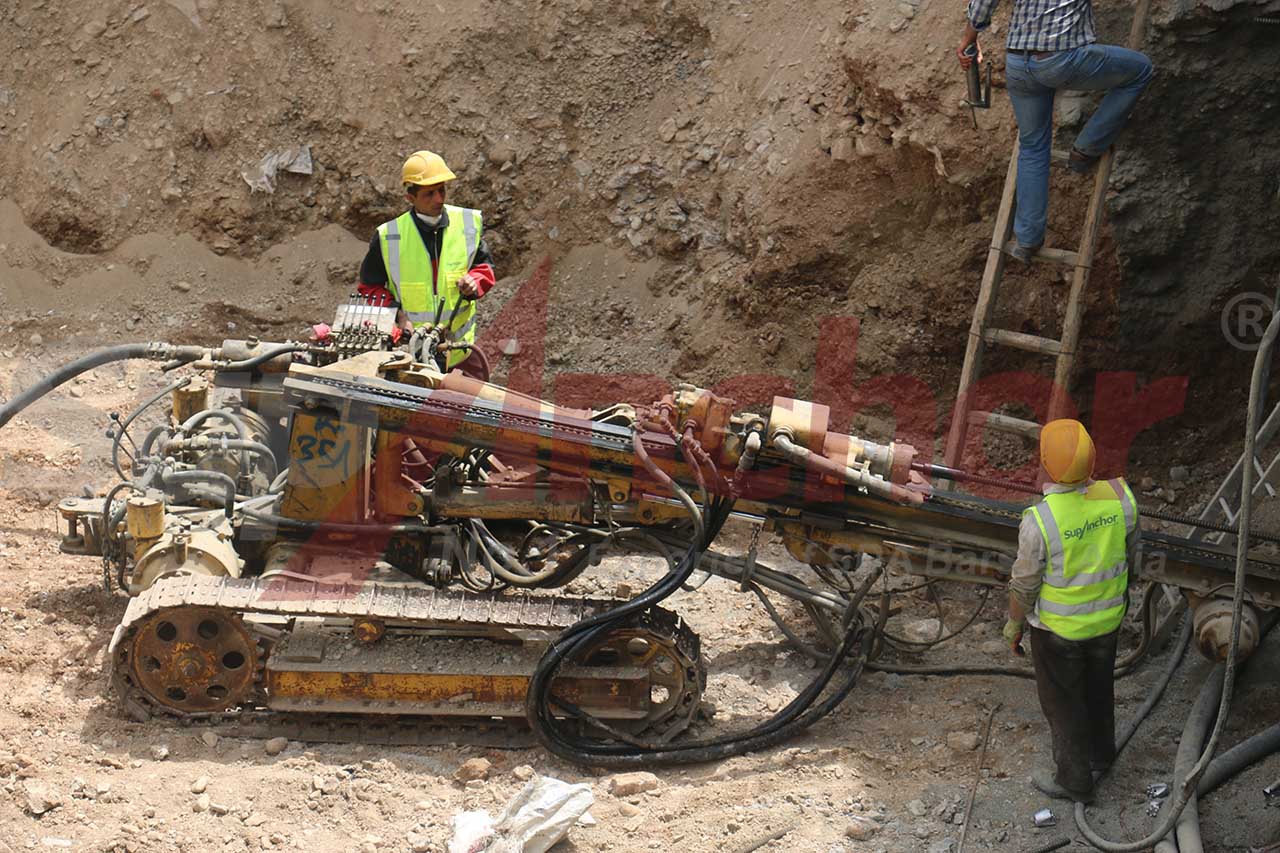
The site, located near the Pass of Drumochter, presented significant challenges from the outset. Preliminary site investigations revealed rock masses with widely varying RQD values, ranging from 10% to 75%, indicating severely fractured and weathered zones interspersed with more competent rock. Traditional drilling and anchoring methods, such as driven soil nails or pre-drilled rock bolts, proved inefficient: drill holes frequently collapsed, grout loss was excessive, and the presence of high groundwater pressures led to extended curing times and uncertain bond strengths. The project's geotechnical consultant recommended evaluating a drill-and-grout bolt approach to bypass these hurdles, ultimately selecting SupAnchor’s self drilling anchor bolt technology.
The A9 Dualling Programme, a multi-year initiative to upgrade Scotland's longest road to dual carriageway standard, has consistently pushed engineering boundaries across some of the country's most remote and challenging terrain. At Drumochter, the road must traverse a narrow glacial valley flanked by steep slopes of Dalradian metasediments—mainly quartzite, schist, and slate. The slopes chosen for cutting reached heights of up to 35 meters, with near-vertical faces required to minimize land acquisition and environmental disturbance. The presence of protected peatlands and the River Garry's floodplain further restricted the construction footprint, forcing engineers to optimize every meter of the cut geometry.
"We knew from the borehole logs that the ground was going to be problematic," said John MacGregor, lead geotechnical engineer for the contracting joint venture. "What we didn't anticipate was the extent of the water in the joints. As soon as we opened up the cut, water started flowing from dozens of fractures, and the rock began to ravel. Conventional reinforcement simply wasn't going to hold."
Complicating matters, the construction sequence required maintaining two-way traffic on the existing A9 while excavating the new cutting immediately adjacent. This necessitated a zero-failure tolerance on the temporary slopes during excavation, ruling out any method that could not provide immediate support. The joint venture's risk assessment identified the self drilling anchor bolt as the only technology capable of meeting the simultaneous demands of installation speed, immediate load-bearing capacity, and reliability in collapsing ground. The decision was supported by a rigorous value engineering analysis that compared the total cost of installation—including time, equipment, and material losses—rather than just the per-meter anchor price.
Installation began in late spring 2024, with crews deploying three hydraulic drill rigs equipped with rotation heads capable of handling the torque requirements. Each rig operated on a bench of 5-meter lifts, installing hollow bar anchors in a staggered pattern across the face. The typical self drilling anchor bolt diameter was 38 mm, with a wall thickness of 6.3 mm, supplied in 3-meter threaded sections. Couplers allowed the anchor to be extended to design lengths of 9 to 15 meters, reaching well beyond the critical sliding surface. Tensile strength of the bar exceeded 660 MPa, providing a substantial factor of safety against pull-out.
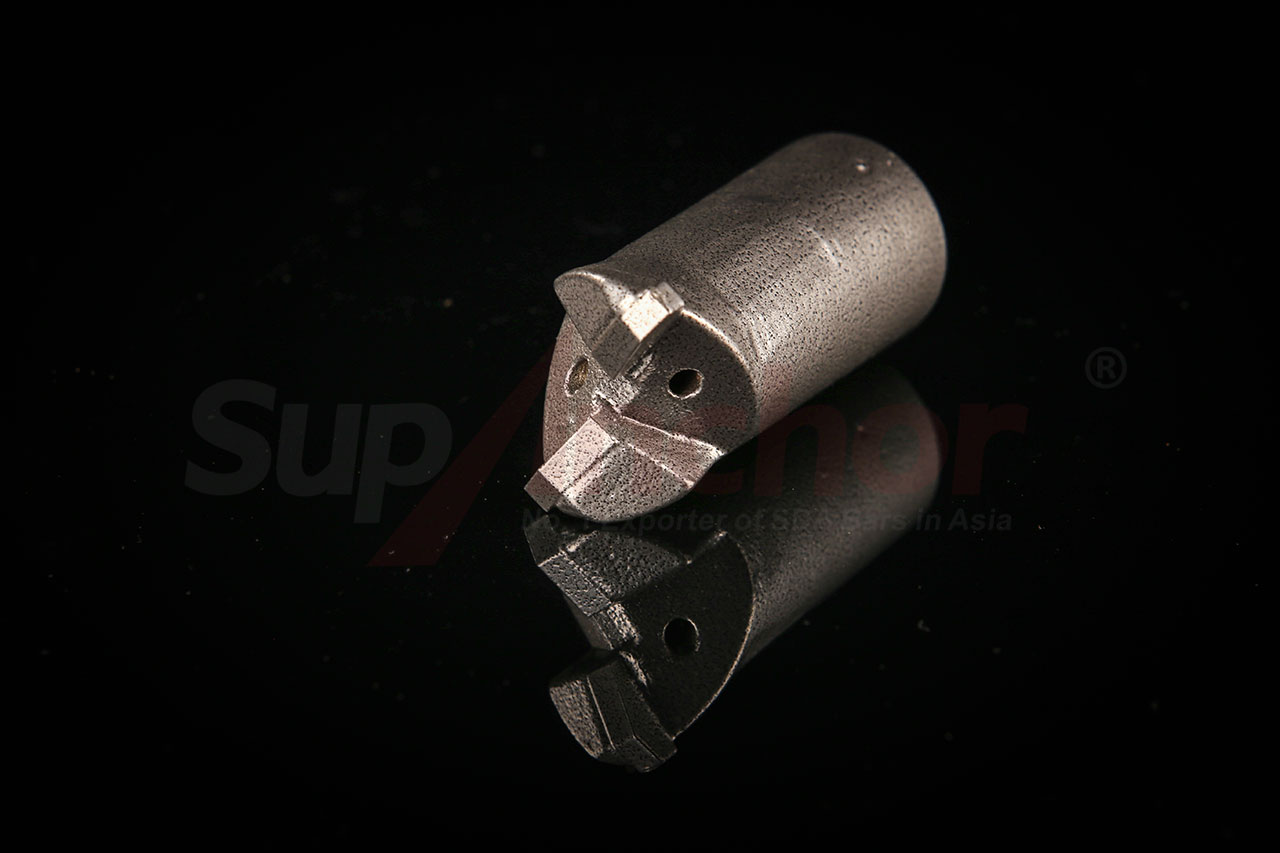
The drilling process began with a pilot hole being advanced using a cross-cut tungsten carbide bit. As the bit progressed, a neat cement grout with a water-cement ratio of 0.4:1 was injected through the bar at a pressure of 1-3 MPa. This simultaneous grouting flushed out drill cuttings, stabilized the borehole, and began bonding with the surrounding rock. The use of an advanced colloidal grout mixer ensured a stable, homogeneous grout with minimal bleeding—essential for achieving consistent bond strength in wet, fractured formations. Once the design depth was reached, the anchor was allowed to rest for a short period before being tensioned to 50% of its ultimate load, following a staged loading protocol: 25%, 50%, 75%, and finally 100% of proof load, with each stage held for five minutes to monitor creep. A bearing plate and dome nut were then installed to lock off the stress.
One of the critical technical features of the SupAnchor system is its double corrosion protection. In the aggressive weathering environment of the Highlands, where acidic peat water and freeze-thaw cycles could rapidly degrade unprotected steel, the anchors were hot-dip galvanized to a minimum thickness of 85 µm. Additionally, the cement grout encasement provided a passive alkaline barrier, effectively preventing rust formation even if the galvanizing was compromised. This not only extended the service life to over 75 years but also matched the design life of the highway itself, reducing maintenance concerns.
The following table summarizes the key technical parameters of the self drilling anchors employed:
| Parameter | Specification |
|---|---|
| Outer Diameter | 38 mm (also available: 25, 32, 52, 63.5 mm) |
| Ultimate Tensile Strength | 660 MPa (varies by diameter and steel grade) |
| Yield Strength | 560 MPa |
| Elongation | ≥12% |
| Section Length | 3 m (also 2 m, 4 m, 6 m) |
| Corrosion Protection | Hot-dip galvanized (≥85 µm) + cement grout |
| Bond Strength (typical in rock) | >400 kPa |
To further verify performance, a series of sacrificial proof tests were conducted on 5% of the anchors. The test protocol followed BS EN 22477-5, with each anchor loaded incrementally to 133% of its design load. Results consistently showed that the ground- grout bond strength exceeded the design assumptions by at least 25%, and the anchor head displacements under design load were less than 1 mm after 60 minutes. No anchor exhibited creep rates above the 1 mm/log cycle of time threshold, confirming sufficient bond and bar capacity. These real-world measurements confirmed the effectiveness of the ground anchor bolt factory delivered system, which arrived on site pre-cut, threaded, and ready for immediate installation, significantly reducing on-site welding and handling. Each shipment was accompanied by full mill certificates and batch test reports, ensuring traceability from steel source to installed anchor.
The successful application of this self drilling anchor system on the A9 project highlights its versatility across a range of infrastructure sectors. Self drilling anchors are no longer niche products; they are becoming a standard tool in the arsenal of foundation engineers, tunneling contractors, and mine operators worldwide. Their ability to function as both micropile hollow bar anchors for deep foundations and as a key component in soil nail systems makes them particularly attractive to any soil nail system manufacturer seeking to expand their product offering.
In particular, the growing demand for self drilling anchor for retaining walls in urban environments—where adjacent structures and underground utilities restrict working space—has accelerated innovation. The hollow core design allows for simultaneous grouting and drainage, reducing pore water pressure build-up behind the wall without the need for separate weep holes. This integrated functionality not only speeds up construction but also improves long-term stability. Recent research by the Norwegian Geotechnical Institute has shown that properly designed hollow bar anchors can reduce wall deflection by up to 30% compared to conventional tiebacks, thanks to the enhanced grout-rock interaction.
The mining sector, too, is embracing these systems. Rock bolt for underground mining applications has traditionally relied on mechanical bolts or resin-grouted bolts, but in heavily jointed or soft ground, these methods often fail to achieve the required immediate support. Self drilling anchors provide active reinforcement from the moment of installation, since the grout sets quickly and the bar can be tensioned almost immediately. This has led to their adoption in several major underground mining operations in Australia and Canada, where safety and productivity are paramount. A recent case study from a deep nickel mine in Western Australia reported a 40% reduction in bolt installation time and a significant decrease in ground fall incidents after switching to a drill-and-grout bolt method.
From a logistical perspective, sourcing from a SDA bolt factory direct supply partner offers distinct advantages. Project timelines are often threatened by supply chain delays, particularly when custom lengths, diameters, or corrosion protection schemes are required. SupAnchor’s vertically integrated manufacturing—from raw steel tube to finished anchor—enables rapid turnaround and strict quality control, ensuring that project-specific variations are delivered without the typical lead times associated with third-party sourcing. For the A9 project, all 2,800 anchors were manufactured, galvanized, and shipped within six weeks of order, with zero quality rejections upon arrival—a performance that the contractor described as "exceptional by industry standards."
Beyond the immediate engineering gains, the use of self drilling anchors brought notable sustainability and safety improvements to the Drumochter site. Because the method eliminates the need for temporary casing or separate drilling and grouting stages, it reduces the number of equipment moves and the associated fuel consumption. The project team estimated a 22% reduction in diesel usage per installed anchor compared to the originally planned cased drilling method—a saving of roughly 18,000 liters over the course of the works. Furthermore, the ability to drill and grout in one pass meant less disturbance to the surrounding terrain, minimizing sediment runoff into the adjacent River Garry, which is a designated Special Area of Conservation for Atlantic salmon.
In terms of occupational safety, the process significantly lowers risks. Workers are not required to handle heavy casings or to work over unlined bores; the anchor itself acts as the drill string, reducing manual handling injuries. The remote tensioning and locking-off procedure can be conducted from a safe distance, and the immediate load transfer to the ground means that unsupported faces are never left exposed for long periods. The project reported zero lost-time incidents related to rock fall or anchoring activities, a credit to both the technology and the comprehensive training provided by the ground stabilization anchor system specialists.
Behind the success of the Drumochter project lies a company that has quietly spent two decades refining the anchor bolt system for geotechnical engineering. SupAnchor, founded in Hangzhou, China, has grown from a regional supplier into a global player, with its products now found in over 30 countries. The company’s ISO 9001:2015 and ISO 14001:2015 certifications underscore its commitment to quality and environmental management, while its dedicated R&D center continuously pushes the boundaries of what hollow bar anchors can achieve.
Among its recent innovations are high-strength variants exceeding 1,000 MPa tensile strength, tailored for ultra-deep anchorages in hydropower and bridge foundation applications, and a new range of couplers that reduce installation torque by up to 20%—a critical improvement when drilling in abrasive or boulder-rich ground. The company also offers a proprietary software tool that assists geotechnical engineers in designing anchor patterns and estimating bond lengths based on ground parameters, further demonstrating its commitment to collaborative problem-solving.
Collaboration with end users and design consultants has been key: SupAnchor regularly engages in value engineering workshops to optimize anchor patterns, reducing anchor quantities without compromising safety factors. This collaborative spirit was evident on the A9, where the company’s application engineers provided on-site training and real-time troubleshooting via remote video link. "The level of support from the manufacturer was exceptional," said MacGregor. "They didn't just hand over a box of bars and say 'good luck.' They visited us, they understood our geology, and they helped us fine-tune the grout mix and drilling parameters. That kind of partnership is rare."
Looking ahead, the global market for ground stabilization technologies is projected to grow by 5.6% annually through 2030, driven by aging infrastructure replacement in North America and Europe, and new greenfield megaprojects in Asia and Africa. Self drilling bolt for civil engineering will undoubtedly claim a larger share of that market, as the push for faster, safer, and more sustainable construction methods intensifies. Whether it's a highway rock cut in the Highlands, a tunnel portal in the Alps, or a retaining wall adjacent to a high-speed rail line, the quiet revolution brought by the self drilling anchor is just getting started.
As the contractor begins to demobilize and the final facing is applied to the rock cuts, the legacy of the A9 project is not just a safer road, but a testament to the power of innovative geotechnical solutions. The ground stabilization anchor system delivered by SupAnchor has set a new benchmark for performance and reliability in the region, and engineers across Europe are taking note. With proven outcomes like these, the case for specifying self drilling anchors on future challenging ground projects becomes increasingly compelling.
SupAnchor's self drilling anchor system deployed on an Alpine slope stabilization project, showcasing efficient installation and high-performance geotechnical reinforcement in challenging conditions.
SupAnchor's Grade 75 self-drilling hollow anchor bars deliver ASTM A615 performance, continuous T-thread bonding, and proven reliability for hydropower slope stabilization projects.
SupAnchor's self drilling anchor system deployed on an Alpine highway slope stabilization project, enabling fast drilling and grouting in fractured rock while meeting strict safety and environmental standards.
SupAnchor launches a corrosion-resistant GFRP friction bolt, offering lightweight, spark-free ground support for tunneling and mining.
SupAnchor's self drilling anchor system demonstrates superior performance in a challenging slope stabilization project, ensuring safety and efficiency.