
When the Saint‑Gotthard Base Tunnel in Switzerland—the world’s longest railway tunnel—was excavated, engineers battled extremely fractured rock masses and high water inflow. In such aggressive hydro‑geological settings, conventional steel rock bolts are vulnerable to stress corrosion cracking, threatening decades of safe operation. To secure the permanent lining, project owners increasingly turn to innovative non‑metallic solutions. SupAnchor, a premier ground anchor bolt factory and geotechnical reinforcement specialist, responded with the development of the SupFRP® GFRP Solid Bolt, a next‑generation anchoring product that eliminates corrosion risks while delivering impressive load‑bearing performance.
The GFRP Solid Bolt is engineered from high‑quality Glassfiber Reinforced Polymer, featuring a fully solid cross‑section. Unlike hollow bar anchors that allow simultaneous drilling and grouting, this solid bolt is designed for pre‑drilled holes, where its waved thread structure maximises mechanical interlock with cementitious grout. The result is a high‑strength, lightweight, and permanently maintenance‑free tension member suited for the most demanding geotechnical applications.
At the heart of the new bolt lies a carefully optimised glassfiber‑resin composite. With a tensile E‑modulus of 45 GPa and an ultimate strain of 2.0 %, the material behaves predictably under load, allowing design engineers to deploy familiar limit‑state concepts. The product family spans five diameters, each delivering a guaranteed tensile load that can be confidently relied upon in safety‑critical permanent works:
| Model | Outside Diameter (mm) | Nominal Area (mm²) | Tensile Load (kN) | Weight (kg/m) | Available Lengths (m) |
|---|---|---|---|---|---|
| S20/200 | 20 | 200 | 200 | 0.52 | 2–11 m |
| S22/240 | 22 | 240 | 240 | 0.62 | 2–11 m |
| S25/320 | 25 | 320 | 320 | 0.83 | 2–11 m |
| S28/400 | 28 | 400 | 400 | 1.04 | 2–11 m |
| S32/500 | 32 | 500 | 500 | 1.30 | 2–11 m |
Note: Outside diameter includes waved thread structure. Nominal cross‑sectional area corresponds to the characteristic stress value in the core. All models share a tensile E‑modulus of 45 GPa and an ultimate strain of 2.0 %; threads can be supplied in left‑ or right‑hand orientation.
One of the most practical benefits is the bolt’s low weight—approximately one‑quarter that of steel. A 10‑meter S25/320 bolt weighs only 8.3 kg, enabling two workers to carry and position it manually inside a narrow tunnel heading without mechanical lifts. This reduces cycle times and improves safety. Moreover, the material is non‑conductive and non‑magnetic, making it ideal for tunnels housing high‑voltage cables, railway signalling systems, or sensitive research equipment where a self drilling anchor bolt might interfere.
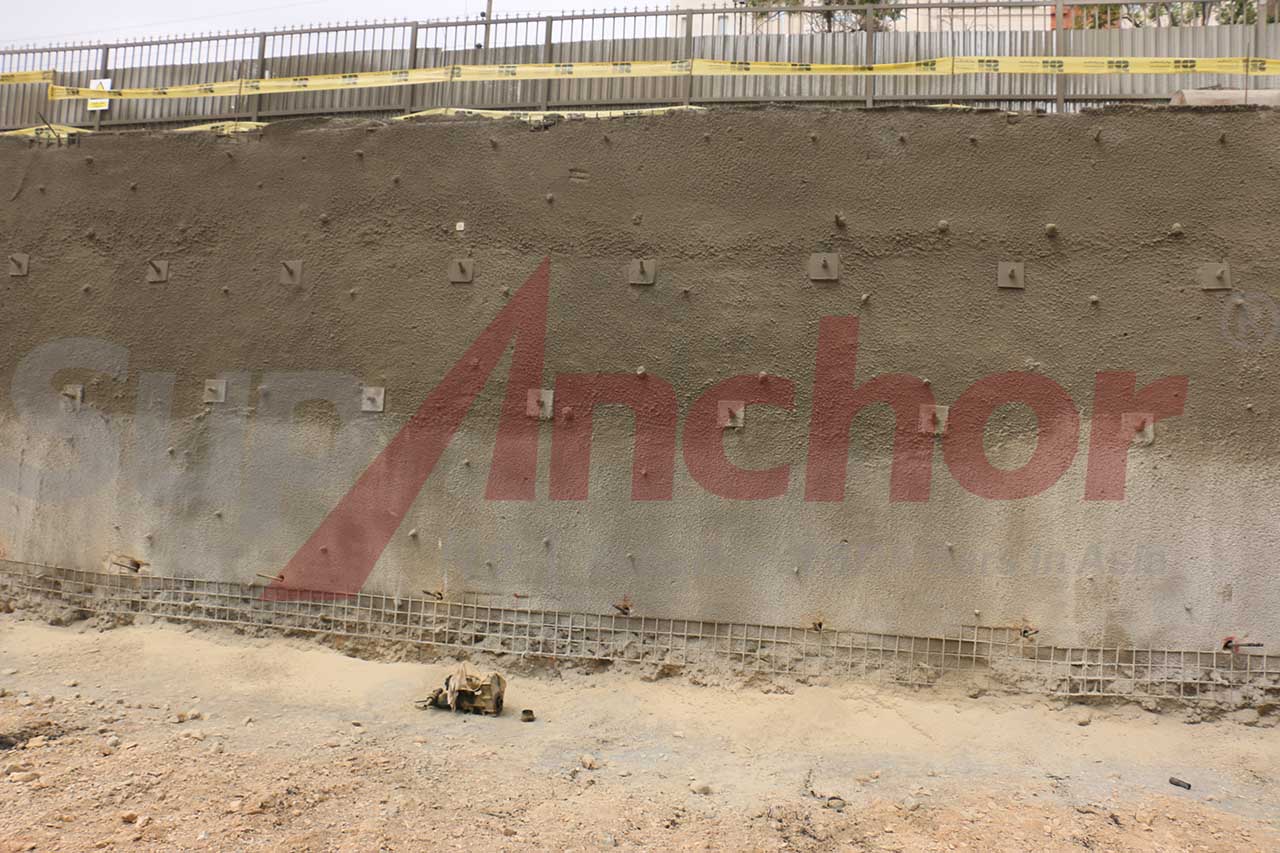
During the rehabilitation of a highway cut slope along the Mediterranean coast, engineers were confronted with saline groundwater and frequent wet‑dry cycles. Steel soil nails installed a decade earlier had suffered severe corrosion, threatening the stability of the road above. The design team specified the S28/400 GFRP Solid Bolt in combination with pressure‑grouted micro‑piles. After 18 months of monitoring, inclinometer readings confirmed stable slope behaviour, and no signs of material degradation were observed. The project highlighted how the bolt’s excellent corrosion resistance removes the need for future remedial works, drastically reducing whole‑life costs.
In underground mining, the cuttability of GFRP is a game‑changer. Continuous miners and roadheaders can simply shear off bolt ends protruding from the face without damaging expensive cutting picks. This contrasts sharply with solid steel bolts, which must be carefully excavated around or removed, causing delays. Mine operators in Australia have adopted the S20/200 and S22/240 models for roof reinforcement in coal headings, where intrinsic safety (non‑sparking) further supports the move away from metallic ground support.
While the GFRP Solid Bolt is installed using conventional drill‑and‑grout sequences, it fits seamlessly into overall support schemes that may involve a variety of anchoring products. For instance, in a large underground cavern, the perimeter could be secured with self drilling anchor systems for immediate support during excavation, while the permanent arch is reinforced with GFRP Solid Bolts to guarantee 120‑year durability. SupAnchor, as a full‑line geotechnical reinforcement system supplier, offers everything from hollow bar anchors and drill‑and‑grout bolts to this latest solid‑FRP anchor, allowing contractors to single‑source a coherent ground support package.
The bolt’s waved thread profile plays a critical role in load transfer. Laboratory pull‑out tests conducted at the University of Stuttgart demonstrated that the mechanical interlock develops bond strengths exceeding 15 MPa in standard cement grout, outperforming smooth‑surface GFRP rods. This ensures that the nominal tensile capacity can be fully mobilised even in moderately fractured rock.
Global investment in infrastructure repair and expansion is projected to reach USD 4.2 trillion annually by 2025, according to the Global Infrastructure Hub. A significant portion of this expenditure goes to tunnels, bridges, and slope stabilization works where anchor durability dictates long‑term maintenance budgets. By choosing a GFRP solution, asset owners can eliminate the hidden corrosion‑related maintenance that plagues metallic systems. SupAnchor’s R&D team, based in its state‑of‑the‑art facility, has invested over five years in composite formulation and full‑scale testing, achieving ISO 9001, ISO 14001, and OHSAS 18001 certification for its manufacturing processes. The company’s engineering experts collaborate closely with consulting firms to develop project‑specific anchor designs, embodying the professional, innovative, and collaborative ethos that has made SupAnchor a trusted soil nail system manufacturer on every continent.
Looking ahead, the GFRP Solid Bolt is poised to become the standard for permanent support in corrosive near‑coastal regions, water‑rich tunnels, and chemically aggressive industrial environments. As the industry increasingly embraces sustainable construction, lightweight, long‑life materials like GFRP align with carbon‑reduction goals by minimising maintenance interventions and material consumption. SupAnchor remains committed to pushing the boundaries of ground anchor technology, ensuring that every project—from a small road cut to a mega‑dam—benefits from reliable, maintenance‑free reinforcement.
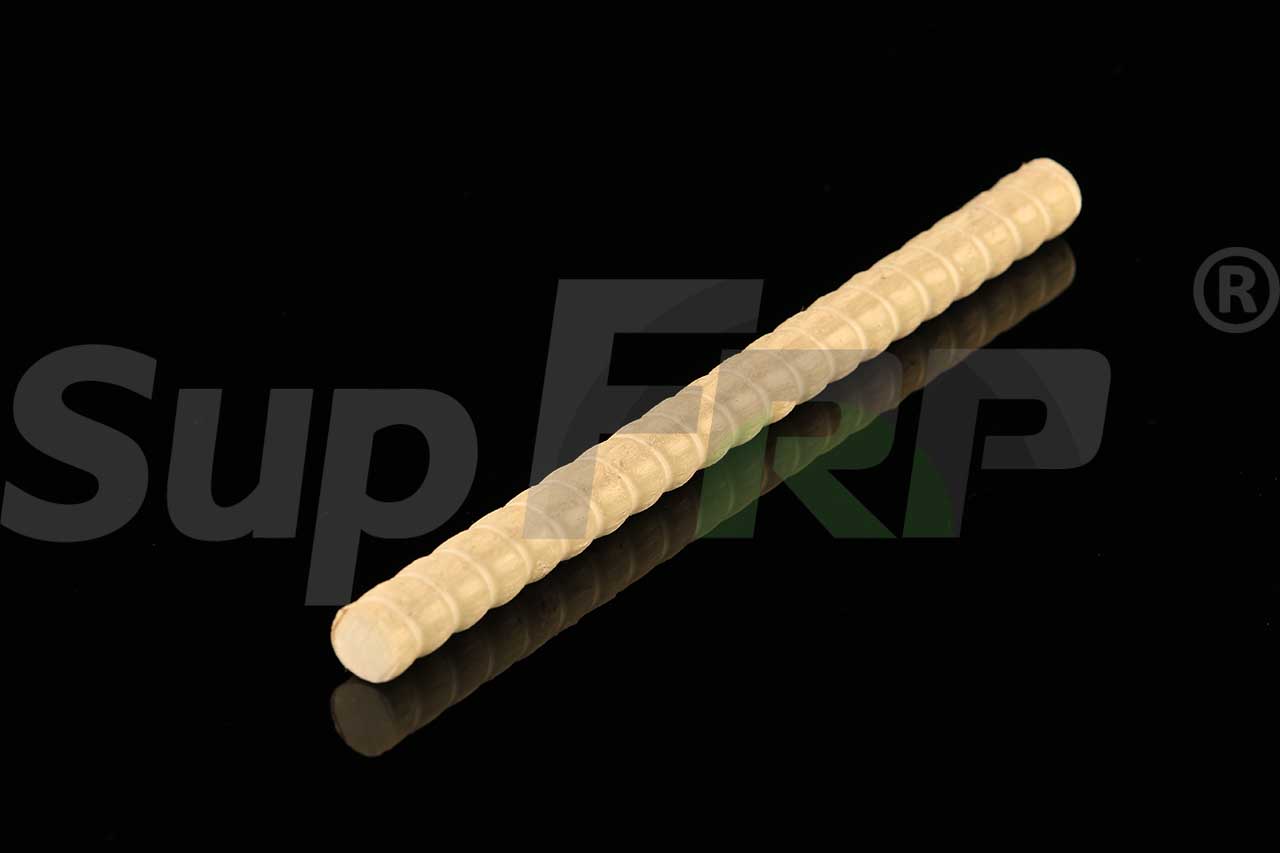
The SupFRP® GFRP Solid Bolt combines high tensile strength with permanent corrosion protection, setting a new benchmark in geotechnical anchoring.
SupAnchor's self drilling anchor system deployed on an Alpine slope stabilization project, showcasing efficient installation and high-performance geotechnical reinforcement in challenging conditions.
SupAnchor's Grade 75 self-drilling hollow anchor bars deliver ASTM A615 performance, continuous T-thread bonding, and proven reliability for hydropower slope stabilization projects.
SupAnchor's self drilling anchor system deployed on an Alpine highway slope stabilization project, enabling fast drilling and grouting in fractured rock while meeting strict safety and environmental standards.
SupAnchor launches a corrosion-resistant GFRP friction bolt, offering lightweight, spark-free ground support for tunneling and mining.
SupAnchor's self drilling anchor system demonstrates superior performance in a challenging slope stabilization project, ensuring safety and efficiency.