
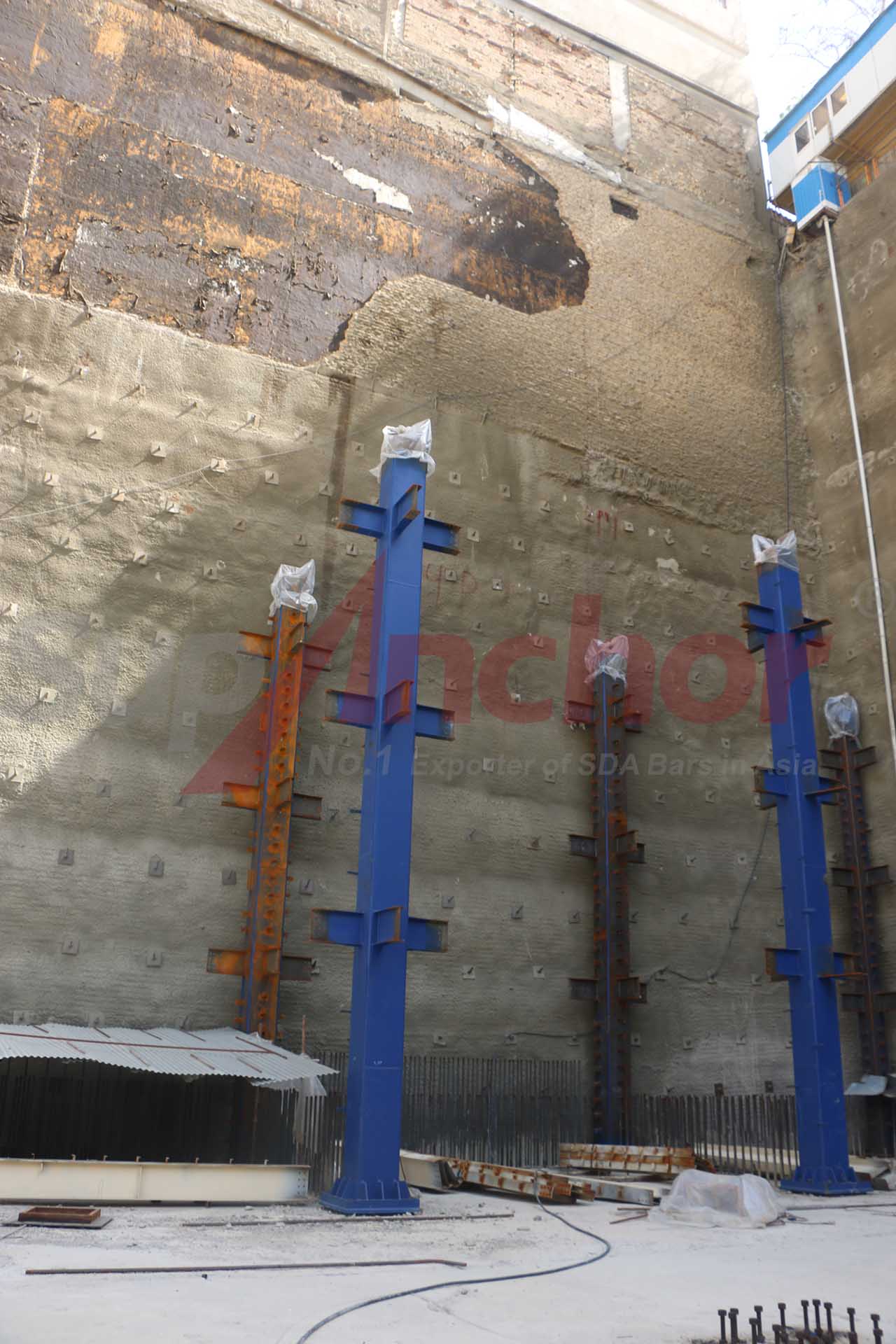
In the rugged highlands, where tectonic forces have fractured the rock and relentless rainfall threatens slope stability, a vital new highway tunnel is taking shape. The project, a twin-bore tunnel traversing a seismically active mountain range, demands the highest standards of geotechnical reinforcement. At the heart of the stabilization strategy lies the SupAnchor self drilling anchor system, a solution that merges drilling, grouting, and anchoring into a single efficient operation.
The terrain is unforgiving: heavily jointed phyllite and schist formations, interspersed with fault gouge, create a “squeezing ground” condition that conventional rock bolts cannot handle. With over 2,000 meters of tunnel and steep approach cuttings exceeding 60 meters in height, the risk of collapse and surface settlement was unacceptable. Engineers needed a reliable geotechnical reinforcement system that could be installed rapidly without sacrificing performance. SupAnchor’s hollow bar anchors proved to be the answer.
The highway is part of a transnational corridor designed to boost economic connectivity and reduce travel time by 40% across the region. However, the alignment crosses a mountain pass where bedrock is deeply weathered and groundwater is abundant. During excavation, pore pressure fluctuations triggered frequent minor falls, delaying progress. “We were facing a classic case of weak rock with high in-situ stress,” explained the project’s chief geotechnical engineer. “Traditional grouted rebar anchors required pre-drilling, which often collapsed before insertion. We needed a drill-and-grout bolt that could consolidate the ground as it advanced.”
The SupAnchor hollow bar anchor was selected after extensive trials because it functions as a drill rod, injection tube, and permanent reinforcement all in one. This self drilling anchor bolt eliminates the need for a casing, dramatically reducing installation time and risk. With the tunnel face advancing at 3–4 meters per day, production rates soared once the system was adopted.
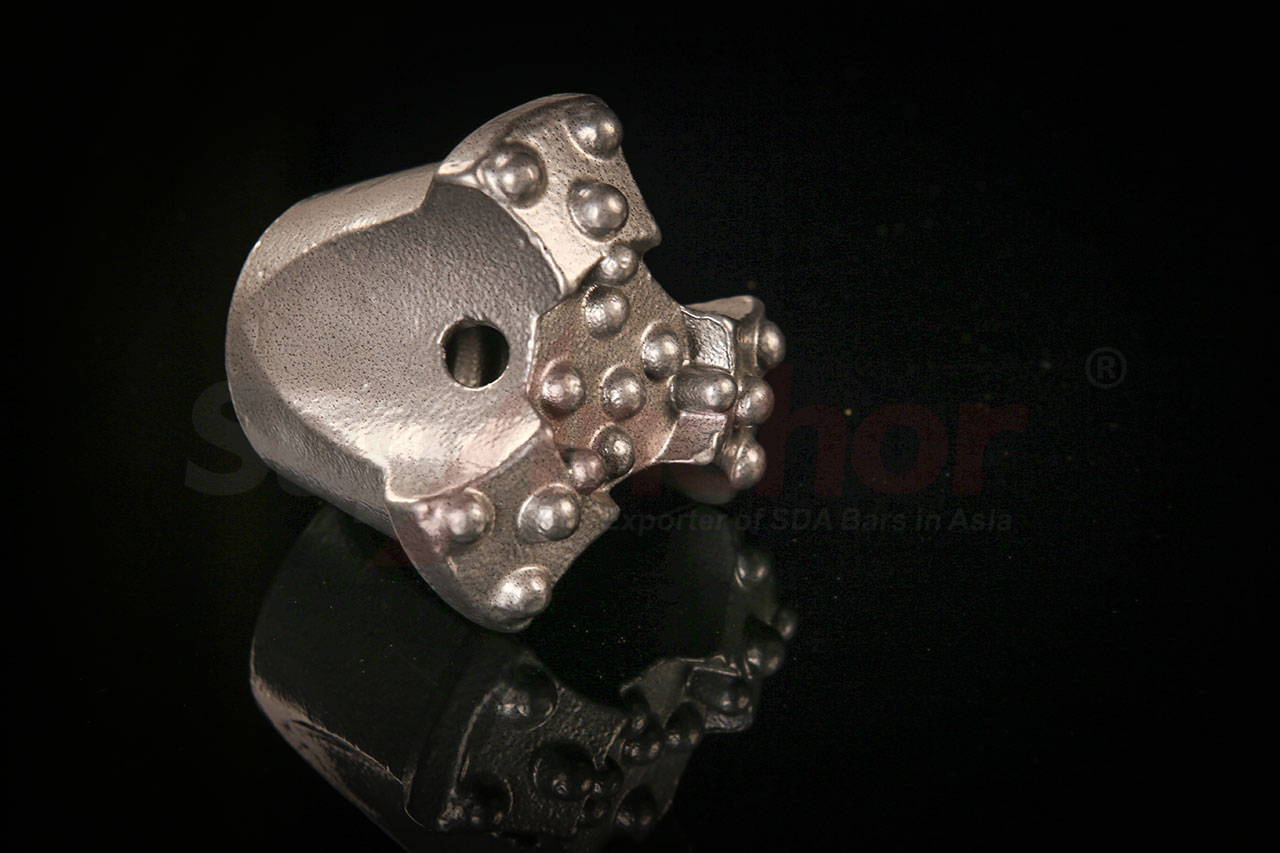
At the portal areas, where slope angles reach 70 degrees, a dense pattern of 25-meter-long self drilling anchors for retaining walls was installed to create a soil nail wall. Workers maneuvered hydraulic drilling rigs onto narrow benches, feeding the anchor bars directly into the competent bedrock. The on-site image captures a crew connecting a new hollow bar to the drill string, with a cloud of dust and mist testament to the aggressive drilling regime. The sacrificial drill bit, manufactured from high-grade tungsten carbide, cuts through mixed ground including large boulders without deviation.
Simultaneous grout injection through the hollow core fills any voids and bonds the bar to the surrounding ground. This immediate ground stabilization system prevents loss of confinement, which is critical in raveling conditions. “With the SupAnchor ground stabilization anchor system, we could grout at pressures up to 1.5 MPa, effectively strengthening the rock mass around the tunnel,” noted the project manager. Over 12,000 linear meters of anchors were installed in the portal slopes alone.
To meet the demanding design loads, SupAnchor supplied its SDA series hollow bars, which feature a continuous coarse-thread profile for maximum grout adhesion. Key specifications are summarized in the table below.
| Parameter | Specification |
|---|---|
| Bar Diameter | 50 mm (R50) |
| Ultimate Tensile Strength | 750 MPa |
| Yield Strength | 500 MPa |
| Elongation | ≥ 8% |
| Standard Length | 3 m / 4 m / 5 m / 6 m (custom available) |
| Corrosion Protection | Hot-dip galvanized (HDG) coating to ISO 1461 |
The hot-dip galvanized coating provides a robust barrier against the aggressive acidic groundwater prevalent in the region, ensuring a 100-year design life. The high tensile strength allows anchorage in the highly stressed rock mass, while the controlled elongation gives the system ductility to accommodate seismic movements. As a micropile hollow bar anchor, these same bars were used to underpin an ancient masonry viaduct 2 km away, demonstrating versatility.
The threading over the full length enables couplers to join bars easily, allowing installers to reach any depth without dedicated crane time. Grout mix designs were optimized with rapid-hardening cement and microsilica to fill the 0.5 mm fracture apertures common in the phyllite. Pull-out tests consistently exceeded the 600 kN ultimate bond resistance, confirming the superior performance of the anchor bolt system for geotechnical engineering.
The success of this mountain highway project underscores a broader shift in civil engineering toward efficient, multi-functional reinforcement technologies. Global infrastructure spending is projected to reach $5.6 trillion annually by 2025, much of it in regions with challenging ground conditions. Self drilling anchor systems are increasingly specified for tunnels, deep excavations, and landslide remediation because they reduce construction time and enhance safety. Unlike conventional soil nails or rock bolts, which require separate drilling and insertion steps, a self drilling bolt for civil engineering cuts cycle times by up to 50%.
In tunneling, the impact is even more pronounced. NATM (New Austrian Tunneling Method) designs rely heavily on rapid initial support; hollow bar anchors can be installed immediately without waiting for casing removal. This capability kept the mountain tunnel excavation on schedule despite encountering unexpected fault zones. The project has drawn attention from infrastructure agencies worldwide, with delegations from Europe and North America visiting the site to study the application of such advanced ground anchor bolt factory solutions.
For slope stabilization, the ability to install soil nail system manufacturer-certified anchors at any angle—including overhead—proved invaluable. On one 80-meter-high cut slope, workers installed 15-meter hollow bar anchors from suspended platforms, achieving a fully operational retaining system in just three weeks. The environmental footprint was minimal because no heavy casing pipes had to be removed and discarded, and the small drilling rigs could maneuver on narrow ledges.
The mining sector is also taking note. Although this project is transportation-related, the same rock bolt for underground mining technology is being adopted in deep mines where seismicity and squeezing ground present similar challenges. The hollow bar’s ability to function as a self-drilling, grout-injected, high-capacity tendon makes it a Swiss Army knife for ground control.
As a leading SDA bolt factory direct supply manufacturer, SupAnchor has built a reputation for reliability and innovation. With ISO 9001, ISO 14001, and OHSAS 18001 certifications, the company operates advanced production lines in China and distribution hubs in multiple continents, ensuring just-in-time delivery to projects large and small. Its R&D team collaborates with universities and engineering institutes to constantly push the boundaries of anchor technology—recent developments include corrosion-resistant duplex coatings and smart anchors with embedded fiber optic sensors for strain monitoring.
“Our philosophy is ‘Professional, Innovative, Collaborative,’” said SupAnchor’s Global Sales Director. “We don’t just sell products; we partner with contractors and designers to solve the toughest ground engineering problems.” This approach has led to the company’s involvement in landmark projects such as the Trans-Andean highway tunnels, high-speed rail mega-bridges, and deep basements in ultra-urban environments.
The project featured here exemplifies the company’s commitment to on-site support. SupAnchor’s technical team provided training, installation supervision, and real-time pull-test analysis to optimize anchor patterns. Such hands-on service, combined with a robust supply chain, ensures that the quality of the anchor bolt system for geotechnical engineering translates directly to field success.
As cities grow denser and infrastructure pushes into more remote and hostile terrains, the demand for versatile, high-performance ground reinforcement will only intensify. The mountain highway tunnel is on track for completion six months ahead of schedule, thanks in significant part to the productivity gains from the SupAnchor system. The lessons learned here—particularly in squeezing ground management and high-seismicity design—are already influencing new standards for anchor technology globally.
For the geotechnical engineering community, this project stands as a testament to what can be achieved when innovative products like the self drilling anchor system are deployed intelligently. SupAnchor remains at the forefront, ready to supply the next generation of safer, stronger, and more sustainable ground support solutions. As one project leader concluded, “In 30 years of tunneling, I’ve never seen anchors perform so consistently in such bad ground. This is a game-changer.”
SupAnchor's self drilling anchor system deployed on an Alpine slope stabilization project, showcasing efficient installation and high-performance geotechnical reinforcement in challenging conditions.
SupAnchor's Grade 75 self-drilling hollow anchor bars deliver ASTM A615 performance, continuous T-thread bonding, and proven reliability for hydropower slope stabilization projects.
SupAnchor's self drilling anchor system deployed on an Alpine highway slope stabilization project, enabling fast drilling and grouting in fractured rock while meeting strict safety and environmental standards.
SupAnchor launches a corrosion-resistant GFRP friction bolt, offering lightweight, spark-free ground support for tunneling and mining.
SupAnchor's self drilling anchor system demonstrates superior performance in a challenging slope stabilization project, ensuring safety and efficiency.