
In a landmark infrastructure initiative across Southern Europe, engineers are deploying advanced geotechnical reinforcement systems to stabilize a critical tunnel segment. The project, part of a trans-European transportation network, faces complex geological conditions including fractured limestone, high groundwater pressure, and variable rock mass quality. To ensure long-term structural integrity, the construction consortium selected the self drilling anchor system from SupAnchor, a leading ground anchor bolt factory with global credentials. This article explores how the innovative drill-and-grout bolt technology is addressing the site's unique challenges and setting new benchmarks in underground construction safety.
The €2.3 billion project, funded by the EU's Connecting Europe Facility, is expected to reduce cross-border travel time by 45 minutes and handle over 20,000 vehicles daily upon completion in 2028. Geotechnical engineers from six countries have collaborated on the design, which includes 45 cross-passages and three ventilation shafts, all requiring robust support systems.
According to Marco Rossi, Geotechnical Manager for the construction JV, "The SupAnchor system allowed us to maintain advance rates even in the weathered karst zone. The ability to drill and grout simultaneously was a game-changer for our schedules and budget."
The Lot C of the Alpine Connectivity Tunnel involves twin-tube tunnels each 8.5 kilometers long, traversing the seismically active Dinaric Alps. With overburden reaching 600 meters, the rock mass alternates between competent dolomite and heavily fractured karst formations. High water inflows of up to 300 liters per second were encountered during pilot drilling. Such conditions demand a rock support system that not only provides immediate load-bearing capacity but also resists corrosion over the tunnel's 120-year design life. Conventional rock bolts with separate drilling and grouting phases proved inefficient, as borehole collapse and grout washout were frequent. The project's design engineers turned to SupAnchor's hollow bar anchor, a type of self drilling anchor bolt that combines drilling, grouting, and anchoring into a single operation.
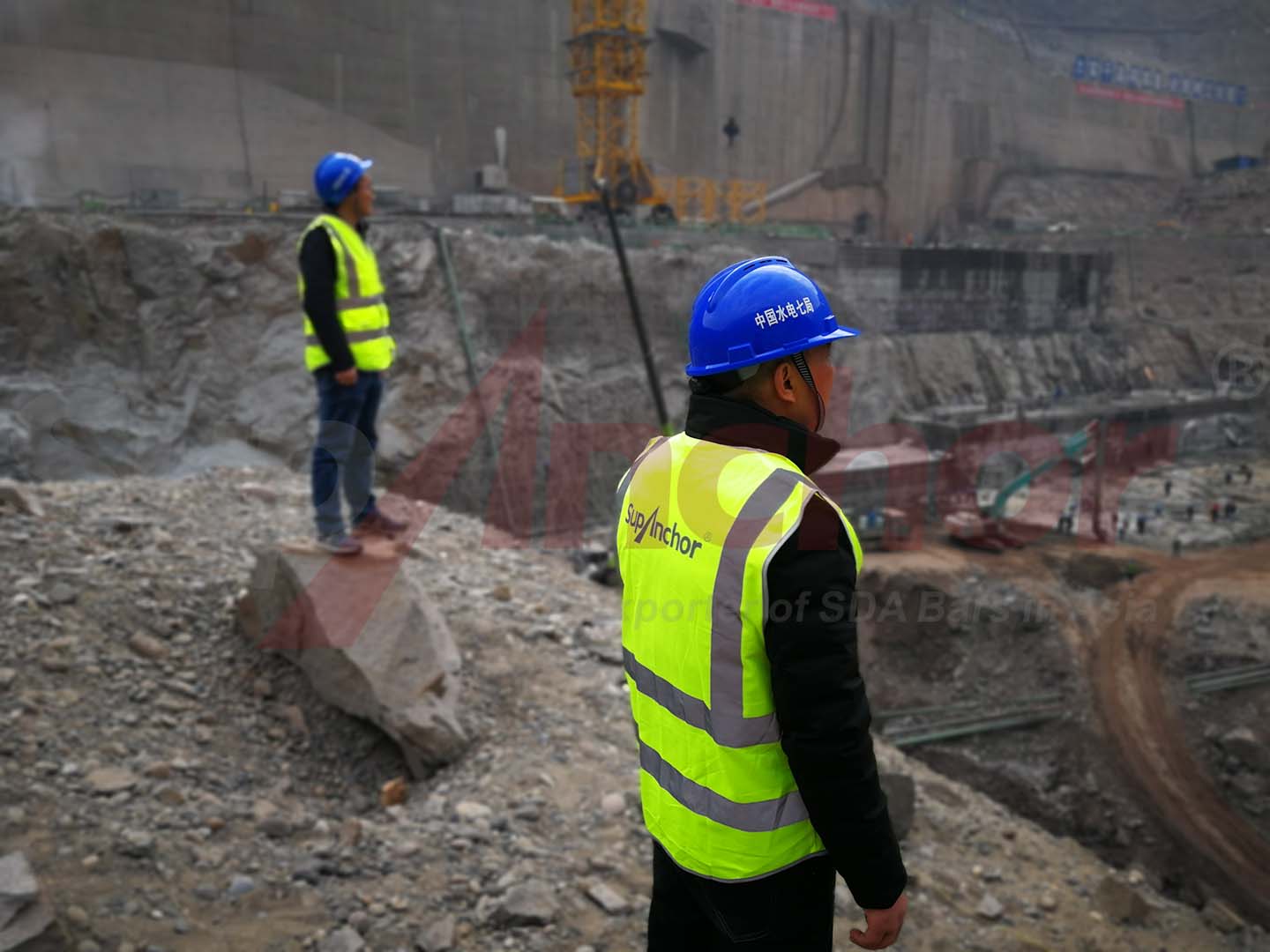
At the construction face, a rig equipped with a hydraulic drifter advances the self drilling anchor bolt through the overburden. The sacrificial drill bit attached to the hollow bar anchor chews through rock and soil while a cementitious grout is injected through the bar's central cavity. This simultaneous drilling and grouting, a hallmark of the drill-and-grout bolt, creates a rough interface with the ground, enhancing frictional resistance. The grout penetrates fissures and consolidates the surrounding rock mass, forming a composite reinforced zone. Workers monitor grout return to confirm complete borehole filling, a critical quality control step visible in the accompanying construction image.
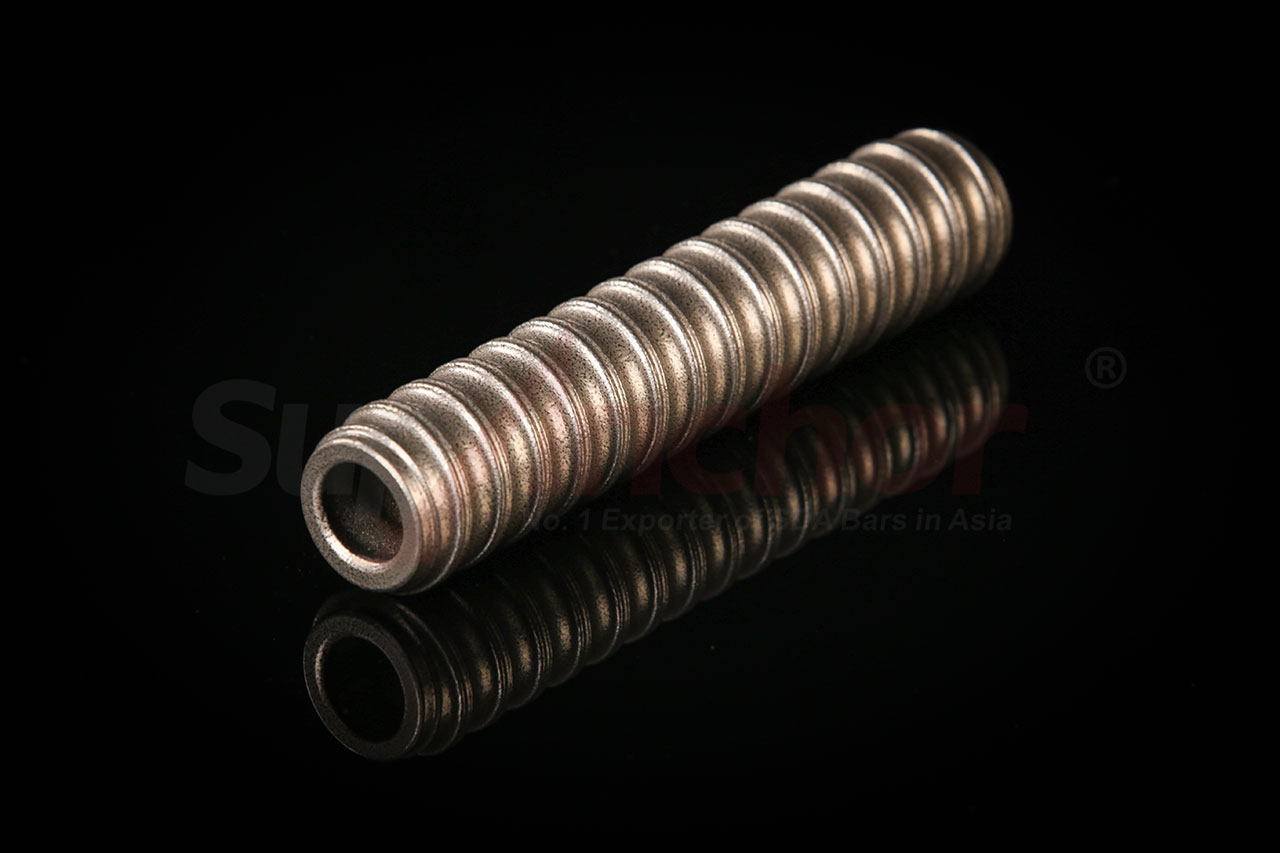
SupAnchor supplied R32 and R38 self drilling anchor systems, with bar diameters ranging from 25 mm to 40 mm and lengths up to 6 meters, allowing installation of up to 12-meter long anchors using couplers. The steel grade S460N (460 MPa minimum yield strength) provides an ultimate tensile strength of approximately 680 MPa. For sections with aggressive groundwater, a hot-dip galvanized coating per ISO 1461 provides a zinc layer of at least 85 microns, while a duplex system (galvanizing plus epoxy) is available for extreme conditions, ensuring a corrosion protection that exceeds 100 years.
The hollow bar anchor's drill bit is a sacrificial component; after reaching the target depth, the bit remains in place, and the bar serves as permanent reinforcement. This design eliminates the retrieval step, saving up to 15 minutes per anchor. The grout mix, designed with a water-cement ratio of 0.4 and superplasticizers, achieves a 28-day compressive strength of 40 MPa, providing a stiff bond to the rock.
The following table summarizes key technical parameters of the ground stabilization anchor system used:
| Parameter | Specification |
|---|---|
| Product Type | Self drilling anchor bolt / Hollow bar anchor |
| Bar Diameter | 25 mm, 32 mm, 40 mm |
| Steel Grade | S460N (yield ≥460 MPa, tensile ≈680 MPa) |
| Coupler Thread | ISO metric or R-thread as required |
| Corrosion Protection | Hot-dip galvanized ≥85 μm; optional duplex coating |
| Drill Bit | Sacrificial carbide cross or button bit |
| Grout Type | Cement-based with additives for quick setting |
The hollow bar anchor installation sequence begins with coupling the bar to the rig. As the rig rotates and percusses, high-pressure grout is pumped through the bar's central cavity using a swivel adapter. The grout exits through flushing holes near the sacrificial bit, filling the annular space and permeating rock fractures. Once the design depth is reached, the rig is detached, leaving the anchor embedded in grout. A plate and nut are then installed to apply pre-tension if required. This single-pass process eliminates the need for casing in unstable ground, reducing installation time by up to 50% compared to conventional methods.
In contrast, traditional rock bolts require separate drilling, rod removal, bolt insertion, and grouting, often leading to borehole collapse in fractured zones. The self drilling anchor system overcomes these challenges, enabling crews on the Vransko Tunnel lot to achieve 15–20 installations per shift, compared to 8–10 with older techniques. This productivity gain was crucial for meeting the project's tight EU funding deadlines.
Corrosion protection is another critical aspect. The tunnel's karst groundwater contains dissolved CO₂ and sulfates, which accelerate steel degradation. The hot-dip galvanized coating acts as a sacrificial anode, while the optional duplex system—combining galvanizing with a fusion-bonded epoxy topcoat—withstands 1000 hours of salt spray per ASTM B117. Such measures align with the 120-year design life mandated by European standards. In sections where a waterproof membrane is installed, the anchors remain encased in grout and concrete, further shielding them from corrosive agents.
Behind every anchor lies rigorous quality control. SupAnchor's manufacturing plant subjects each heat of steel to spectrochemical analysis, ensuring compliance with DIN 488-1. Thread geometry is verified with optical comparators, and random samples undergo pull-out testing in a simulated grout body. For the Alpine project, additional tests were conducted at the University of Ljubljana's geotechnical lab, where bonded lengths of 1 meter withstood over 600 kN before steel yield occurred. The factory's batch traceability system, linked to a QR code on each anchor, allows engineers to retrieve the complete production history—a requirement increasingly specified by European clients.
The deployment of this geotechnical reinforcement system comes at a time of surging global infrastructure investment. A 2023 report by Allied Market Research projects the ground anchor market to reach $2.8 billion by 2030, driven by urbanization, mining expansion, and renewable energy projects. The self drilling bolt for civil engineering applications is gaining traction due to its efficiency and adaptability. In Europe, strict regulatory frameworks like Eurocode 7 require rigorous performance validation, and SupAnchor's products carry CE marking under ETAG 025.
The anchor bolt system for geotechnical engineering must demonstrate both static and dynamic performance. On this project, pull-out tests confirmed loads exceeding 500 kN per anchor, yielding a factor of safety above 2.0. The system's seismic resilience was validated by dynamic testing at the University of Ljubljana, which simulated accelerations of 0.3g typical of the Dinaric region. The hollow bar anchor's ductile steel and robust thread design ensured no strength degradation under cyclic loading.
Beyond tunneling, the same technology serves as a rock bolt for underground mining operations. In South Africa's deep-level gold mines, the anchor is installed in under 3 minutes to support stopes, showcasing the reliability of the rock bolt for underground mining. SupAnchor, as a leading soil nail system manufacturer, also supplied self drilling anchors for the open-cut retaining walls at the tunnel portals. There, the self drilling anchor for retaining walls was installed with 200 mm spacing, stabilizing loose colluvial soils and keeping lateral deflections under 5 mm. In the soft ground approaches, the anchor functioned as a micropile hollow bar anchor to underpin bridge abutments, transferring loads to competent bedrock. This multifunctionality streamlines logistics, reducing inventory needs.
The ground stabilization anchor system also contributes to sustainability. By eliminating separate drilling and casing, it reduces spoil generation and cement use, lowering the carbon footprint. SupAnchor's SDA bolt factory direct supply model ensures consistent quality and traceability, with each batch certified to ISO 9001. The company's automated thread rolling and CNC machining maintain tight tolerances, while in-house tensile testing up to 2,000 kN verifies every lot.
Founded in 2007, SupAnchor has grown from a regional ground anchor bolt factory into a global leader. The company produces over 600,000 meters of self drilling anchor bolts annually at its Fujian, China facility, with a distribution center in Rotterdam serving the European market. Its innovation extends to patented thread designs that maximize load transfer and allow rapid coupling underground—a key advantage in the Alpine tunnel where long anchors were sectioned together. Contractors benefit from SDA bolt factory direct supply, which reduces logistical delays.
SupAnchor's collaborative ethos is demonstrated through on-site training and value engineering. For example, engineers worked with the project consortium to optimize anchor spacing based on real-time geological mapping, reducing the total anchor count by 12% without compromising safety. This "Professional, Innovative, Collaborative" approach, combined with ISO 14001 and OHSAS 18001 certifications, underscores the company's commitment to environmental stewardship and worker safety.
As Europe accelerates its green transition, new hydropower projects and railway tunnels will demand ever more efficient ground support. SupAnchor is developing next-generation anchors with integrated fiber-optic sensors for real-time strain monitoring, aiming to commercialize them by 2025. This proactive innovation ensures that the hollow bar anchor remains at the forefront of geotechnical practice.
Environmental stewardship is embedded in SupAnchor's operations. The factory in Fujian uses a closed-loop water system and recycles steel scrap, achieving a 95% material utilization rate. The self drilling technology reduces on-site noise and vibration compared to percussion drilling with casing, enhancing community acceptance near the tunnel portals. Such factors align with EU directives on sustainable construction.
SupAnchor's self drilling anchor system delivers efficient ground stabilization in a large-scale infrastructure project, offering technical advantages in difficult geological conditions.
SupAnchor unveils SupFRP® GFRP reinforcement rebar offering high tensile strength, corrosion resistance, and versatility for soft-eye excavation, sea walls, and precast elements. Learn about specs and applications.
SupAnchor's self drilling anchor system has been successfully deployed on a highway slope stabilization project in Europe, overcoming fractured rock and loose soil conditions with high-strength hollow bar anchors and drill-and-grout technology.
SupAnchor launches SupFRP® GFRP friction bolt: lightweight, corrosion-resistant, non-conductive, high tensile strength, easy ore separation.
European infrastructure project overcomes difficult geology with SupAnchor self drilling anchor system. Technical specs, industry value, and brand insight.