
The relentless expansion of Europe’s transportation corridors often collides with unforgiving geological obstacles. On a stretch of the Trans-European Transport Network (TEN-T) linking northern industry to Mediterranean ports, engineers faced a critical challenge: stabilizing near-vertical rock slopes riddled with fractured schist and active groundwater seepage. Traditional drilling and anchoring methods proved inefficient, time-consuming, and unsafe. The solution came in the form of an advanced self drilling anchor system supplied by SupAnchor, a globally recognized specialist in geotechnical reinforcement solutions.
This news report examines how a self drilling anchor bolt technology not only mitigated the risks but also accelerated construction timelines, setting a benchmark for future infrastructure projects in similarly demanding environments.
The project, part of the A9 Highway Upgrade through the Bavarian Alps, required the widening of a 14-kilometer mountain section prone to landslides. The geology comprises heavily jointed mica schist with pockets of weathered gneiss, intersected by seasonal water flow. During preliminary investigations, core samples revealed rock quality designation (RQD) values as low as 25%, indicating poor rock mass integrity. Excavation for new retaining walls and tunnel portals threatened to destabilize existing slopes, endangering both workers and the operational highway below.
Conventional anchored retaining systems demanded separate drilling, casing installation, tendon insertion, and grouting steps—a process that frequently led to borehole collapse in the weak rock. Moreover, the presence of water made cement washout a constant concern. The project’s lead geotechnical consultant, Dr. Markus Ettinger, noted: “We needed a system that could drill, reinforce, and drain simultaneously without losing ground. The hollow bar anchor approach was the logical choice.”
After an extensive review, the construction consortium selected SupAnchor’s SDA (Self Drilling Anchor) solution, a fully integrated drill-and-grout bolt designed for difficult ground. The anchors would serve multiple purposes: temporary cut slope stabilization, permanent retaining wall tiebacks, and micropile foundations for overhead signage structures.
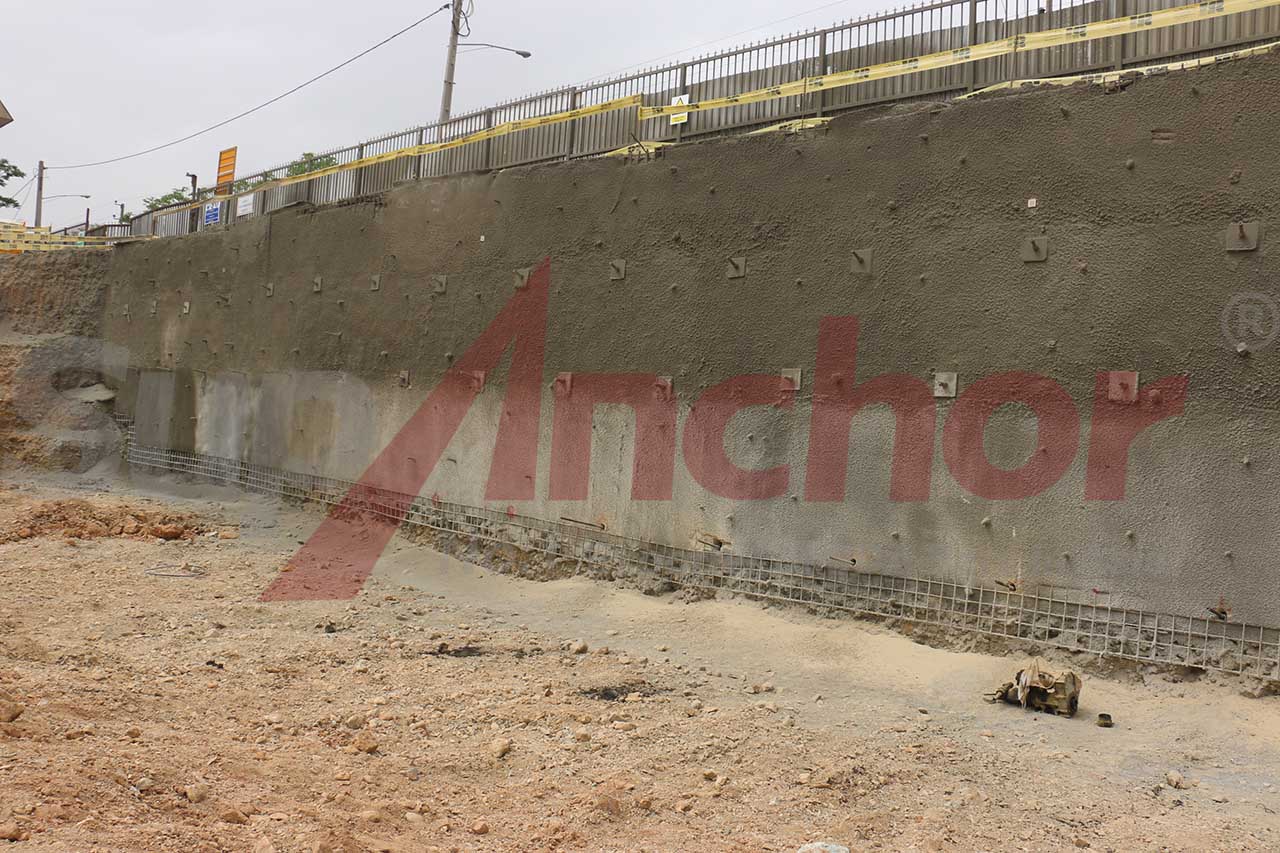
On the misty morning of installation, crews mobilized hydraulic rotary-percussive drill rigs equipped with SupAnchor’s hollow bars. The image above captures a typical setup: an SDA anchor being advanced into a steep rock face while synchronized grout injection fills the borehole annulus and permeates surrounding fractures. The system eliminates the need for temporary casing, as the sacrificial drill bit remains in place, and the hollow bar itself acts as both the drill rod and the reinforcement tendon.
Key specifications of the deployed SDA anchors are summarized in Table 1. These parameters were tailored to the site’s load requirements and corrosive environment, where de-icing salts and mountain runoff demand robust protection.
| Parameter | Specification |
|---|---|
| Nominal Outer Diameter | 32 mm (T32) |
| Steel Grade | High-Strength Alloy Steel (EN 10025 S355J2H equivalent) |
| Ultimate Tensile Strength | ≥ 660 kN |
| Yield Strength | ≥ 520 kN |
| Elongation at Fracture | ≥ 15% |
| Corrosion Protection | Hot-Dip Galvanized (≥ 85 µm thickness) + optional epoxy coating |
| Drill Bit Type | Button or carbide cross-cut, depending on rock hardness |
| Standard Lengths | 2 m, 3 m, 4 m, 6 m; couplable up to 12 m or more |
| Grouting Method | Simultaneous drilling and grouting through hollow core |
| Approvals/Certifications | ISO 9001, ISO 14001, CE marking (ETAG 029 compliant) |
Table 1. Technical specifications of the SupAnchor SDA T32 hollow bar anchor used on-site.
The 660 kN tensile capacity comfortably exceeded the design load of 450 kN per anchor, providing a safety factor of over 1.4. The hollow core (approximately 16 mm inner diameter) allowed grout to be pumped at pressures up to 4–6 bar, effectively permeating microfractures and creating a bond zone far superior to post-grouted alternatives. The continuous left-hand rope thread along the entire length enabled couplers to join bars without welding, adapting to varying embedment depths—a critical advantage when rockhead depth proved inconsistent.
The simultaneous drilling and grouting process, often termed the self drilling bolt for civil engineering, minimized disruptions. Crews reported a 40% reduction in anchor installation time compared to traditional duplex systems. Most importantly, there was no borehole collapse, and the immediate grout encapsulation countered groundwater washout. The system also served as a drainage conduit: weep holes could be incorporated along the bar if needed, but in this case, the porous grout itself allowed slow drainage, reducing hydrostatic pressure behind the retaining structure.
The versatility of the SDA ground stabilization anchor system was evident in its deployment across three distinct work fronts:
Throughout the works, SupAnchor’s on-site technical support team conducted pull-out tests to verify bond strength. Results consistently exceeded the 1.5-times-design-load requirement, with minimal creep deformation. The project’s quality manager, Ms. Elena Hoffmann, commented: “The reliability of the anchor bolt system for geotechnical engineering gave us confidence to push ahead during a tight schedule. We especially valued the direct supply from the ground anchor bolt factory, which ensured consistent quality and rapid fulfillment of our changing orders.”
The success of the A9 upgrade resonates far beyond Bavarian highways. Across Europe, aging infrastructure and new tunnel projects—from the Scandinavian Faste-forbindelsen to the Alpine Base Tunnels—demand geotechnical solutions that are faster, safer, and more environmentally conscious. The self drilling anchor system aligns perfectly with these goals by minimizing spoil, reducing noise, and eliminating vibration-intense driving methods.
Globally, the trend toward geotechnical reinforcement system integration is accelerating. The hollow bar anchor method, often called self drilling anchor bolt in North American markets, is gaining recognition not just for slopes and retaining walls but also for underground excavations. As a rock bolt for underground mining, for example, the same technology provides immediate support in tunnels and mines, where quick installation in collapsing ground is paramount. The interoperability of the system across civil and mining sectors demonstrates its cross-industry relevance.
Environmental regulations also play a role. The European Construction Products Regulation (CPR) and various sustainability rating systems favor techniques that reduce carbon footprint. A drill-and-grout bolt operation uses less steel than conventional multi-component anchors (no separate casing) and produces less waste. Moreover, the ability to fabricate bars to custom lengths and ship directly from an SDA bolt factory direct supply reduces logistics emissions and inventory costs.
The self-drilling anchor emerged from a need to solve persistent problems in weak, water-bearing ground. SupAnchor, founded over two decades ago, has been at the forefront of refining the hollow bar technology. With ISO 9001 and ISO 14001 certifications, the company operates from a state-of-the-art manufacturing facility where quality control is embedded from raw steel to finished product. Each batch undergoes rigorous tensile, elongation, and metallurgical testing, ensuring compliance with EN 10204 Type 3.1 certificates.
Collaboration is central to SupAnchor’s ethos. On the A9 project, engineers worked closely with the design team to optimize anchor lengths, corrosion protection levels, and drilling parameters. This partnership extended to training on correct coupling procedures and grout mix design, reducing the risk of installation errors. The result was a project delivered on time and with zero lost-time injuries related to geotechnical instability.
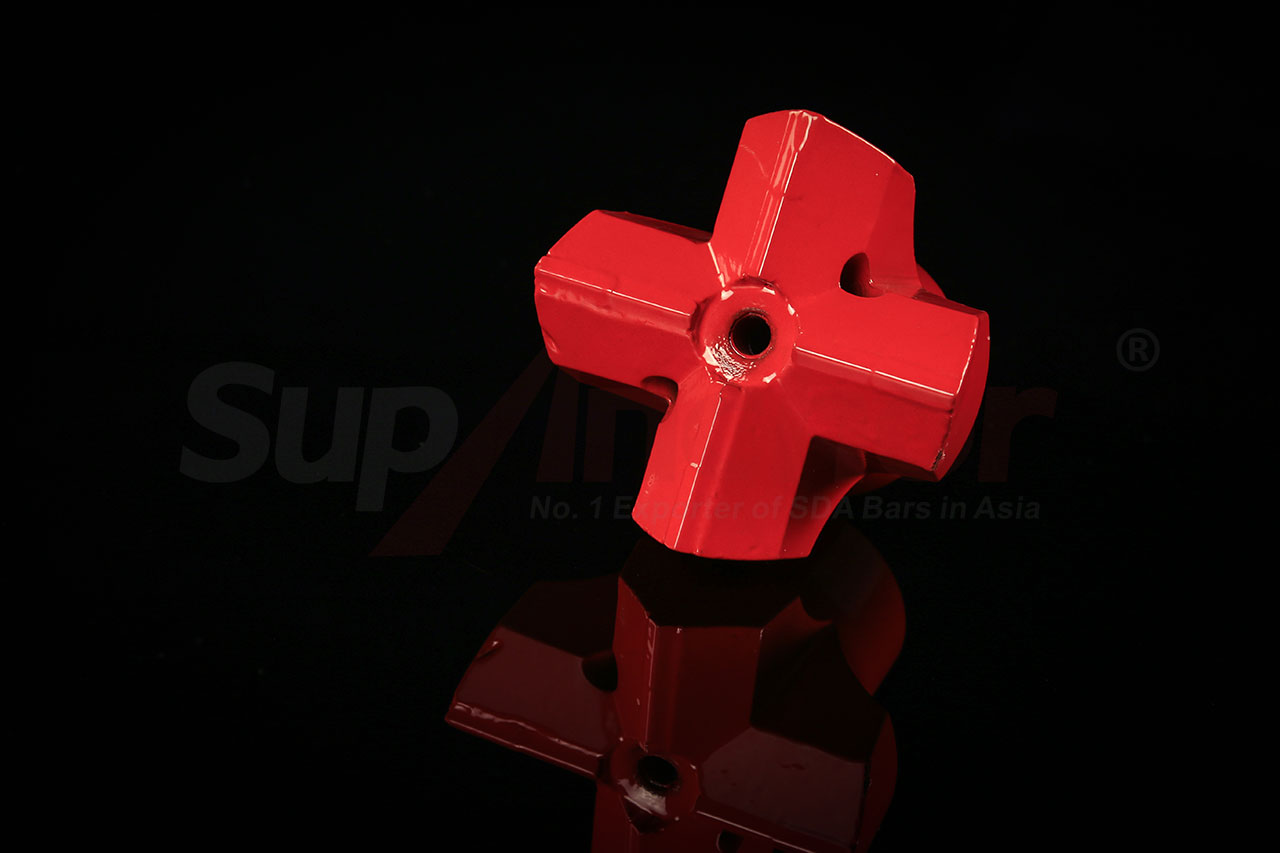
The image above shows the finished SDA bolt—a sleek, continuous profile with a sacrificial carbide bit. Its simplicity belies the advanced metallurgy and thread form geometry that ensures efficient energy transfer during drilling. The rough, galvanized surface promotes mechanical interlock with the grout, enhancing load transfer. Such details matter when human lives and multi-million-euro investments are at stake.
As transportation networks push into more challenging terrain, the demand for reliable, efficient ground stabilization anchor system technology will only grow. The A9 Highway Upgrade stands as a testament to what can be achieved when innovative products meet practical field expertise. SupAnchor’s self drilling anchors not only solved a complex geotechnical puzzle but also contributed to the broader goals of infrastructure resilience and sustainable construction. For engineers and contractors facing similar conditions, the message is clear: the hollow bar revolution is here, and it is rewriting the rules of ground support.
SupAnchor's self drilling anchor system delivers efficient ground stabilization in a large-scale infrastructure project, offering technical advantages in difficult geological conditions.
SupAnchor unveils SupFRP® GFRP reinforcement rebar offering high tensile strength, corrosion resistance, and versatility for soft-eye excavation, sea walls, and precast elements. Learn about specs and applications.
SupAnchor's self drilling anchor system has been successfully deployed on a highway slope stabilization project in Europe, overcoming fractured rock and loose soil conditions with high-strength hollow bar anchors and drill-and-grout technology.
SupAnchor launches SupFRP® GFRP friction bolt: lightweight, corrosion-resistant, non-conductive, high tensile strength, easy ore separation.
European infrastructure project overcomes difficult geology with SupAnchor self drilling anchor system. Technical specs, industry value, and brand insight.