
In the heart of the European Alps, a major infrastructure project is pushing the boundaries of modern tunneling. The expansion of the Brenner Base Tunnel—a key artery in the Trans-European Transport Network (TEN-T)—has encountered some of the most challenging geological conditions in the continent. To safely navigate the complex mix of fractured rock, loose formations, and high groundwater pressures, engineers have turned to an advanced geotechnical reinforcement system: the SupAnchor self drilling anchor system. This innovative hollow bar anchor technology is proving instrumental in stabilizing excavation faces, securing portal zones, and underpinning critical retaining structures along the tunnel alignment.
The Brenner Base Tunnel, once completed, will be the world’s longest underground railway connection, stretching 64 kilometers beneath the Alps. Its construction involves multiple work sites across Austria and Italy, each facing unique subsurface hurdles. In one particularly demanding section, the tunnel passes through a thrust fault zone composed of heavily fractured phyllites, graphitic schists, and brecciated rocks. These materials exhibit low stand-up time, high deformability, and susceptibility to water ingress—conditions that render conventional drilling and grouting methods risky and inefficient.
Initial assessments indicated that standard rock bolts and grouted anchors would struggle to achieve the required load transfer due to the poor bond between grout and surrounding ground. Moreover, the presence of running sands and silty layers at the tunnel portals posed a threat of collapse during open-cut excavations. To overcome these obstacles, the project consortium sought a reliable ground anchor bolt factory that could supply a versatile, high-capacity, and rapidly installable support solution. After rigorous testing, SupAnchor’s self drilling anchor bolt was selected for its unique ability to drill, grout, and reinforce in a single pass—eliminating the need for casing and reducing installation time by up to 40% compared to conventional systems.
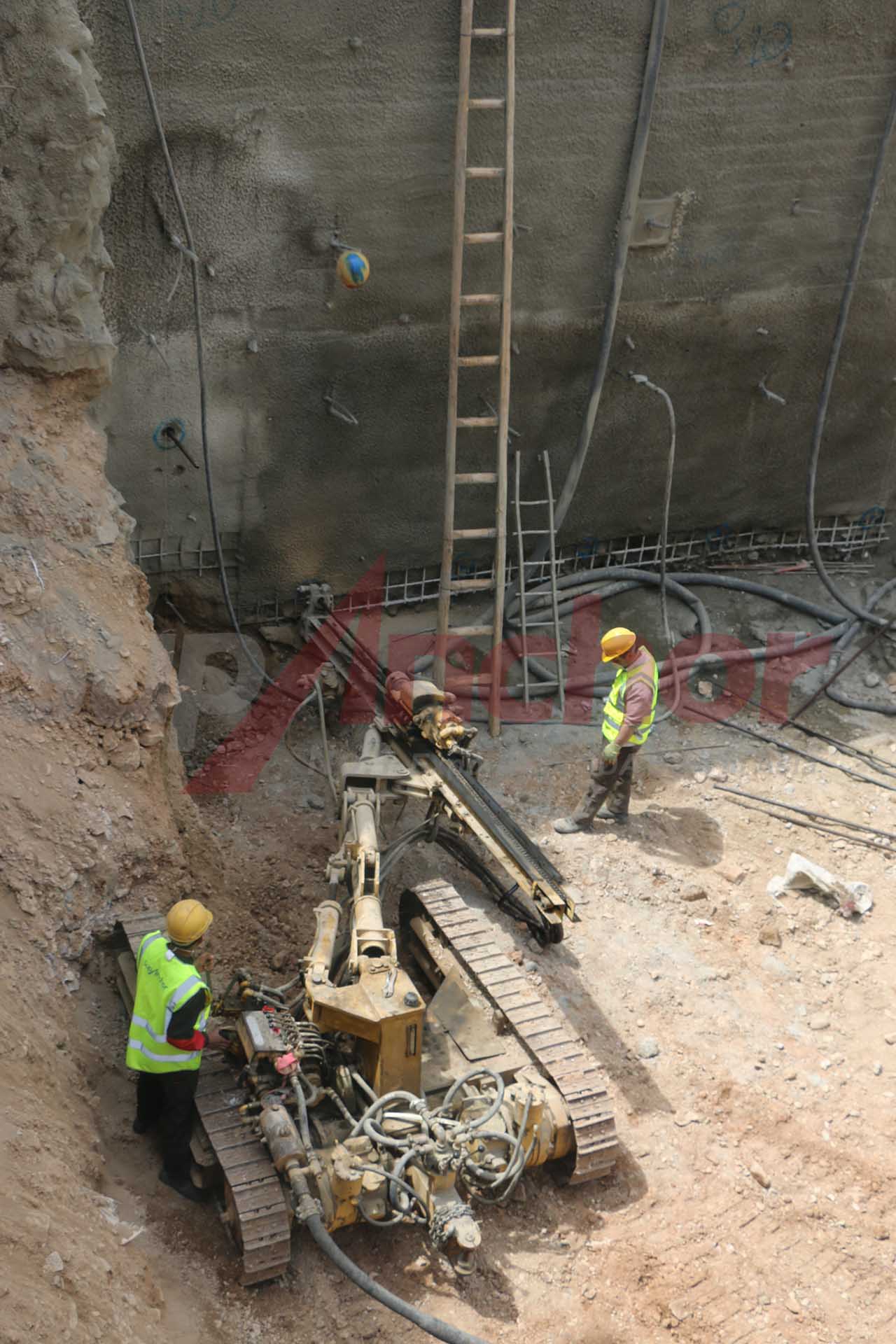
At the construction site captured in the image above, crews can be seen operating a hydraulic drilling jumbo equipped with SupAnchor’s SDA (Self-Drilling Anchor) system. The scene illustrates the seamless integration of the hollow bar anchor into the drilling rig: the bolt itself acts as the drill rod, with a sacrificial drill bit attached to its tip. As the bolt advances through the ground, cementitious grout is pumped through its hollow core under high pressure, immediately filling voids and permeating the surrounding formation. This process simultaneously creates a reinforced grout column, providing immediate skin friction and point anchorage.
For the portal works, which involve deep vertical cuts, a systematic array of these ground stabilization anchor systems was installed in a grid pattern to form a retaining wall. Each self drilling anchor for retaining walls was installed at a 15-degree inclination, with lengths varying from 6 to 12 meters depending on the depth to competent bedrock. The ability to install long anchors without buckling, even in loose overburden, was a decisive factor in preventing slope failures during heavy rainfall events that struck the region last autumn.
Underground, within the main tunnel drives, the drill-and-grout bolt system is being used as both face reinforcement and radial support. In the fractured fault zone, 8-meter-long self drilling anchor bolts are installed on a 1.5m × 1.5m pattern immediately after each excavation round. This practice has significantly reduced overbreak and limited ground deformations to within acceptable tolerances, ensuring the safety of miners and the continuity of operations.
The SupAnchor SDA bolts deployed in this project feature a continuous thread along the entire length, allowing for couplers to extend the anchor as needed and for the attachment of plates and nuts without additional threading operations. The hollow core diameter is optimized for efficient grout flow while maintaining high tensile and shear capacity. Key technical parameters are summarized in the table below:
| Parameter | Value / Range |
|---|---|
| Bar Diameter | 25 mm – 105 mm |
| Tensile Strength | ≥ 550 MPa |
| Yield Strength | ≥ 420 MPa |
| Elongation | ≥ 18% |
| Corrosion Protection | Double Corrosion Protection (DCP) with epoxy coating + cement grout |
| Hollow Core Diameter | ≥ 12 mm (for effective grout flow) |
| Drill Bit Type | Sacrificial, available in various configurations for rock, soil, and weathered formations |
The high tensile strength ensures each anchor can sustain loads exceeding 400 kN, critical for supporting large spans in the tunnel. The double corrosion protection—comprising a factory-applied epoxy coating and the surrounding cement grout—provides a service life exceeding 100 years, meeting the strict durability requirements of the tunnel’s 200-year design life. The varying diameters allow engineers to select the optimal size based on the required load capacity and drilling conditions; for instance, 32 mm and 40 mm bolts are primarily used for face reinforcement, while 63 mm and 90 mm anchors are employed for long-term portal retaining structures and micropile foundations.
Another notable feature is the system’s adaptability as a micropile hollow bar anchor. When installed with a high-pressure grouting technique, the SDA bolt can be transformed into a load-bearing micropile, transferring structural loads to deeper competent layers. This capability is being utilized at tunnel cross-passages and emergency niches, where additional foundation support was required due to unexpectedly soft ground.
The successful application of the self drilling anchor system at the Brenner Base Tunnel underscores a broader shift in the geotechnical engineering community towards more integrated, time-efficient support methods. As infrastructure projects become increasingly ambitious—from high-speed rail networks in mountainous regions to deep urban excavations for metro stations—the demand for reliable ground stabilization anchor systems continues to climb.
A key driver is the need to reduce construction timelines without compromising safety. Traditional anchoring methods often require multiple steps: drilling, removing the drill steel, inserting the tendon, and then grouting. In unstable ground, this sequence risks hole collapse and loss of grout. The SupAnchor SDA system condenses these steps, delivering a fully functional anchor in a single pass. This not only accelerates cycle times but also enhances worker safety by minimizing exposure to unsupported ground.
Environmental considerations are also at play. The low-vibration installation and minimal spoil generation of the self drilling bolt for civil engineering align with stringent European environmental mandates. In ecologically sensitive alpine zones, the reduced footprint of the drilling operation and the elimination of casing disposal are significant advantages.
Globally, the market for advanced soil nail system manufacturers is expected to grow at a CAGR of 5.8% through 2030, fueled by rising investments in transport infrastructure and the rehabilitation of aging dams, bridges, and retaining structures. The versatility of hollow bar anchors makes them suitable for a wide range of applications beyond tunneling, including slope stabilization, dam anchors, and foundation underpinning. In North America, ongoing upgrades to the electrical grid and water conveyance tunnels are poised to adopt similar technologies, with several ground anchor bolt factories in the supply chain already gearing up for increased demand.
In the mining sector, the same principles apply. Rock bolt for underground mining has long relied on self-drilling anchors for rapid development in poor ground conditions. The Brenner project’s experience is drawing attention from mining engineers looking to improve safety and productivity in deep, high-stress environments.
Behind the Brenner success story is SupAnchor, a manufacturer that has positioned itself as a professional and innovative partner for complex geotechnical challenges. With ISO 9001, ISO 14001, and ISO 45001 certifications, the company adheres to rigorous quality and environmental management standards. Its factory direct supply model ensures that projects receive customized anchor bolt systems for geotechnical engineering without intermediaries, maintaining cost efficiency and technical consistency.
SupAnchor’s R&D team has continually refined the SDA bolt system based on real-world feedback from projects in over 30 countries. Recent innovations include a specialized thread profile that increases fatigue resistance for dynamic loading conditions—vital for earthquake-prone regions—and a new fast-setting grout formulation that develops strength within 2 hours, allowing for quicker installation of subsequent support elements.
Collaboration is central to SupAnchor’s ethos. On the Brenner project, the company’s engineers worked closely with the contractor and designer to develop detailed installation manuals, conduct on-site training, and perform pull-out tests to validate design assumptions. This level of engagement, combined with the technical performance of the anchor bolt system for geotechnical engineering, has cemented SupAnchor’s reputation as a go-to ground anchor bolt factory for critical infrastructure worldwide.
As the tunneling industry prepares for even more demanding projects—such as the proposed 250-kilometer Trans-Himalayan Railway and the expansion of the London Crossrail network—the lessons learned from the Alps will resonate broadly. The use of self drilling anchors for retaining walls, slope stabilization, and underground openings is expected to become standard practice, driven by the safety and efficiency gains demonstrated at Brenner.
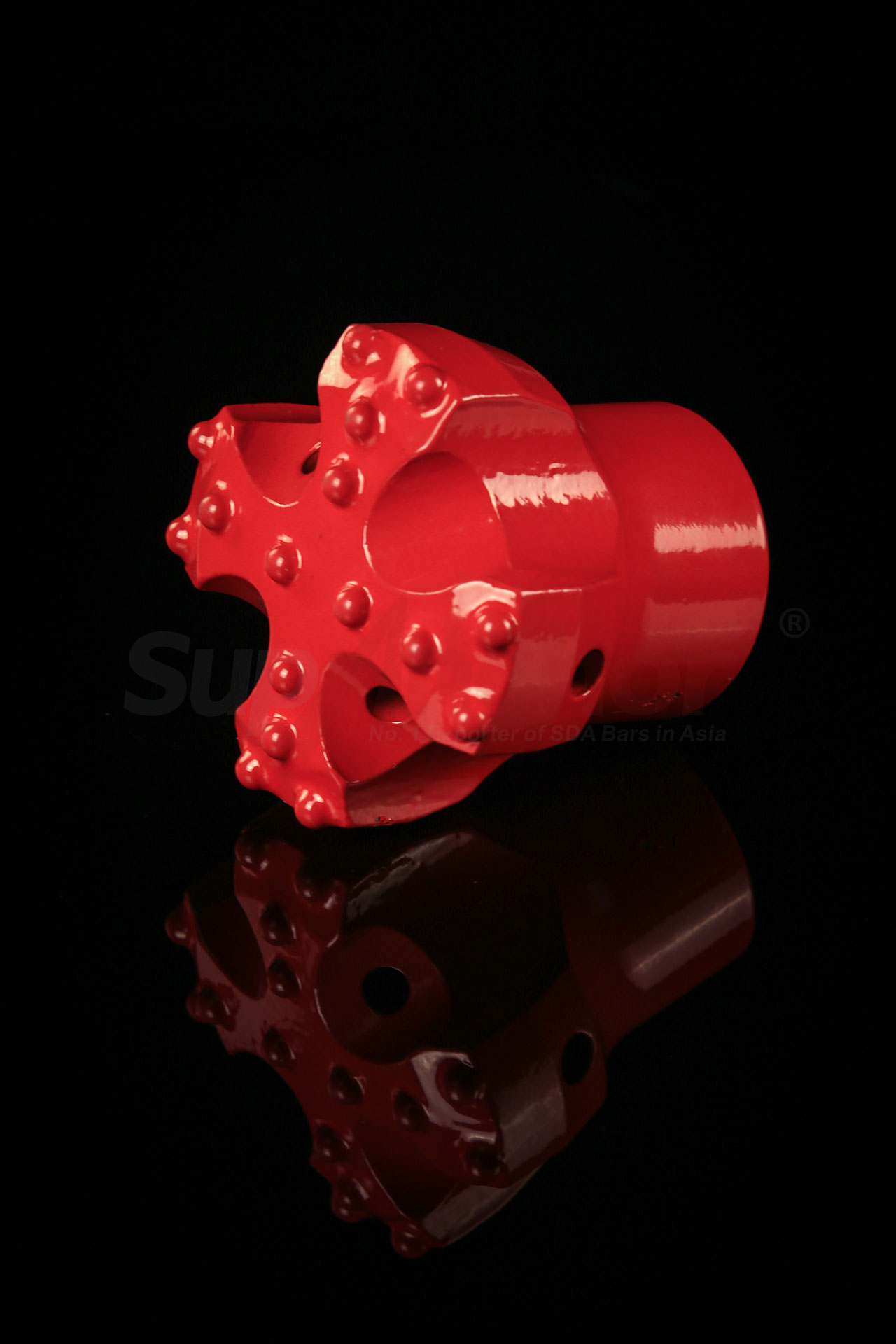
The image below captures the final product—a SupAnchor self drilling anchor bolt ready for deployment. Its robust appearance, with continuous threads and sacrificial bit, speaks to the engineering precision that makes such ambitious projects possible.
In conclusion, the Brenner Base Tunnel expansion serves as a powerful testament to the evolution of geotechnical reinforcement systems. SupAnchor’s self drilling anchor technology not only overcame some of the toughest ground conditions on Earth but also set new benchmarks for construction efficiency and long-term reliability. As infrastructure demands escalate, such innovative, collaborative solutions will remain at the forefront of civil engineering progress.
SupAnchor's self drilling anchor system delivers efficient ground stabilization in a large-scale infrastructure project, offering technical advantages in difficult geological conditions.
SupAnchor unveils SupFRP® GFRP reinforcement rebar offering high tensile strength, corrosion resistance, and versatility for soft-eye excavation, sea walls, and precast elements. Learn about specs and applications.
SupAnchor's self drilling anchor system has been successfully deployed on a highway slope stabilization project in Europe, overcoming fractured rock and loose soil conditions with high-strength hollow bar anchors and drill-and-grout technology.
SupAnchor launches SupFRP® GFRP friction bolt: lightweight, corrosion-resistant, non-conductive, high tensile strength, easy ore separation.
European infrastructure project overcomes difficult geology with SupAnchor self drilling anchor system. Technical specs, industry value, and brand insight.