The Green Valley Highway Widening Project, situated in the geologically complex terrain of the Appalachian foothills, recently addressed a critical stability challenge: a 30-meter-high cut slope in highly weathered shale with loose overburden and persistent groundwater seepage. Initial geotechnical investigations revealed that the slope could not be safely excavated without full-height face support, yet conventional methods—such as soil nailing with grouted bars, driven H-piles, or tied-back soldier piles—were deemed unsuitable due to the fractured, blocky nature of the rock mass and the need to keep the adjacent interstate highway open to traffic. The project’s designers, in concert with the main contractor, recognized that only an integrated self drilling anchor system could provide the necessary bond strength, installation speed, and safety during construction.
After evaluating several international suppliers, the team selected SupAnchor, a globally certified soil nail system manufacturer and ground anchor bolt factory, to supply its patented self drilling anchor bolt technology. The system, often referred to as a hollow bar anchor or drill-and-grout bolt, offers a unique combination of simultaneous drilling, grouting, and anchoring that eliminates the need for a casing and produces an immediate, fully bonded tendon. This article provides an in-depth on-site report of the installation, the technical parameters that made it successful, and the broader implications for the infrastructure and mining sectors.
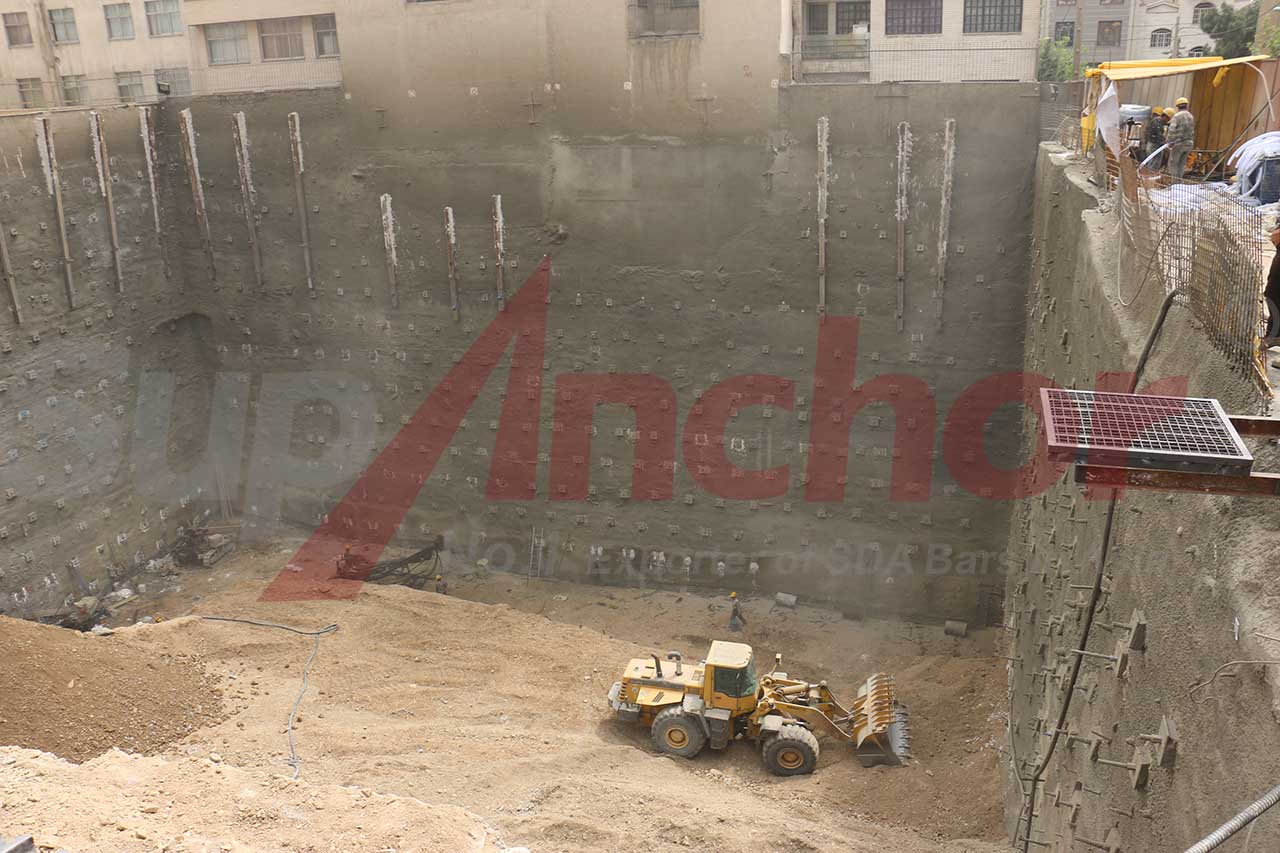
As the site photograph illustrates, the slope stabilization work was carried out using a Casagrande C6 drill rig equipped with an on-board grout pump, which advanced the self drilling anchor bolt into the steep cut face. Each anchor consisted of a continuous hollow steel bar with an integrated sacial drill bit; high-pressure compressed air and water-based cement grout were pumped through the bar’s center to flush the cuttings and immediately bond the anchor to the surrounding weathered shale. This single-pass installation method is particularly advantageous in ground that is too unstable for open-hole drilling because the injected grout simultaneously stabilizes the borehole walls, preventing collapse and ensuring 100% coverage of the nominal anchor diameter.
Before production drilling began, the project team conducted four pull-out tests to confirm design assumptions and optimize the anchor bonded length. The test results, validated by an independent geotechnical firm, showed that the ultimate bond stress in the weathered shale exceeded 450 kPa, well above the design value. Based on this, the production anchors were installed at a spacing of 2.5 m center-to-center in a staggered pattern, each inclined 15° downward to intersect competent rock at depth. The permanent anchors were designed to carry a service load of 250 kN per anchor, with a factor of safety of 2.0 against ultimate failure.
The following table summarizes the key technical specifications of the self drilling anchor system as supplied by SupAnchor for the Green Valley project:
| Parameter | Value / Description |
|---|---|
| Nominal Outer Diameter | 32 mm (R32 thread) |
| Tensile Strength | ≥ 660 MPa |
| Yield Strength | ≥ 500 MPa |
| Elongation at Fracture | ≥ 12% |
| Anchor Length (typical) | 9.0 m (customizable 3–12 m) |
| Drill Bit Type | Cross-cut carbide bit, 43 mm diameter |
| Corrosion Protection | Hot-dip galvanized coating (≥ 85 µm) per ISO 1461 |
| Grout Compressive Strength | ≥ 40 MPa at 28 days |
| Installation Rate | Average 5–7 anchors per shift per rig |
The selection of a 32 mm diameter was the result of a careful balance between installation torque limits, available drill rig power, and mechanical requirements. The high tensile strength of 660 MPa ensured that the anchors could develop the required load without excessive strain, and the hot-dip galvanizing provided a robust defense against the moderately aggressive environment, where groundwater sulfate levels measured up to 2000 mg/L. The hollow bar anchor’s central flushing channel, measuring 14 mm in diameter, allowed a grout flow rate of 40–60 L/min at a pressure of 1.5–2.0 MPa, which effectively flushed the cuttings and guaranteed a compact annular grout column. The drill-and-grout bolt installation method eliminated the need for a separate grouting phase, reducing the cycle time to approximately 20 minutes per anchor.
In the field, the construction team worked in a top-down sequence: after each 2.5 m bench was excavated, a row of anchors was installed, followed immediately by a reinforced shotcrete facing layer with a drainage geocomposite strip. The ground stabilization anchor system proved instrumental in maintaining the stability of the excavation face between benches, and no slope movements were recorded during the entire operation. The grout used was a neat cement mix with a water/cement ratio of 0.4, achieving a 28-day compressive strength of 42 MPa in on-site cube tests. The project’s quality control plan included regular pull-out tests on production anchors, and all results exceeded the acceptance criteria.
The Green Valley project illustrates a growing global trend: the adoption of self drilling anchor systems for critical infrastructure in challenging ground. As highway networks are widened to accommodate increased traffic, engineering teams must often build new lanes adjacent to existing roads without disrupting service. This demands ground support methods that are both rapid and reliable. The self drilling bolt for civil engineering has emerged as a preferred solution for precisely these conditions, offering the ability to penetrate mixed face and faulted ground while maintaining strict deformation limits. In the tunneling sector, similar anchor bolt systems for geotechnical engineering are routinely used as presupport at tunnel portals and in crown stabilization, where the ground is often weathered and weak.
The versatility of the technology extends well beyond slopes and highways. In urban settings, the self drilling anchor for retaining walls has become a mainstay for deep excavations, allowing contractors to underpin adjacent structures with minimal vibration and noise. In the mining industry, a variant known as a rock bolt for underground mining is employed for immediate roof support in development headings, providing a safe working platform for miners. The same principle applies to micropile hollow bar anchor applications, where slender, high-capacity anchors are drilled through distressed masonry or loose fill to underpin existing foundations.
Climatic extremes are also spurring innovation. More frequent intense rainfall events have increased the number of weather-related slope failures, prompting asset owners to invest in robust geotechnical reinforcement systems. A single hollow bar anchor, when drilled deep into stable bedrock, can effectively tie back a failing slope, resisting both hydrostatic and dynamic forces. The ground anchor bolt factory -to-site supply chain, as practiced by SupAnchor, ensures that each anchor is manufactured to the precise length and coating specification, eliminating costly on-site cutting and splicing. Engineers in seismically active regions increasingly rely on the ductility and energy absorption capacity of high-strength self drilling anchor bolts to design slopes that can withstand earthquake shaking without catastrophic failure.
International construction codes are recognizing the advantages of self drilling anchors. The European execution standard EN 1537:2013 explicitly covers hollow bar anchors, and the forthcoming revision of the American PTI Recommendations will include guidance on their design and testing. This regulatory support is encouraging more owners to specify SDA bolt factory direct supply from qualified manufacturers who can demonstrate consistent quality through ISO 9001-certified processes and full material traceability. SupAnchor, as a preferred SDA bolt factory direct supply partner, has shipped its products to over 30 countries, supporting projects that range from Himalayan hydropower plants to South American metro systems.
Beyond technical performance, the self drilling anchor for retaining walls also offers significant environmental and economic benefits. Because the system eliminates the need for temporary casing and reduces the number of grouting stages, it generates less slurry waste and requires fewer construction personnel. The speed of installation can decrease the overall project schedule by 20–30%, which translates directly into lower carbon emissions from heavy equipment and earlier return to service for the traveling public. In an era where sustainability metrics influence procurement decisions, such advantages make the SupAnchor ground stabilization anchor system an increasingly attractive choice for public infrastructure owners.
Founded on principles of engineering excellence, SupAnchor has grown into a leading soil nail system manufacturer and ground anchor bolt factory whose products are backed by decades of field experience. The company’s manufacturing facility utilizes advanced cold-rolling and heat-treatment lines to produce hollow bars with predictable mechanical properties, and every batch is subjected to tensile and bending tests in accordance with ISO 6892-1 and ASTM A370. The corrosion protection coatings are applied in-house using a controlled hot-dip galvanizing line, ensuring a uniform zinc layer that meets or exceeds the requirements of EN ISO 1461. The company holds ISO 9001:2015, ISO 14001:2015, and OHSAS 18001 certifications, underscoring its commitment to quality, environmental stewardship, and worker safety.
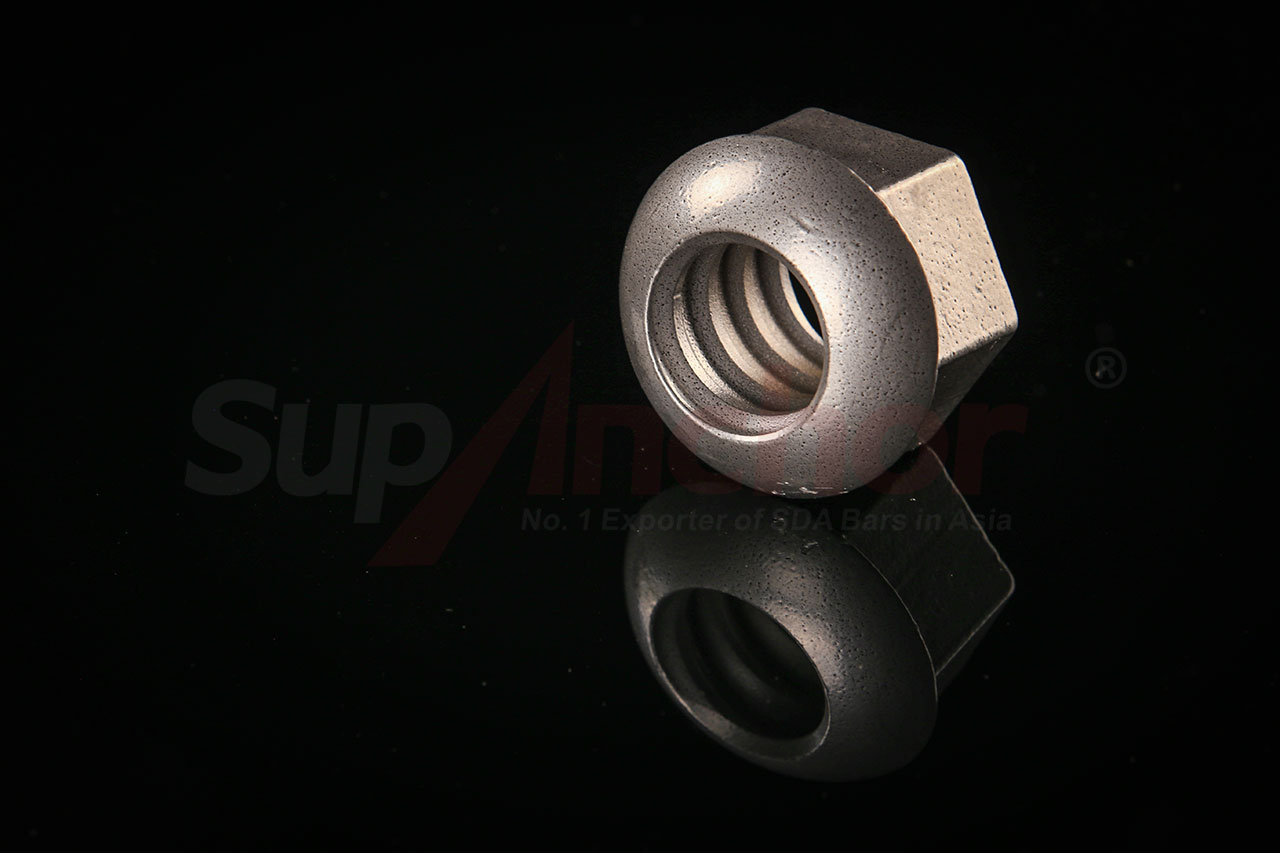
For the Green Valley project, SupAnchor’s technical team worked closely with the contractor from the bidding stage, recommending an optimal anchor pattern and providing real-time support during the initial pull-out tests. This collaborative approach—exemplified in the company’s motto, “Professional, Innovative, Collaborative”—is a hallmark of every SupAnchor project. By offering SDA bolt factory direct supply, SupAnchor was able to deliver the 600-anchor consignment within four weeks of order placement, significantly reducing the project’s procurement risk. Each anchor was packaged with a pre-assembled nut, plate, and centralizer to speed up field handling. Project manager John Carter remarked, “The on-site support and the ability to get a SDA bolt factory direct supply on short notice were key to keeping our excavation schedule on track. The anchors performed exactly as designed, and the installation was trouble-free.”
Looking ahead, SupAnchor continues to invest in R&D to push the boundaries of what is possible with self drilling anchor technology. Recent innovations include a new generation of self drilling anchors with a double-corrosion-protection system (epoxy-coated bar inside a corrugated HDPE sheath) for extremely aggressive environments, and a high-elongation variant capable of sustaining strains above 15% for seismic applications. The company’s products are now featured in key infrastructure databases and are quickly becoming the reference solution for anchor bolt systems for geotechnical engineering in challenging ground. As the global construction industry confronts ever more complex subsurface conditions, SupAnchor’s unwavering focus on professional, innovative, and collaborative solutions will continue to drive the adoption of self drilling anchor bolts worldwide.
A European infrastructure project utilized SupAnchor's self drilling anchor bolt system to stabilize a steep slope, overcoming fractured rock and groundwater with high-strength hollow bars and efficient drill-and-grout technology.
A major infrastructure project in mountainous terrain uses SupAnchor's self drilling anchor system to stabilize a critical slope, combining drilling and grouting in one pass for rapid, reliable geotechnical reinforcement.
SupAnchor introduces the SupFRP® GFRP Dowel Bar, a corrosion-free load transfer solution with 100+ year service life, high strength, and superior thermal compatibility for jointed rigid pavement and construction joints.
A European highway project uses SupAnchor's self drilling anchor system to stabilize a steep cut slope with complex geology, featuring high-strength hollow bar anchors and integrated drilling and grouting.
SupAnchor's SupPump Sup2000 and Sup5000 grout pumps demonstrate exceptional performance in a major Alpine tunnel project, offering high-pressure precision and robust durability for challenging geotechnical reinforcement.