
In the summer of 2024, a major transportation infrastructure project in the European Alps encountered significantly challenging ground conditions during the construction of a new highway tunnel portal and adjacent retaining walls. The site, located at an elevation of 1,200 meters, featured a complex geology comprising highly weathered schist, glacial till, and pockets of running ground with active groundwater inflows. Early geotechnical investigations indicated that conventional drilling and anchoring methods would be both time-consuming and risky due to the potential for borehole collapse and the need for temporary casing. To address these issues, the project's lead contractor, in collaboration with geotechnical consultants, specified a self drilling anchor system supplied by SupAnchor, a globally recognized manufacturer of geotechnical anchoring products. This decision proved pivotal in maintaining the project schedule and ensuring long-term stability of the earth retention structures.
The geological profile at the site consisted of three distinct layers: an uppermost layer of loose, sandy colluvium up to 2 meters thick; an intermediate layer of highly weathered schist with RQD values below 25%; and a lower layer of moderately fractured, competent gneiss. The groundwater table fluctuated seasonally, and during spring thaw, inflows into excavations reached up to 50 liters per minute. These conditions ruled out open-hole drilling without support and made the hollow bar solution an ideal choice, as it could be installed quickly while injecting grout to stabilize the hole. The project's scale was considerable: over 1,200 linear meters of retaining walls reaching heights up to 9 meters, and a tunnel portal requiring immediate face support in fractured rock. The hollow bar anchor technology was selected because it combines drilling, grouting, and anchoring into a single operation, eliminating the need for a separate casing and reducing the risk of ground disturbance. The site's remote location and harsh weather conditions further underscored the need for a robust, easily transportable, and rapid installation method. The following sections detail the on-site application, technical parameters, and the broader significance of this innovative ground stabilization anchor system.
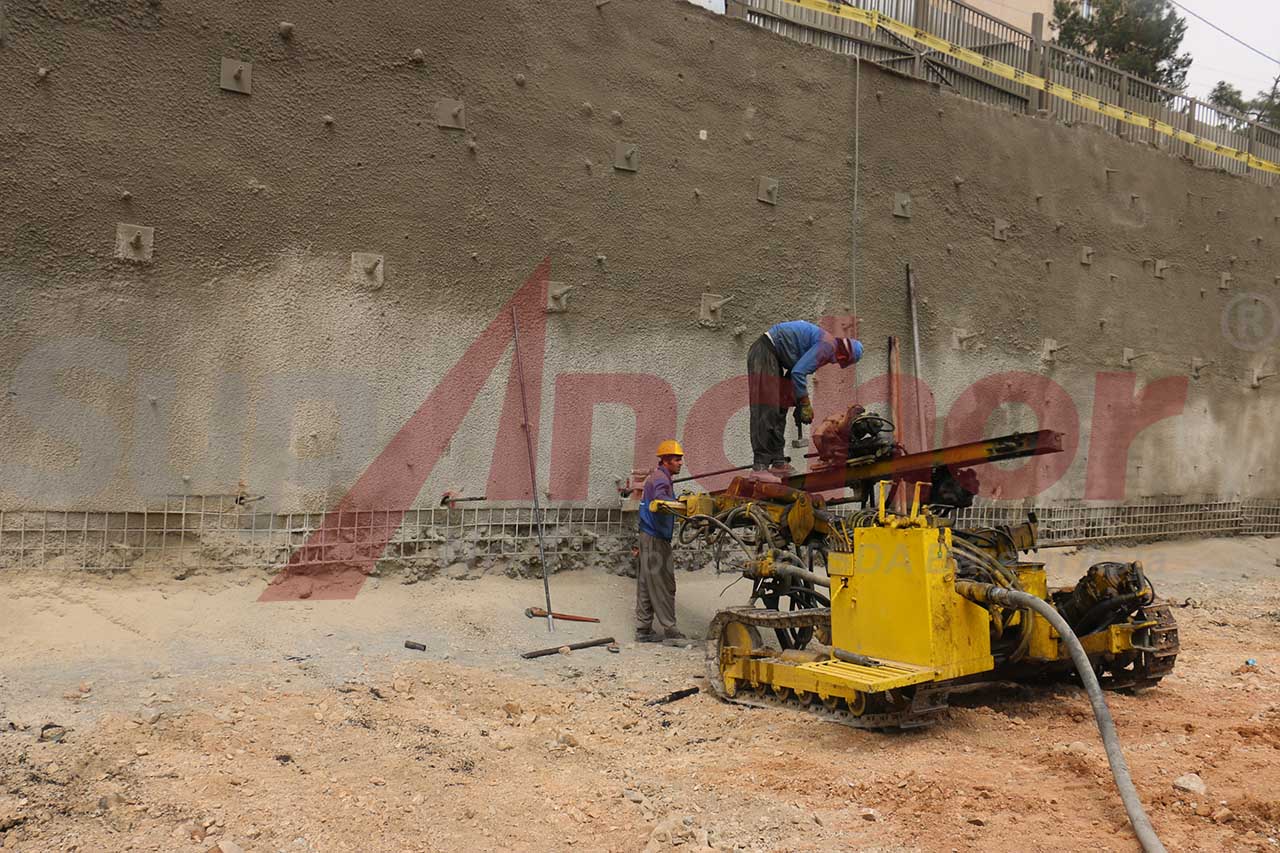
The construction site image captures a typical moment during the installation of the self drilling anchor bolt. A crawler-mounted hydraulic drilling rig is shown advancing a 51 mm diameter hollow bar anchor into the slope face, while a grout pump connected to the bar's hollow core simultaneously injects a cement-based grout. The drill-and-grout bolt method allowed the crew to penetrate the loose overburden and weathered rock without the need for temporary casing, as the grout immediately stabilized the borehole walls. This single-pass process dramatically reduced installation time from an estimated 45 minutes per anchor using conventional methods to just 15 minutes, enabling the contractor to stay ahead of the aggressive construction schedule.
The SupAnchor system deployed on this project comprised several configurations of the micropile hollow bar anchor, ranging in outer diameter from 32 mm to 76 mm, with lengths of 3, 6, 9, and 12 meters. The choice of diameter and length was determined by the required load capacity and the depth to competent rock. In areas of thick glacial till, longer bars with larger diameters were used to transfer loads to deeper, more stable strata. This configuration transforms the bar into a robust geotechnical reinforcement system capable of supporting high loads. The following table summarizes the key technical parameters of the anchors used on this project and their direct relevance to site conditions.
| Parameter | Specification | On-Site Application |
|---|---|---|
| Tensile Strength | 670–830 MPa (depending on steel grade) | Provided high load capacity to resist lateral earth pressures on retaining walls. |
| Outer Diameter | 32/38/51/76 mm | Selected based on required bond length and ground conditions; 51 mm most common. |
| Length | 3–12 m (customizable) | Extended anchors reached competent rock beyond the weathered zone. |
| Corrosion Protection | Hot-dip galvanized (85 µm) or epoxy coating | Provided durability against aggressive groundwater with high sulfate content. |
| Thread Profile | Rope thread (ISO 10208) | Allowed efficient coupling and consistent grout flow without leakage. |
| Yield Load | Up to 1,050 kN for 76 mm bar | Ensured sufficient safety margin for high-stress zones near tunnel portal. |
These specifications were not arbitrary; they were carefully matched to the geotechnical design requirements. The high tensile strength of the self drilling anchor for retaining walls ensured that the ground anchors could withstand the calculated lateral earth pressures, including surcharge loads from construction equipment. The corrosion protection was particularly critical because the groundwater contained elevated levels of sulfates and chlorides, which can rapidly degrade untreated steel. By using hot-dip galvanized bars, the design life of the retaining structures was extended to 100 years, meeting the client's durability requirements.
Installation procedure involved a sacrificial drill bit attached to the leading end of the hollow bar. As the bar was drilled into the ground, grout was pumped through the central hole under pressure, filling the annular space and penetrating surrounding fractures. This created a strong mechanical interlock between the bar, grout, and soil or rock, forming a robust anchorage system capable of carrying both tension and compression loads. The continuous rope thread along the entire length of the bar allowed for easy extension using couplers, which proved essential when unexpected boulders required longer anchors. The project's geotechnical engineer noted that the system's adaptability and ease of handling contributed to a high installation quality with minimal waste.
Quality control was rigorous: pull-out tests were conducted on 5% of the installed anchors to verify bond strength, and grout samples were tested daily for compressive strength. All test results exceeded design expectations, confirming the reliability of the SupAnchor product. The contractor also appreciated the factory direct supply model, which ensured timely delivery of the SDA bolt factory direct supply products to the remote site, avoiding costly delays.
The successful application of this anchor technology on the Alpine project reflects a broader shift in the construction industry toward methods that improve safety, efficiency, and environmental compatibility. In tunnels, slopes, and deep excavations, the use of a drill-and-grout bolt has become a standard practice for both temporary and permanent support. As infrastructure ages and urban spaces become denser, the demand for advanced ground reinforcement methods that can be installed in limited headroom and with minimal vibration is rising. The hollow bar anchor meets these needs by offering a single-pass solution that reduces equipment footprint, labor costs, and construction time.
Globally, transportation agencies and mining operators are increasingly specifying self drilling bolts for civil engineering projects that involve difficult ground. For instance, rock bolt for underground mining applications often require rapid installation in fractured rock masses where conventional drilling may cause block falls. The self drilling bolt for civil engineering provides immediate support upon grouting, enhancing worker safety. Similarly, the use of anchor bolt system for geotechnical engineering in retaining walls, bridge abutments, and tunnel portals has grown due to its reliability and speed. The micropile hollow bar anchor, in particular, has found favor in foundation underpinning projects where access is restricted and load transfer must be achieved quickly.
According to a 2023 report by a leading infrastructure research firm, the global market for ground anchor systems is projected to grow at a compound annual growth rate of 5.8% through 2030, driven by investments in transportation networks, renewable energy foundations, and urban underground space development. The self drilling anchor system, as a subset of this market, is expected to see even faster adoption due to its versatility. In Europe, the push for resilient infrastructure under programs like the Trans-European Transport Network (TEN-T) has led to numerous slope stabilization and tunnel rehabilitation projects where hollow bar anchors are specified. In North America, the need to upgrade aging dams and levees has also increased the demand for reliable ground stabilization anchor systems.
Another significant trend is the emphasis on sustainability. By minimizing spoil production and using less concrete than traditional cast-in-place anchors, the self drilling anchor system reduces the carbon footprint of ground engineering works. SupAnchor’s products, which are manufactured under strict quality control, contribute to longer service life and reduced maintenance, aligning with green construction goals. The ability to reuse the drilling rig for multiple purposes and the reduction in material waste further enhance the environmental profile of the system.
Compared to traditional driven soil nails or strand anchors, the self drilling anchor system offers distinct advantages. The elimination of a separate drilling and casing step reduces the number of equipment moves and the amount of spoil generated. On this Alpine project, the use of SupAnchor’s system resulted in a 40% reduction in installation time and a 25% reduction in overall project cost for the retaining wall scope. Such efficiencies are increasingly important as contractors face skilled labor shortages and tighter project margins. Moreover, the hollow bar anchor can be installed in almost any ground condition, from soft clay to hard rock, making it a versatile tool in the geotechnical engineer’s toolkit.
SupAnchor has established itself as a trusted partner for complex geotechnical projects worldwide. The company’s hollow bar anchor and related accessories are produced in a modern ground anchor bolt factory that holds ISO 9001, ISO 14001, and ISO 45001 certifications. These certifications ensure that every self drilling anchor bolt meets consistent quality standards and that manufacturing processes are environmentally responsible and safe for workers. SupAnchor’s R&D team continuously improves the thread design and steel chemistry to enhance load capacity and corrosion resistance, reflecting the company’s core values of professionalism, innovation, and collaboration.
Over the past decade, SupAnchor has supplied its products to major infrastructure projects across Europe, North America, and Asia. From metro tunnels in urban centers to slope stabilization along highways, the hollow bar anchor system has proven its versatility. In one notable case, a ground stabilization anchor system was used to reinforce a failing retaining wall adjacent to a railway, allowing trains to operate without interruption during the repair. In another, the self drilling anchor for retaining walls was deployed in a landslide-prone area, providing immediate reinforcement and enabling the safe construction of a new road alignment. The company’s products have also been used in underground mining operations, where rock bolt for underground mining applications benefit from the fast installation and high load capacity of the hollow bar.
Engineers and contractors choose SupAnchor not only for product quality but also for the technical support provided from design to installation. The company’s engineers collaborate closely with project teams to select the appropriate anchor diameter, length, and corrosion protection scheme, ensuring optimal performance. This collaborative approach, combined with the factory direct supply model, offers cost savings without compromising on quality. As a leading soil nail system manufacturer, SupAnchor is committed to advancing geotechnical engineering through continuous innovation and rigorous testing.
SupAnchor’s commitment to quality is evidenced by its compliance with international standards such as EN 14490 for execution of special geotechnical works and ASTM F432 for rock bolts. Each batch of self drilling anchor bolt is tested for tensile strength, elongation, and thread geometry before leaving the factory. The company also maintains a comprehensive traceability system, allowing project owners to verify material certifications for every anchor installed. This level of transparency and reliability has earned SupAnchor repeat business from major contractors and public agencies.
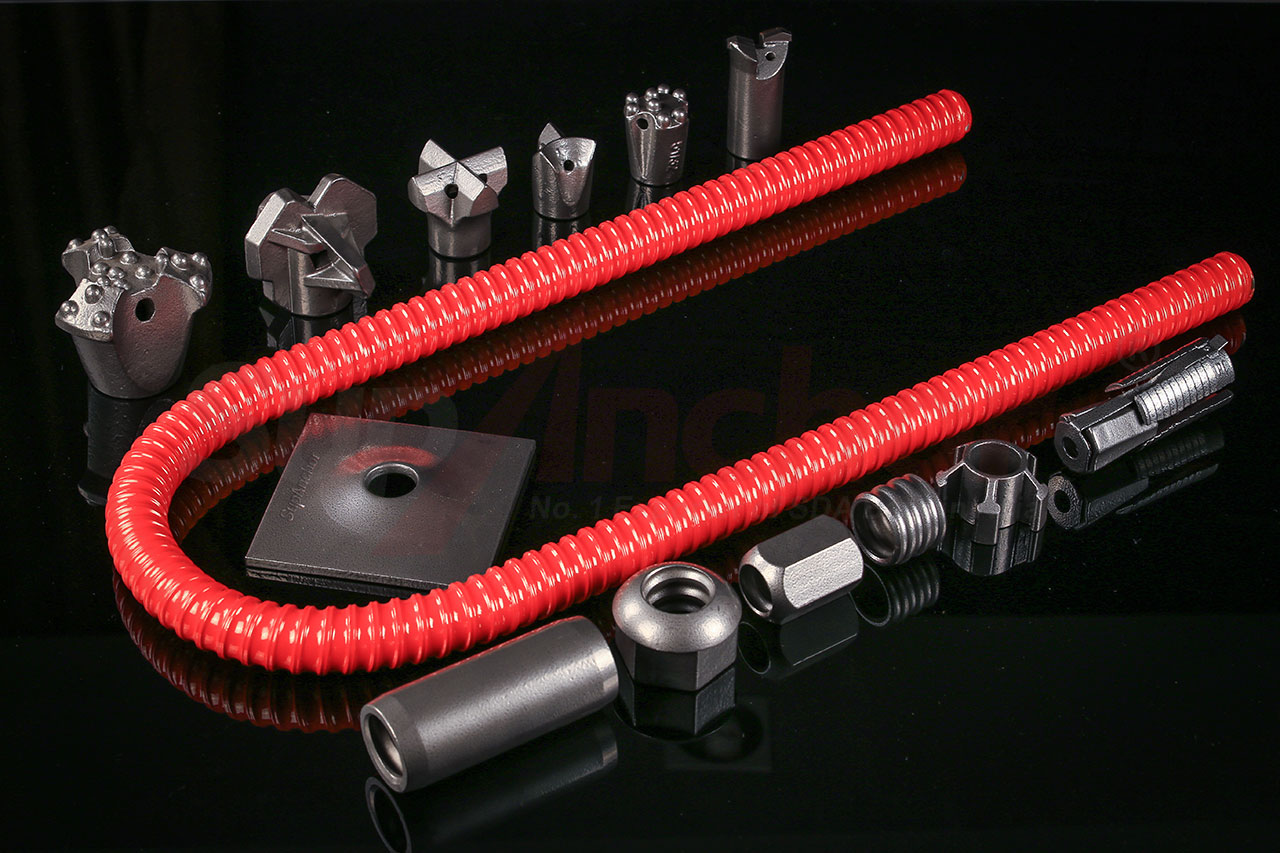
In conclusion, the construction site image and project details demonstrate how SupAnchor’s hollow bar anchor technology successfully addressed the geotechnical challenges of a difficult ground environment. By integrating drilling, grouting, and anchoring into a single operation, the system provided a robust and durable solution. With a strong focus on innovation and certification, SupAnchor continues to be a leading soil nail system manufacturer, delivering products that enhance safety and performance in civil engineering and mining projects worldwide.
SupAnchor’s self drilling anchor system delivered reliable ground reinforcement in a complex geotechnical project, combining hollow bar technology with efficient installation.
SupAnchor's T thread self-drilling hollow anchor combines drilling, grouting, and reinforcement in one system, offering high load capacity and corrosion protection for global tunneling and slope projects.
SupAnchor's self drilling anchor system was deployed on a challenging slope stabilization project, delivering reliable geotechnical reinforcement in difficult ground conditions.
SupAnchor launches the SupUTS series, a high-strength self drilling anchor system with up to 930 kN ultimate load, designed for deep foundations, tunnels, and slope stabilization.
SupAnchor's self drilling anchor system provided slope stabilization and retaining wall support on a 14.5-km highway expansion in fractured rock, delivering fast installation and high load capacity.