
As infrastructure development pushes into increasingly difficult terrain, geotechnical engineers are turning to advanced anchoring technologies that combine speed, reliability, and adaptability. In a recent project located in a mountainous region of Europe, a contractor successfully utilized SupAnchor's self drilling anchor system to stabilize an unstable slope along a major transportation corridor. The project, which involved reinforcing a rock cut adjacent to a highway, required an anchoring solution capable of penetrating fractured rock and loose overburden while maintaining strict safety and schedule requirements.
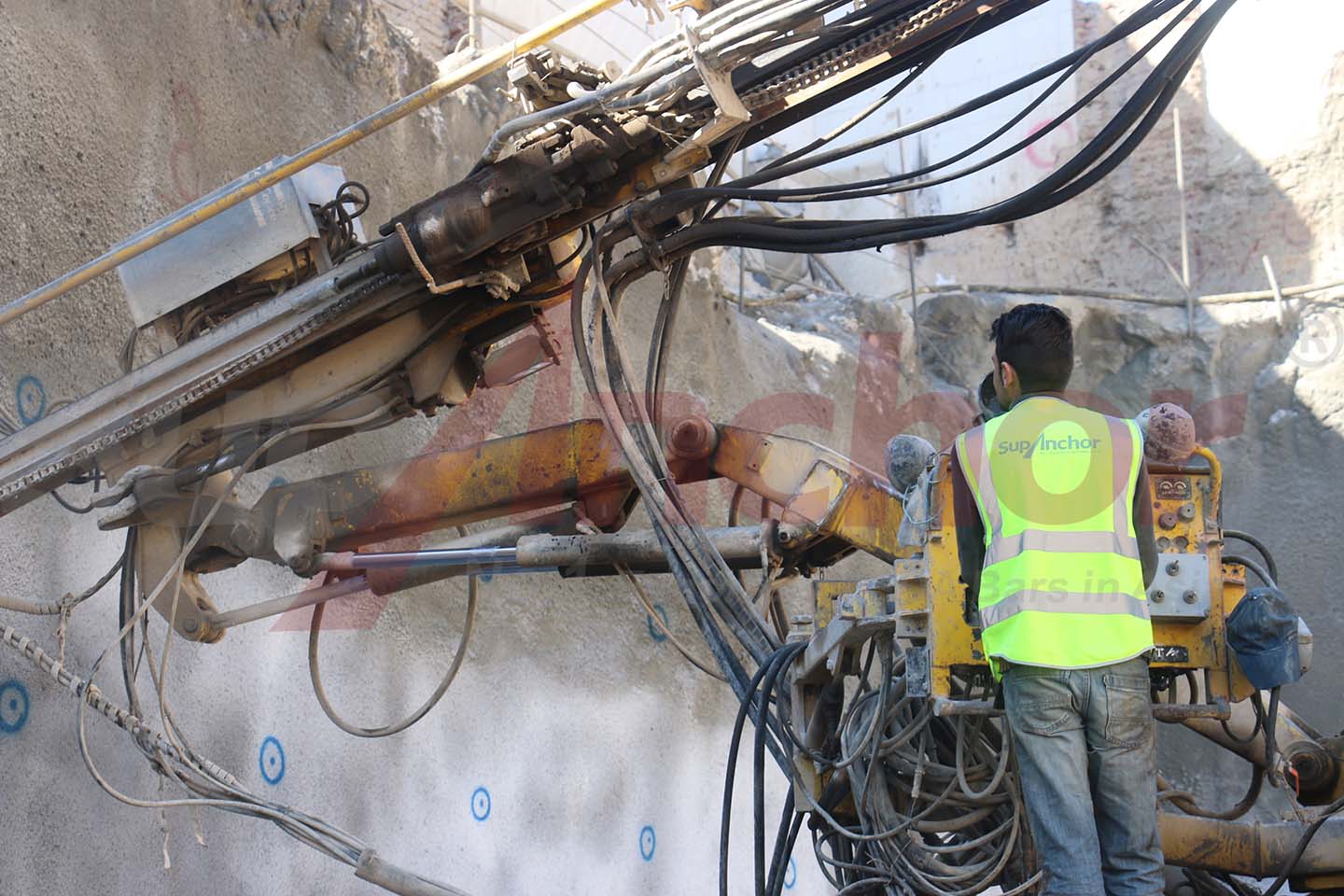
The on-site photograph captures the installation of a self drilling anchor bolt into the weathered rock face. Workers are seen operating a compact drill rig, which advances the hollow bar into the ground while simultaneously injecting grout. This integrated process eliminates the need for separate drilling, casing, and grouting stages, reducing the risk of borehole collapse and ensuring a continuous bond with the surrounding soil or rock. The result is a geotechnical reinforcement system that provides immediate load-bearing capacity and long-term stability.
The slope stabilization project was initiated after routine inspections revealed signs of progressive movement, including tension cracks and localized rockfall. The geological profile consisted of highly weathered schist and phyllite, interspersed with clay-filled joints and zones of loose colluvium. These conditions made conventional drilling difficult, as open boreholes tended to collapse before anchor installation could be completed. Additionally, the site's steep gradient limited access for heavy machinery, necessitating a lightweight and versatile anchoring system.
Engineers evaluated several anchoring methods, including driven soil nails, strand anchors, and self drilling hollow bars. Driven soil nails were ruled out due to the presence of hard rock layers that would impede penetration. Strand anchors required pre-drilling with casing, which was both time-consuming and prone to grout loss in fractured zones. The self drilling anchor system, however, offered a compelling alternative: it could drill through mixed ground conditions without casing, and the grout injection during drilling would stabilize the borehole walls immediately.
The selected anchor type was a hollow bar anchor, specifically designed for drilling and grouting in one pass. Its continuous rope thread along the entire length allows the use of standard drill bits and coupling systems, while the hollow core serves as the grout conduit. This design ensures that the entire anchor length is fully bonded, even in highly fractured rock where traditional gravity grouting often fails to achieve complete encapsulation.
For this project, SupAnchor supplied a self drilling bolt for civil engineering applications, with the following key parameters:
| Parameter | Specification |
| Anchor Bar Diameter | 32 mm |
| Anchor Bar Length | 6 meters (custom lengths up to 12 m available) |
| Tensile Strength (Ultimate) | ≥ 550 MPa |
| Yield Strength | ≥ 410 MPa |
| Elongation | ≥ 16% |
| Corrosion Protection | Hot-dip galvanized (zinc coating ≥ 85 µm) with optional epoxy coating |
| Thread Type | Continuous ISO rope thread (left-hand) |
| Grout Port | Hollow core (inner diameter 14 mm) |
The 32 mm diameter hollow bar anchor offered an optimal balance between weight and load capacity, making it easy to handle on steep slopes while still providing a design load of 250 kN per anchor. The hot-dip galvanized coating provided robust corrosion protection, essential for the project's aggressive environment where groundwater had a pH of 6.2 and contained moderate chlorides. The continuous rope thread allowed for easy extension using standard couplers, enabling the contractor to adapt anchor lengths on site without special tools.
During installation, the self drilling anchor bolt was advanced using a rotary-percussive drill rig equipped with a 38 mm drill bit. Grout with a water-cement ratio of 0.45 was pumped through the hollow core at a pressure of 0.5–1.0 MPa. The grout filled the annular space between the bar and the borehole wall, penetrating cracks and fissures in the rock mass. This drill-and-grout bolt technique created a reinforced zone of ground around the anchor, significantly improving the overall shear strength of the slope.
Pull-out tests performed on sacrificial anchors confirmed an average ultimate capacity of 320 kN, exceeding the required design load by a factor of safety of 1.3. The installation rate averaged 18 minutes per anchor, including drilling, grouting, and coupling, which allowed the contractor to complete the 450-anchor scope in just over three weeks—nearly 40% faster than the originally planned schedule using conventional methods.
Key advantages observed during the project included:
The successful implementation of this geotechnical reinforcement system underscores a broader industry shift toward more integrated ground improvement solutions. According to a 2024 report by a leading market research firm, the global ground anchor market is valued at approximately USD 1.2 billion and is expected to grow at a CAGR of 5.1% through 2030. The growth is driven by increasing investments in transportation infrastructure, particularly in mountainous regions where slope stabilization is critical.
In Europe, the self drilling anchor for retaining walls has become a preferred method for deep excavation support in urban areas. The technique minimizes ground disturbance and noise compared to driven piles, making it suitable for projects near sensitive structures. SupAnchor's products conform to European standards such as EN 14490 and Eurocode 7, ensuring compatibility with local design practices and regulatory requirements.
The use of micropile hollow bar anchor systems is also expanding in foundation rehabilitation projects, where existing structures require additional support due to soil movement or increased loads. The small diameter and high load capacity of these anchors allow installation in restricted access areas, such as basements or historic buildings. SupAnchor's experience as a ground anchor bolt factory enables it to produce custom lengths and thread configurations to meet specific project demands.
In the mining sector, the demand for rock bolt for underground mining has surged due to the need for safe and efficient ground support in deeper and more complex ore bodies. SupAnchor's self drilling anchors provide immediate support after installation, reducing the risk of rock bursts and collapses. The ability to post-grout through the hollow core further enhances long-term stability, a critical factor in high-stress mining environments.
Furthermore, the growing emphasis on sustainable construction practices has highlighted the environmental benefits of self drilling anchor systems. By eliminating the need for separate drilling and grouting operations, these systems reduce fuel consumption, noise pollution, and waste generation. The reduced equipment footprint also minimizes disturbance to surrounding ecosystems, aligning with green building certification requirements such as LEED and BREEAM.
SupAnchor has established itself as a leading soil nail system manufacturer and SDA bolt factory direct supply, serving clients in over 40 countries. The company's manufacturing facilities are equipped with automated production lines that ensure consistent quality and precision. All products undergo strict quality control procedures, including tensile testing, dimensional checks, and corrosion resistance evaluation, in accordance with ISO 9001 and ISO 14001 certifications.
The anchor bolt system for geotechnical engineering offered by SupAnchor is designed to address the most challenging ground conditions. The company's research and development team continuously works on improving thread geometry, steel grades, and corrosion protection systems to enhance performance and longevity. Recent innovations include a new generation of hollow bar anchors with higher yield strength and improved grout flow characteristics, which have been successfully used in major infrastructure projects across Europe and North America.
“SupAnchor's technical support was invaluable during the design phase,” said the project's geotechnical engineer. “Their engineers provided detailed installation guidelines and on-site training, ensuring that our crew could achieve the required quality standards. The ground stabilization anchor system they supplied performed beyond our expectations.”
The company's commitment to sustainability is reflected in its manufacturing processes, which utilize recycled steel and minimize waste. The self drilling anchor system reduces the carbon footprint of construction projects by eliminating the need for multiple pieces of equipment and reducing material consumption. As the industry moves toward greener practices, SupAnchor's products are well-positioned to meet the demands of environmentally conscious clients.
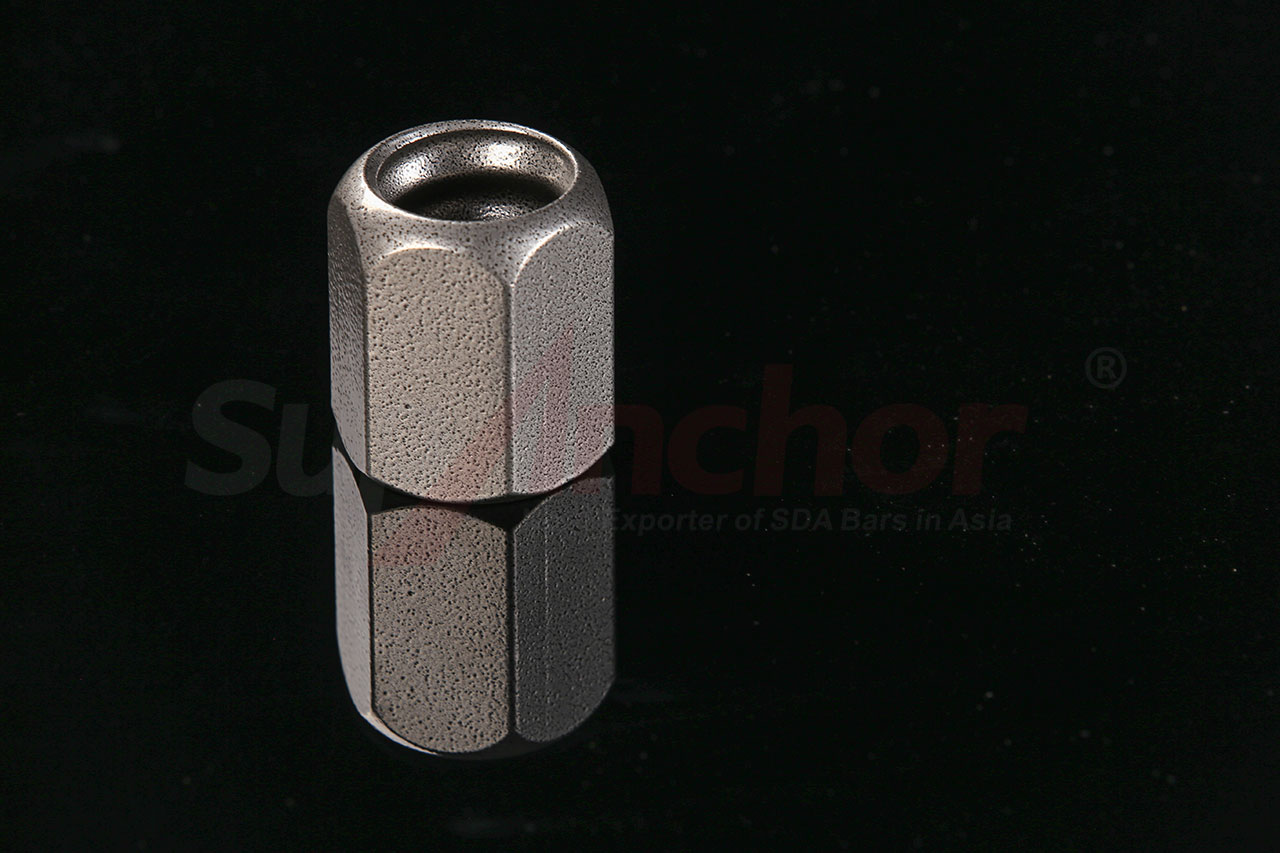
The product image shows the self drilling anchor bolt with its distinctive rope thread and drill bit attachment. The hollow core is visible at the end, demonstrating the path for grout injection. This design simplicity is a key factor in the system's reliability: fewer components mean fewer potential failure points, and the continuous thread allows for easy length adjustment with standard couplers.
As infrastructure projects continue to face geotechnical challenges, the adoption of advanced anchoring systems like those from SupAnchor will be essential for ensuring safety, efficiency, and long-term performance. The company's focus on innovation, quality, and customer collaboration positions it as a preferred partner for contractors and engineers worldwide.
In conclusion, the successful application of SupAnchor's self drilling anchor system in this slope stabilization project highlights the practical benefits of integrated drilling and grouting technologies. By overcoming difficult ground conditions and delivering a robust, cost-effective solution, SupAnchor continues to demonstrate its leadership in the geotechnical reinforcement industry.
SupAnchor's self drilling anchor system demonstrates superior performance in a challenging slope stabilization project, ensuring safety and efficiency.
SupAnchor introduces Grade 75 self-drilling hollow anchor, enhancing load capacity for critical infrastructure, tunneling, and slope stabilization with 3-in-1 efficiency and high-strength steel.
European infrastructure project deploys SupAnchor hollow bar anchors for soil stabilization and retaining wall support, highlighting technical performance and industry trends.
A major European infrastructure project has selected SupAnchor's self drilling anchor system to overcome challenging geology, delivering safer and more efficient ground reinforcement for a critical transportation corridor.
Discover SupAnchor's R Thread self-drilling hollow anchor system, a drill-and-grout bolt with ISO-certified design, corrosion protection options, and proven performance in tunneling and ground engineering.