
In the demanding world of modern construction, formwork systems must balance strength, durability, and cost efficiency. A large-scale infrastructure project in Northern Europe recently faced significant challenges: aggressive chloride environments, tight schedules, and the need for permanent structural integrity. Traditional steel tie rods required post-concrete removal, leading to increased labor, transportation, and storage costs. SupAnchor, a leading manufacturer of geotechnical reinforcement systems, offered a groundbreaking solution—the SupFRP® GFRP Tie Rod. This innovative product not only eliminates the need for removal but also delivers superior performance in harsh conditions.
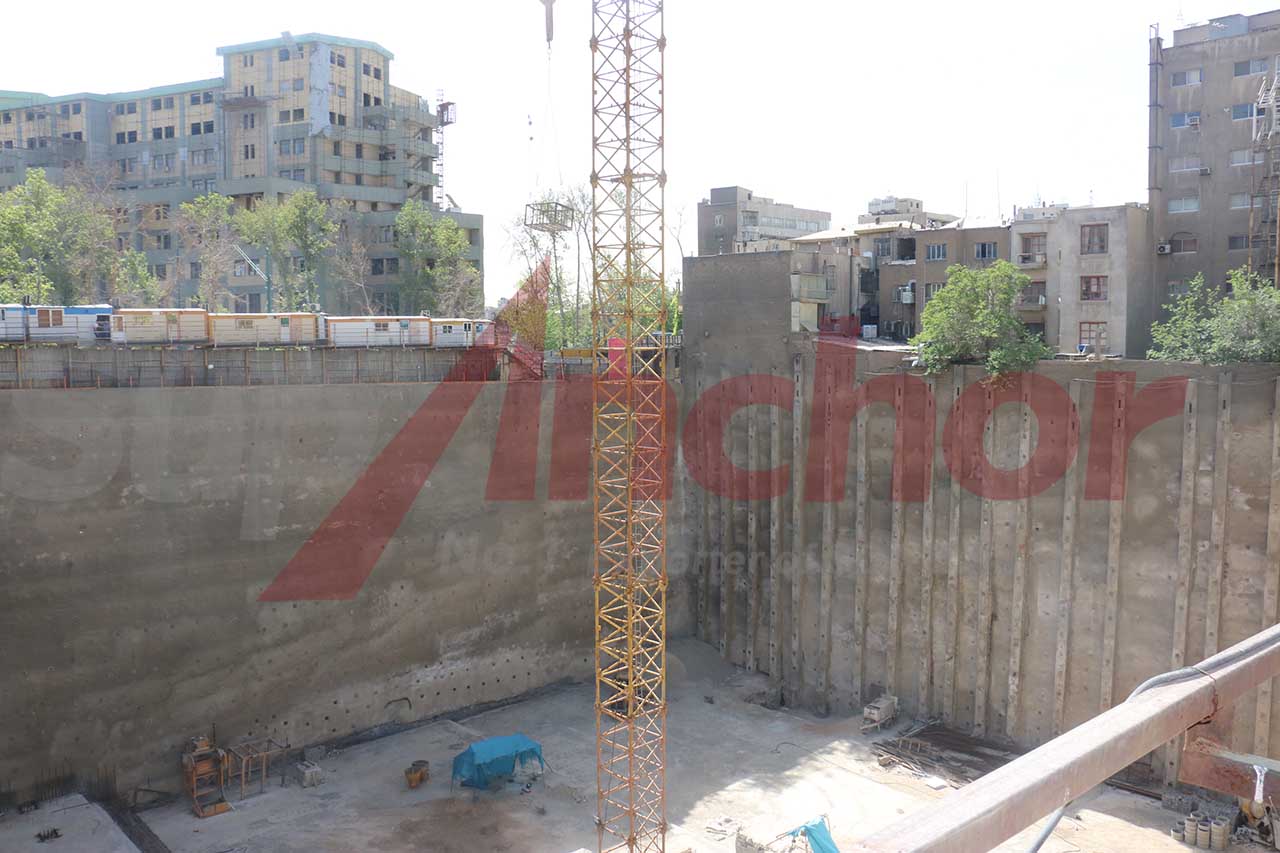
The SupFRP® GFRP Tie Rod is specially designed for formwork applications where permanence and corrosion resistance are paramount. Unlike steel tie rods, it remains in the structure after concrete sets, dramatically reducing post-construction work. SupAnchor, known for its comprehensive range of self drilling anchor systems and hollow bar anchors, has leveraged its deep expertise in fiber-reinforced polymers to deliver a product that meets the highest engineering standards.
At the core of the SupFRP® GFRP Tie Rod is its advanced composite construction. Manufactured in accordance with standard steel rod thread profiles, it seamlessly integrates with existing formwork accessories. The tie rod's waved thread structure and high-strength glass fiber core provide exceptional load-bearing capacity while maintaining a lightweight profile.
The table below highlights the technical specifications for the two main variants:
| Parameter | T15/130 | T20/250 |
|---|---|---|
| Outside Diameter (mm) | 17 (including waved thread) | 22 (including waved thread) |
| Nominal Cross-Sectional Area (mm²) | 130 | 250 |
| Guaranteed Tensile Load (kN) | 130 | 250 |
| Tensile E-Modulus (GPa) | 45 | 45 |
| Ultimate Strain | 2.0% | 2.0% |
| Weight (kg/m) | 0.37 | 0.71 |
| Available Lengths (m) | 2, 3, 4, 5, 6, 7, 8, 9, 10, 11 | |
These specifications translate directly into engineering value. The high corrosion resistance ensures long-term durability in marine or chemically aggressive environments, while the non-conductive and non-magnetic properties make the tie rod ideal for sensitive applications such as tunnels or hospital construction. Its good bond force with concrete guarantees structural integrity without additional anchoring. Furthermore, the tie rod's permanent application eliminates the labor-intensive process of extraction, patching, and sealing holes—a common pain point with steel rods.
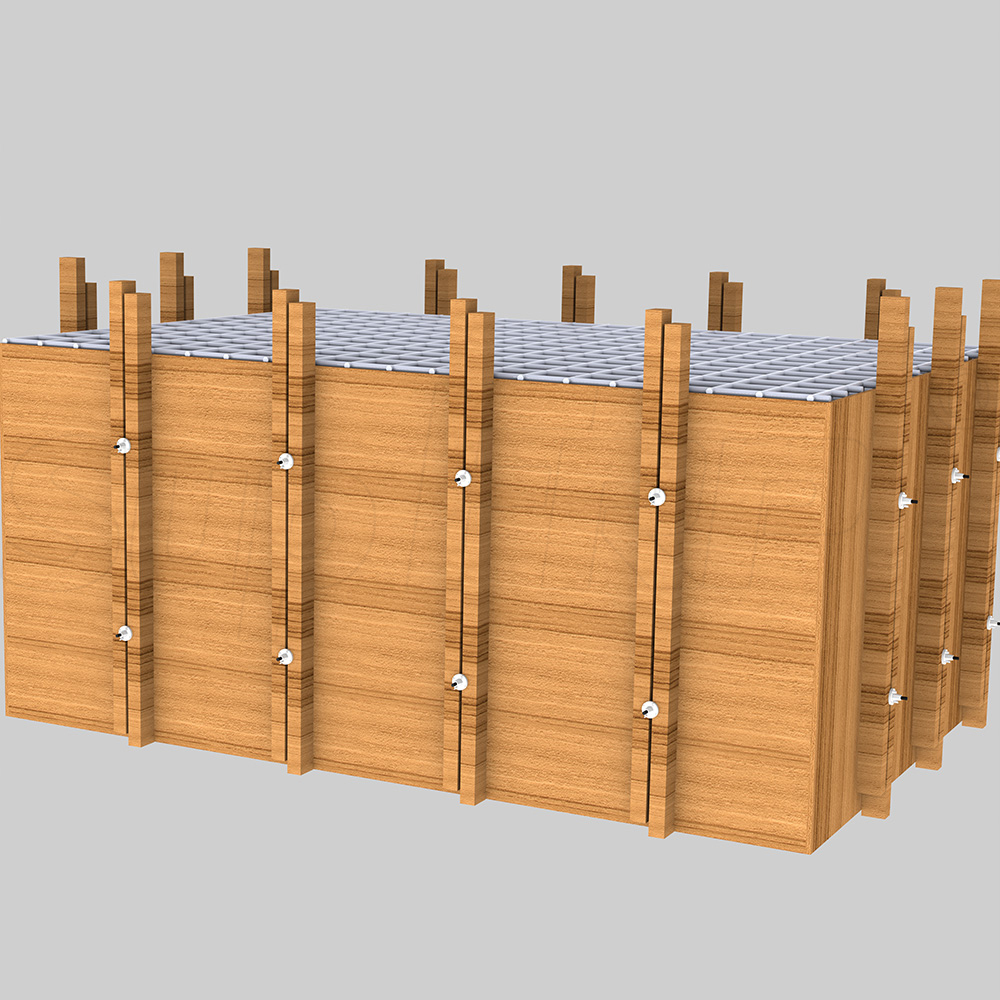
The easy handling of the GFRP tie rod is another notable advantage. Weighing only 0.37 kg/m for the T15/130 variant, it is significantly lighter than steel, reducing worker fatigue and transportation costs. The standard thread profile allows the use of conventional accessories, ensuring seamless integration into existing formwork systems without the need for specialized tools.
The SupFRP® GFRP Tie Rod is engineered for formwork in a wide range of construction projects, including high-rise buildings, bridges, dams, and industrial facilities. Its permanent application is particularly beneficial in situations where tie rod removal is impractical or undesirable, such as in thick concrete elements, underwater structures, or areas with limited access.
In the context of global infrastructure development, the demand for efficient and durable formwork solutions is rising. SupAnchor's GFRP tie rod addresses several industry pain points: it reduces overall project costs by eliminating post-processing, enhances structural durability, and supports sustainable construction by minimizing material waste. Compared to steel tie rods, which often corrode and require additional protective measures, the GFRP option provides a maintenance-free solution for the structure's entire service life.
SupAnchor's broader portfolio—including self drilling anchor systems, hollow bar anchors, and drill-and-grout bolts—positions the company as a one-stop provider for geotechnical and formwork needs. The GFRP tie rod complements these products, enabling contractors to source all anchoring and formwork components from a single trusted manufacturer. This integration streamlines procurement and ensures compatibility across different phases of a project.
For tunneling and mining projects, where non-conductive and non-magnetic properties are critical to avoid interference with sensitive equipment, the GFRP tie rod offers a distinct advantage. Its high end loading capacity allows it to withstand the substantial pressures exerted by fresh concrete, while the waved thread design ensures a secure mechanical bond with the surrounding material.
SupAnchor has established itself as a pioneer in the development of advanced anchoring and reinforcement systems. With a strong focus on R&D, the company holds numerous patents and certifications, including ISO 9001 for quality management and ISO 14001 for environmental stewardship. Its manufacturing facilities employ state-of-the-art pultrusion and composite processing technologies to produce products that meet or exceed international standards such as ASTM, BS, and DIN.
The company's global footprint spans over 50 countries, with successful projects in Europe, North America, the Middle East, and Asia. From the construction of high-speed rail tunnels in the Alps to the reinforcement of bridge foundations in Southeast Asia, SupAnchor's products have demonstrated reliability in the most challenging environments. The introduction of the SupFRP® GFRP Tie Rod further strengthens its position as an innovative leader in the construction materials industry.
SupAnchor's commitment to collaboration is evident in its customer-centric approach. The company provides comprehensive technical support, including application guidance, load calculations, and on-site training. This collaborative spirit, combined with a culture of innovation, has earned SupAnchor the trust of major contractors and engineering firms worldwide.
In conclusion, the SupFRP® GFRP Tie Rod represents a significant advancement in formwork technology. By offering high corrosion resistance, easy handling, and permanent application, it delivers tangible benefits that translate into cost savings, improved safety, and enhanced structural performance. As global infrastructure demands continue to grow, products like this will play a crucial role in building a sustainable and resilient future. SupAnchor, with its extensive range of geotechnical reinforcement systems, self drilling anchor bolts, and drill-and-grout bolts, remains at the forefront of this evolution, empowering engineers and contractors to build better, faster, and smarter.
A major highway expansion overcomes unstable geology using SupAnchor's self drilling anchor bolts, featuring hollow bar anchor technology and a drill-and-grout bolt for efficient slope stabilization.
SupAnchor introduces the SupFRP® GFRP Tie Rod, a corrosion-resistant, high-strength alternative to steel tie rods for formwork. With permanent application and easy handling, it reduces costs and enhances project efficiency.
A major infrastructure project overcame difficult geological conditions using SupAnchor's self drilling anchor system. The hollow bar anchors provided reliable ground reinforcement, ensuring long-term stability and safety.
SupAnchor's SupUTS self-drilling hollow anchor offers ultimate loads up to 930 kN, integrating drilling, grouting, and reinforcement for high-load geotechnical projects.
Industry report on SupAnchor's self drilling anchor system used in a challenging slope stabilization and foundation support project, highlighting technical parameters and global geotechnical trends.