
In the heart of a rugged mountain range, where unstable rock formations and loose colluvial soils have long threatened a vital transportation link, a major geotechnical stabilization project is underway. The site, located along a winding highway that serves as the only all-weather route for several communities, presents some of the most demanding ground conditions in recent infrastructure development: fractured bedrock, high groundwater seepage, and steep cut slopes exceeding 60 degrees in places. Following multiple rockfall incidents and progressive slope movement, the owner commissioned a comprehensive stabilization program, selecting SupAnchor’s self drilling anchor system as the primary ground reinforcement solution.
The project scope includes installation of over 2,500 linear meters of permanent rock anchors and 1,200 linear meters of temporary soil nails, along with reinforced shotcrete facing and drainage measures. The primary objective is to stabilize a 120-meter-long section of cut slope that has exhibited signs of instability, including tension cracks, minor slumping, and localized rockfall. Geotechnical investigations revealed a complex stratigraphy: a weathered granite layer overlain by residual soil and colluvium, with groundwater levels fluctuating seasonally. The design required anchors capable of transferring loads into competent bedrock at depths of up to 12 meters, while accommodating installation through unstable overburden without triggering further movement.
SupAnchor was chosen after a competitive tender process that evaluated technical capability, product performance, and delivery logistics. The company’s self drilling anchor system combines drilling, grouting, and tensioning into a single operation, eliminating the need for temporary casing and reducing disturbance to the already fragile slope. This method is particularly suited to the site’s conditions, where conventional drilled and cased anchors would have required extensive pre-grouting and still faced a high risk of hole collapse.
The slope under treatment is part of a larger geological formation known for its instability. Aerial surveys and LiDAR mapping conducted during the design phase identified several areas of active erosion and rockfall, with the most critical zone extending from elevation 850 m to 920 m. The highway at the base of the slope carries an average daily traffic of 5,000 vehicles, including essential commercial trucks servicing local mines and agricultural areas. Any interruption to this route would have significant economic impacts, making the stabilization project a high priority for the regional transportation authority.
Initial geotechnical borings revealed that the top 3 to 5 meters consist of loose, saturated colluvium with boulders, underlain by highly weathered granite that transitions to competent bedrock at depths between 8 and 12 meters. The groundwater table is perched, with seepage observed along the contact between the colluvium and weathered rock, further reducing slope stability. The design required a ground stabilization anchor system capable of achieving a bond with the competent bedrock while traversing the unstable overburden without causing additional disturbance. Conventional ground anchors with pre-drilled holes and casing were considered but rejected due to the high risk of hole collapse and the need for multiple drilling and grouting stages.
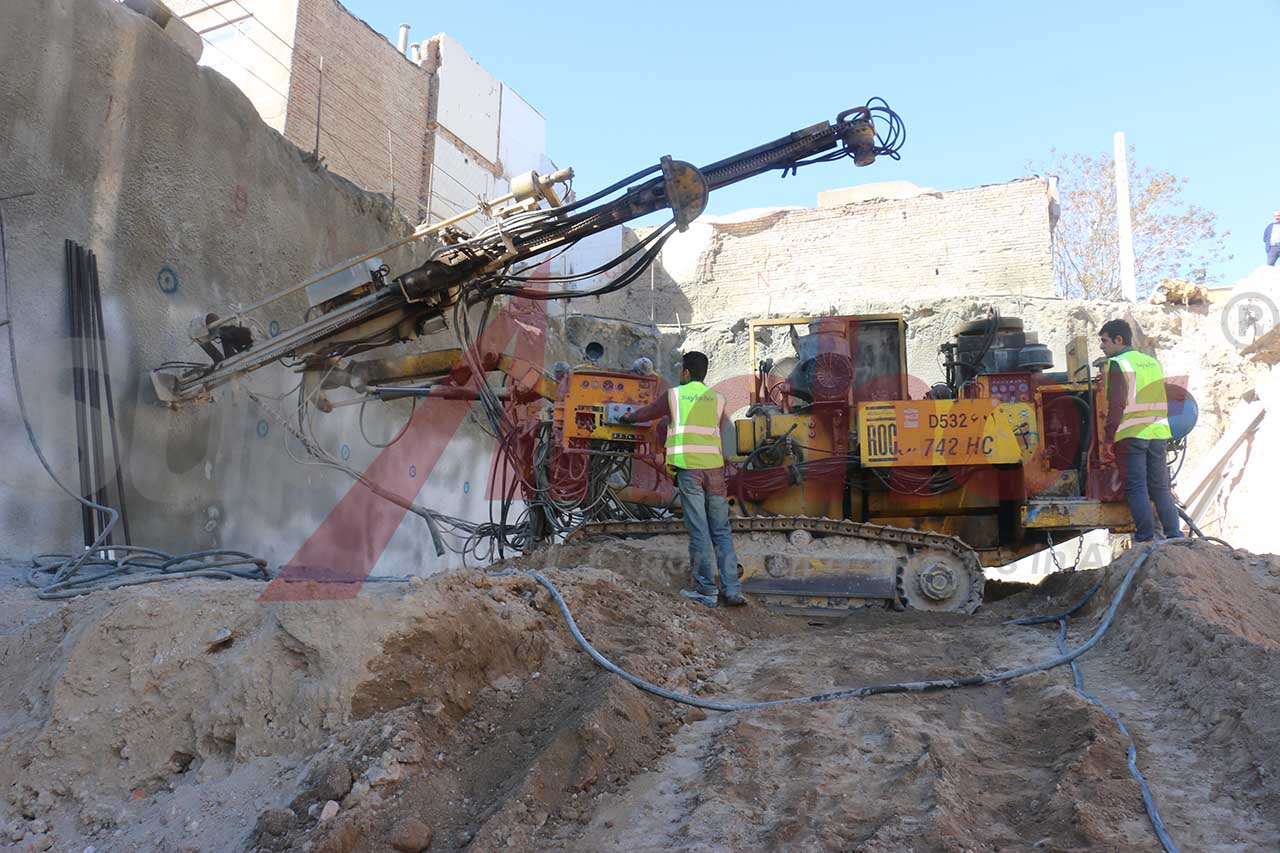
The construction photograph captures a critical moment in the anchor installation process. A crawler-mounted hydraulic drill rig is positioned on a narrow bench cut into the slope, while a worker guides a self drilling anchor bolt into the ground. The bar, visible as a slender steel rod with a tapered bit, is being advanced through the loose overburden at a controlled rotation speed and feed pressure. The hollow center of the bar serves as the grout conduit, allowing cement slurry to be pumped under pressure as the anchor progresses. This simultaneous drilling and grouting creates a temporary support column around the bar, preventing the borehole from collapsing and ensuring continuous load transfer to the surrounding ground.
Behind the drill rig, a grout plant and mixing station are set up, with hoses running to the anchor head. The operator monitors the drilling parameters on a digital display, adjusting torque, rotation speed, and penetration rate based on real-time feedback. The image also shows the steep, irregular surface of the cut slope, with visible rock outcrops and areas of loose soil, highlighting the difficulty of the working conditions. Safety measures, including harnesses and anchor points for workers, are evident, reflecting the high-risk environment.
The narrow working bench, only 4 meters wide, required careful rig positioning and frequent repositioning to cover the entire slope face. The SupAnchor system’s lightweight, modular drill masts enabled the contractor to use a compact rig that could be maneuvered safely on the bench. The use of couplers allowed the anchors to be assembled in sections, overcoming the limited overhead clearance and avoiding the need for a single long bar that would be difficult to handle on the steep slope. Grout was delivered via a high-pressure hose from a central mixing station located on the access road below, reducing the need for heavy equipment on the bench.
For this project, SupAnchor supplied two primary product configurations. The first is a 32 mm diameter self drilling anchor bolt with a threaded profile along its entire length, allowing the use of couplers and accessories without special machining. The steel grade is equivalent to ISO 6934-2, with a minimum tensile strength of 660 MPa and a minimum yield strength of 560 MPa, providing a nominal ultimate load capacity of approximately 530 kN for the bare bar. When combined with the cement grout body, the system is capable of achieving a working load of up to 300 kN, depending on ground conditions and grout quality. The second configuration is a 40 mm diameter micropile hollow bar anchor, used for temporary shoring and as a foundation element for retaining wall footings, with a higher compressive and bending capacity.
Both products feature a rolled, continuous thread that provides a mechanical interlock with the grout, transferring load along the entire bond length rather than relying on discrete ribs or plates. This design significantly improves the pull-out resistance in weak or fractured rock. The bars are manufactured from high-strength steel with a hot-dip galvanized coating as standard, and an optional double corrosion protection system consisting of a corrugated HDPE sheath and grout cover for permanent anchors in aggressive environments. For this project, the permanent anchors were specified with the double corrosion protection due to the presence of sulfates and chlorides in the groundwater, which could accelerate corrosion of unprotected steel.
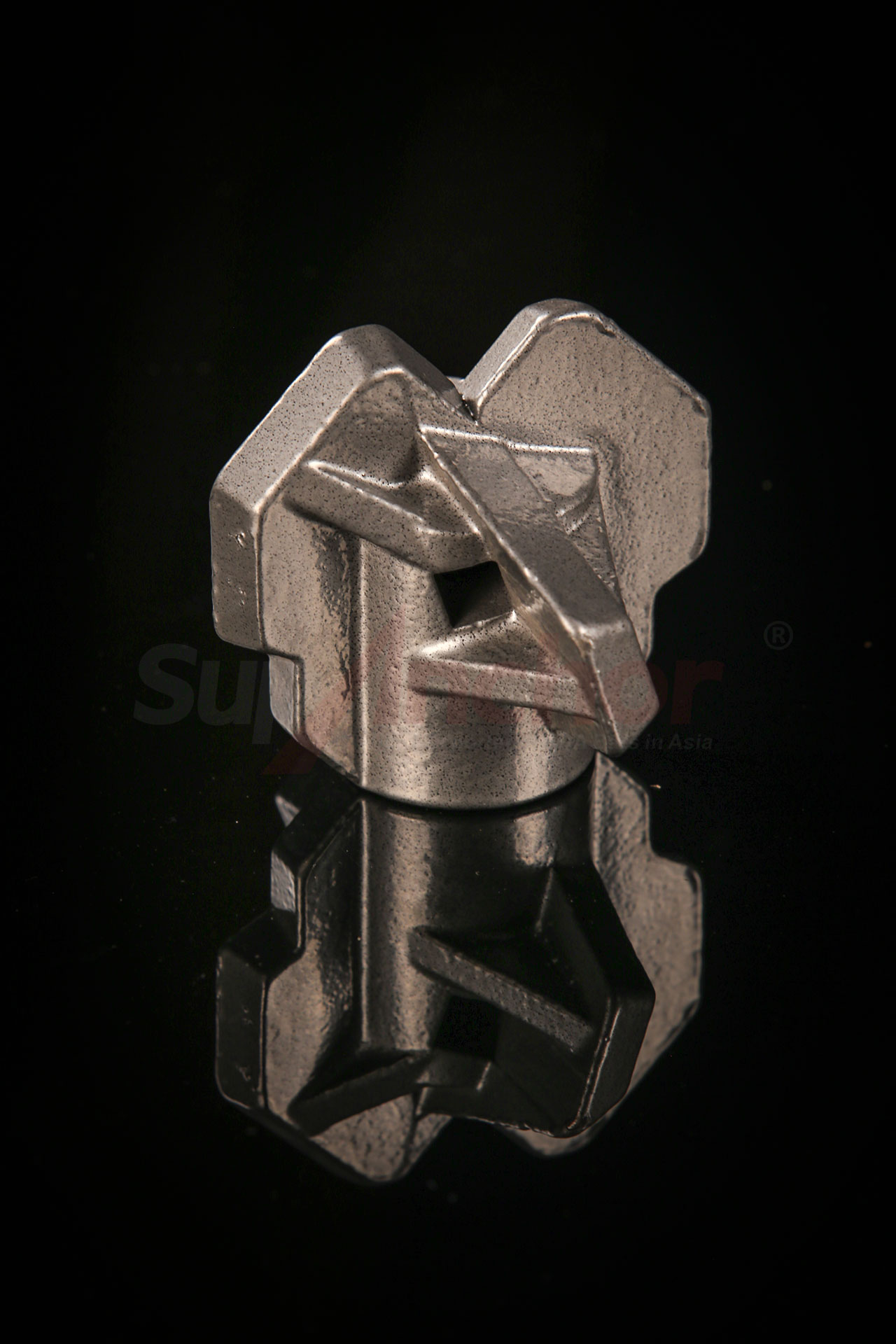
The drill bit attached to the leading end of the anchor is a sacrificial, carbide-tipped design that can penetrate hard rock formations with uniaxial compressive strength up to 80 MPa. The bit is larger in diameter than the bar, creating an annular space for grout to flow back along the bar and fill any voids in the surrounding ground. This drill-and-grout bolt mechanism is the key to the system’s effectiveness in collapsing ground.
The following table summarizes the primary technical specifications of the self drilling anchor system used on the site:
| Parameter | Main Anchor (32 mm) | Micropile (40 mm) | Notes |
|---|---|---|---|
| Bar diameter | 32 mm | 40 mm | Nominal outer diameter |
| Bar length | 6 m standard, extendable to 12 m | 6 m standard, extendable to 12 m | Coupled sections |
| Tensile strength | 660 MPa min. | 660 MPa min. | High-strength steel |
| Yield strength | 560 MPa min. | 560 MPa min. | For design calculations |
| Corrosion protection | Hot-dip galvanized + double corrosion protection (optional) | Hot-dip galvanized | Permanent anchors require double protection |
| Drill bit diameter | 40–51 mm | 51–64 mm | Carbide-tipped, sacrificial |
During the installation of the self drilling anchor system, crews followed a rigorous quality control protocol. Each anchor was drilled to the designed depth, with torque and penetration rate recorded at 0.5-meter intervals. Upon reaching target depth, the anchor was grouted with a water-cement ratio of 0.4–0.5, using a grout pressure of 1–2 MPa. The grout was pumped through the hollow bar until clean grout returned at the surface, indicating complete filling of the borehole annular space. After a curing period of 3 to 7 days, the anchors were tensioned to the design load using a hydraulic jack, and lock-off loads were set to account for long-term relaxation. Pull-out tests were conducted on 5% of the permanent anchors to verify bond strength and system performance. All test results exceeded the design requirements, confirming the suitability of the ground stabilization anchor system for the challenging conditions.
In addition to the pull-out tests, the contractor performed on-site torque-tension calibration for each anchor size to ensure the applied tension corresponded to the desired load. Strain gauges were installed on selected anchors to monitor load distribution along the bar during service. Early data indicate that the anchors are performing as designed, with no measurable movement of the slope face since installation. This real-time monitoring provides the owner with confidence in the long-term stability of the reinforced slope.
The successful implementation of this ground stabilization anchor system underscores the critical role that self drilling anchor bolts play in modern civil engineering. Across Europe and North America, infrastructure owners are grappling with aging slopes, deteriorating retaining structures, and the need for rapid rehabilitation with minimal disruption to traffic and communities. The self drilling anchor for retaining walls has emerged as a preferred solution for these projects because it can be installed in limited access areas, often with smaller rigs, and does not require the same level of site preparation as traditional ground anchor systems. This reduces not only the direct construction cost but also the indirect costs associated with traffic management and environmental mitigation.
In the tunneling and mining sectors, the same hollow bar anchor technology is adapted as a rock bolt for underground mining. In these applications, the immediate support capability of the drill-and-grout bolt is essential to protect workers and equipment in advancing headings. The ability to install the bolt and inject grout in one pass means that the ground is reinforced within minutes of drilling, rather than waiting for a separate grouting operation. SupAnchor supplies these products globally, with customized lengths and corrosion protection to suit the highly variable conditions found underground.
Another growing application is the use of micropile hollow bar anchors as foundation elements for buildings and bridges in soft or contaminated soils. By drilling and grouting simultaneously, contractors can create a reinforced concrete column in the ground that serves both as a foundation and as a ground improvement element. This technique is particularly valuable in urban environments where vibration and noise restrictions preclude driven piles. SupAnchor’s experience as a ground anchor bolt factory allows it to offer a complete range of micropile diameters from 30 mm to 105 mm, with matching plates, nuts, and couplers.
The project described here also highlights the importance of integrating geotechnical reinforcement systems with other slope stabilization measures, such as drainage, shotcrete, and wire mesh. The SupAnchor products were installed in a grid pattern designed to work with the reinforced shotcrete facing, creating a composite structure that resists both sliding and surface erosion. The coordination between the anchor installation and the shotcrete application required careful sequencing, which was managed by the contractor with SupAnchor’s technical support.
SupAnchor has established itself as a leading anchor bolt system for geotechnical engineering through a combination of manufacturing excellence, continuous innovation, and a collaborative approach to project delivery. The company’s ISO 9001-certified quality management system ensures that every self drilling bolt for civil engineering leaving the factory meets stringent dimensional and mechanical property requirements. In addition, the ISO 14001 certification reflects the company’s commitment to minimizing environmental impact through efficient production processes and recyclable materials.
For this slope stabilization project, SupAnchor’s technical team worked closely with the design engineer and contractor from the tendering stage through installation. This included providing load-test data, installation guidelines, and training for the crew. The company’s SDA bolt factory direct supply model meant that the anchors were delivered to the remote site in a timely manner, avoiding the delays common with multi-tier distribution channels. This direct relationship also allowed for rapid response to a design change that required additional couplers and plates, which were dispatched within 48 hours.
The SupAnchor product range includes not only self drilling anchor bolts but also a full suite of accessories, including drill bits, couplers, nuts, plates, and centralizers. This compatibility reduces the risk of installation errors and ensures that the entire ground stabilization anchor system performs as a cohesive unit. The company’s commitment to research and development has led to improvements in thread design, steel chemistry, and corrosion protection systems, all aimed at extending the service life of anchors in harsh environments.
Looking ahead, the demand for efficient and reliable geotechnical reinforcement systems is set to increase as infrastructure investment expands globally. The push toward more sustainable construction methods and the need to upgrade existing assets to withstand climate change impacts will drive adoption of self drilling anchor systems across a wide range of projects. From mountain highways to urban metro tunnels, the ability to install a ground stabilization anchor system in one pass offers a compelling combination of speed, safety, and cost-effectiveness.
This project serves as a case study in how modern anchoring technology can overcome extreme geological challenges while meeting strict environmental and safety standards. The SupAnchor self drilling anchor bolt, with its robust design and versatile application, has proven to be a reliable foundation for slope stability. As the industry continues to evolve, SupAnchor remains at the forefront, developing new solutions such as corrugated sheath systems for double corrosion protection and high-capacity thread profiles for deeper and more heavily loaded anchors.
For contractors and engineers seeking a proven soil nail system manufacturer with global experience and a commitment to quality, SupAnchor offers a complete range of products and services. The company’s collaborative approach ensures that each project, no matter how complex, benefits from the latest advances in anchor bolt system for geotechnical engineering. More information about hollow bar anchors, micropile hollow bar anchors, and self drilling anchor for retaining walls can be found on the SupAnchor website.
SupAnchor's self drilling anchor system deployed on an Alpine slope stabilization project, showcasing efficient installation and high-performance geotechnical reinforcement in challenging conditions.
SupAnchor's Grade 75 self-drilling hollow anchor bars deliver ASTM A615 performance, continuous T-thread bonding, and proven reliability for hydropower slope stabilization projects.
SupAnchor's self drilling anchor system deployed on an Alpine highway slope stabilization project, enabling fast drilling and grouting in fractured rock while meeting strict safety and environmental standards.
SupAnchor launches a corrosion-resistant GFRP friction bolt, offering lightweight, spark-free ground support for tunneling and mining.
SupAnchor's self drilling anchor system demonstrates superior performance in a challenging slope stabilization project, ensuring safety and efficiency.